
Superseded
Standard amendment
Historical
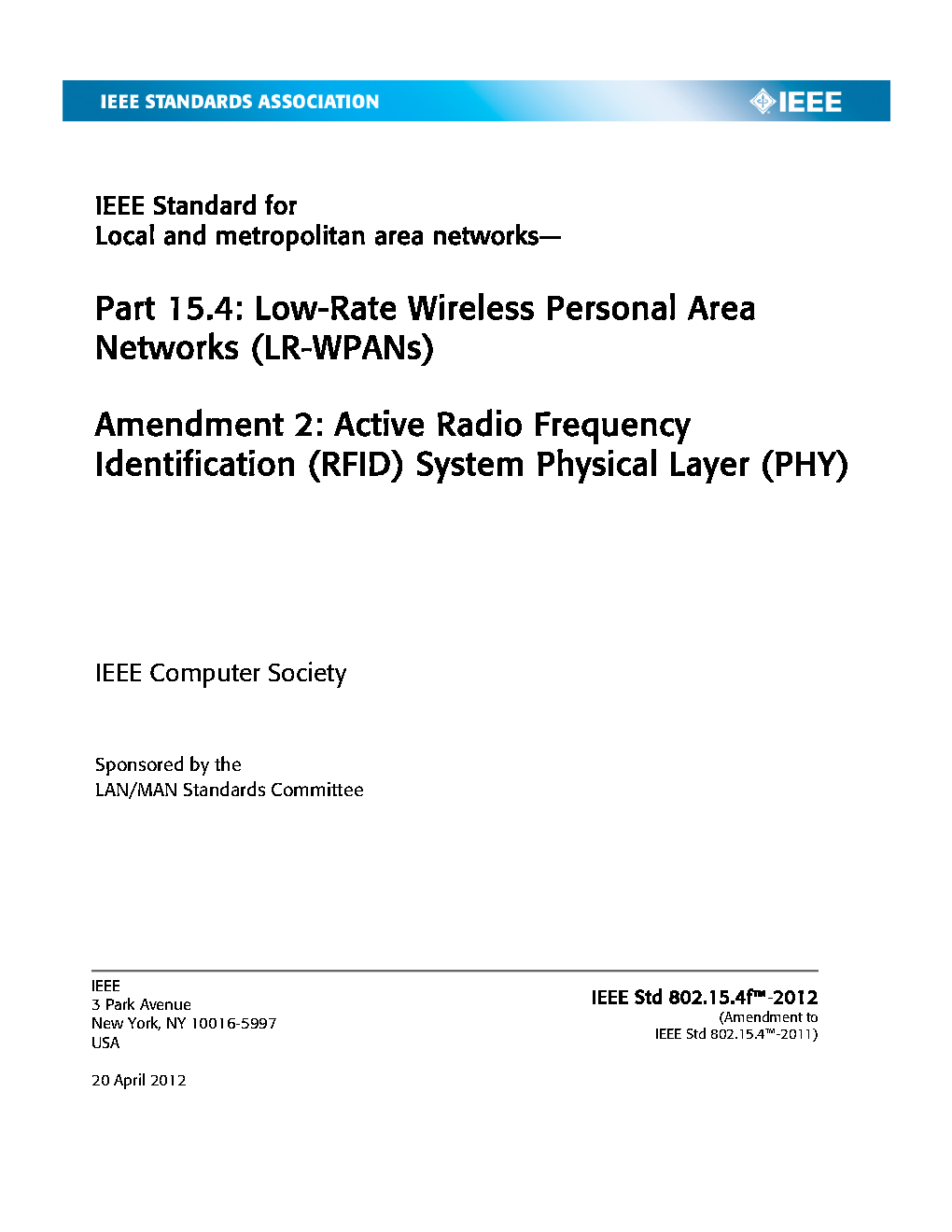
IEEE 802.15.4f:2012
IEEE Standard for Local and metropolitan area networks-- Part 15.4: Low-Rate Wireless Personal Area Networks (LR-WPANs) Amendment 2: Active Radio Frequency Identification (RFID) System Physical Layer (PHY)

Summary
Amendment Standard - Superseded.
This amendment provides two PHYs (MSK and LRP UWB) that can be used in a wide range of applications requiring various combinations of low cost, low energy consumption, multiyear battery life, reliable communications, precision location, and reader options. This PHY standard supports the performance and flexibility needed for future mass deployments of highly populated autonomous active RFID systems anywhere in the world.
Change the first item of the dashed list as follows:
-- Devices operating in the license-free 433.05 MHz to 434.79 MHz, 868 MHz to 868.6 MHz, 902 MHz to 928 MHz, and 2400 MHz to 2483.5 MHz, and 6289.6 MHz to 9185.6 MHz bands
Change the second and third paragraphs as follows:
In addition, one of the alternate PHYs provides precision ranging capability capabilities that is are accurate to one meter.
Multiple PHYs are defined to support a variety of frequency bands including
-- 433.05 MHz to 434.79 MHz (worldwide, varies by region)
-- 868 MHz to 868.6 MHz
-- 902 MHz to 928 MHz
-- 2400 MHz to 2483.5 MHz
-- 6289.6 MHz to 9185.6 MHz
-- 314 MHz to 316 MHz, 430 MHz to 434 MHz, and 779 MHz to 787 MHz band for LR-WPAN systems in China
-- 950 MHz to 956 MHz in Japan
This amendment provides two PHYs (MSK and LRP UWB) that can be used in a wide range of applications requiring various combinations of low cost, low energy consumption, multiyear battery life, reliable communications, precision location, and reader options. This PHY standard supports the performance and flexibility needed for future mass deployments of highly populated autonomous active RFID systems anywhere in the world.
Change the first item of the dashed list as follows:
-- Devices operating in the license-free 433.05 MHz to 434.79 MHz, 868 MHz to 868.6 MHz, 902 MHz to 928 MHz, and 2400 MHz to 2483.5 MHz, and 6289.6 MHz to 9185.6 MHz bands
Change the second and third paragraphs as follows:
In addition, one of the alternate PHYs provides precision ranging capability capabilities that is are accurate to one meter.
Multiple PHYs are defined to support a variety of frequency bands including
-- 433.05 MHz to 434.79 MHz (worldwide, varies by region)
-- 868 MHz to 868.6 MHz
-- 902 MHz to 928 MHz
-- 2400 MHz to 2483.5 MHz
-- 6289.6 MHz to 9185.6 MHz
-- 314 MHz to 316 MHz, 430 MHz to 434 MHz, and 779 MHz to 787 MHz band for LR-WPAN systems in China
-- 950 MHz to 956 MHz in Japan
Notes
Superseded
Technical characteristics
| Publisher | Institute of Electrical and Electronics Engineers (IEEE) |
| Publication Date | 04/20/2012 |
| Edition | |
| Page Count | 72 |
| EAN | --- |
| ISBN | --- |
| Weight (in grams) | --- |
| Brochures |

|
Amendments modifies
Previous versions
12/12/2024
Active
Most Recent
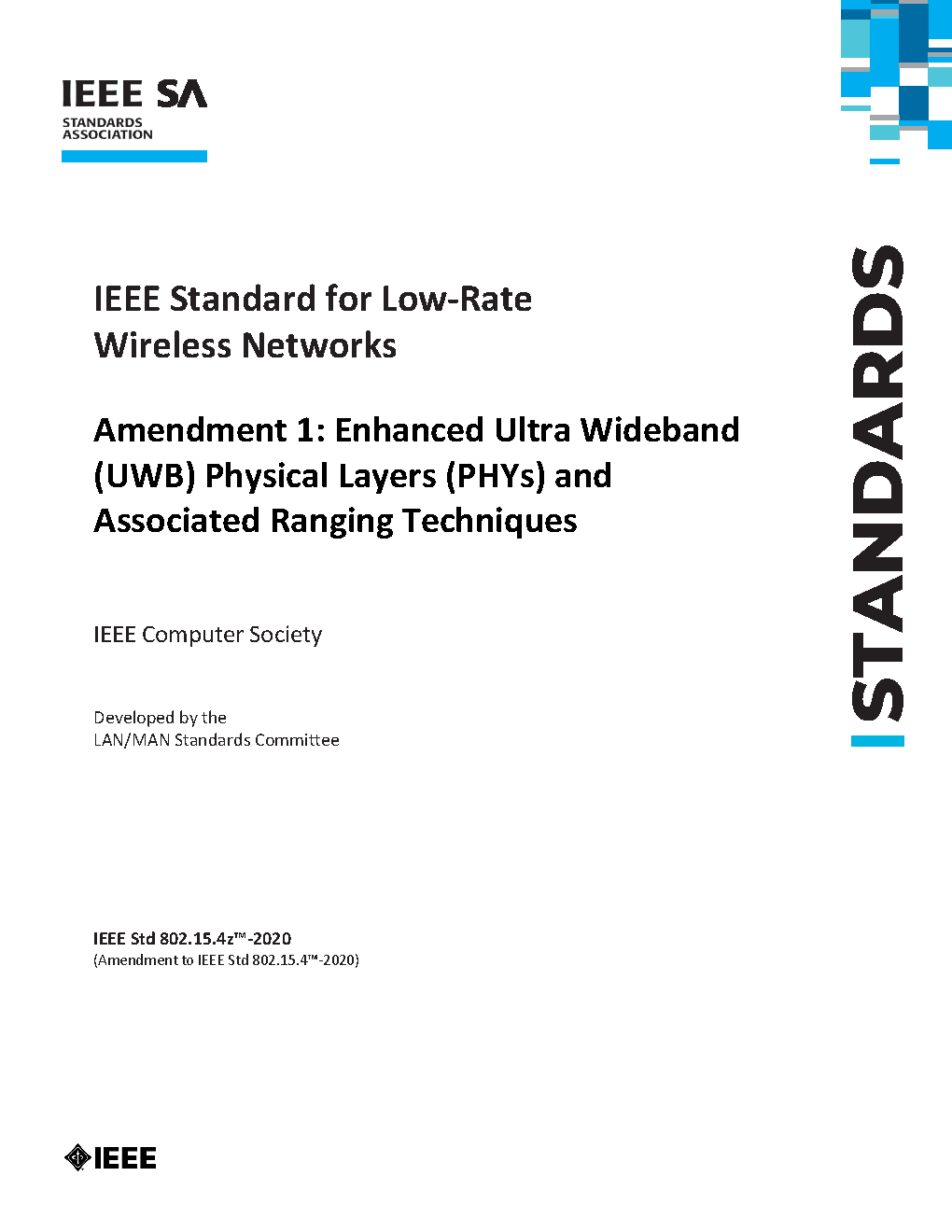
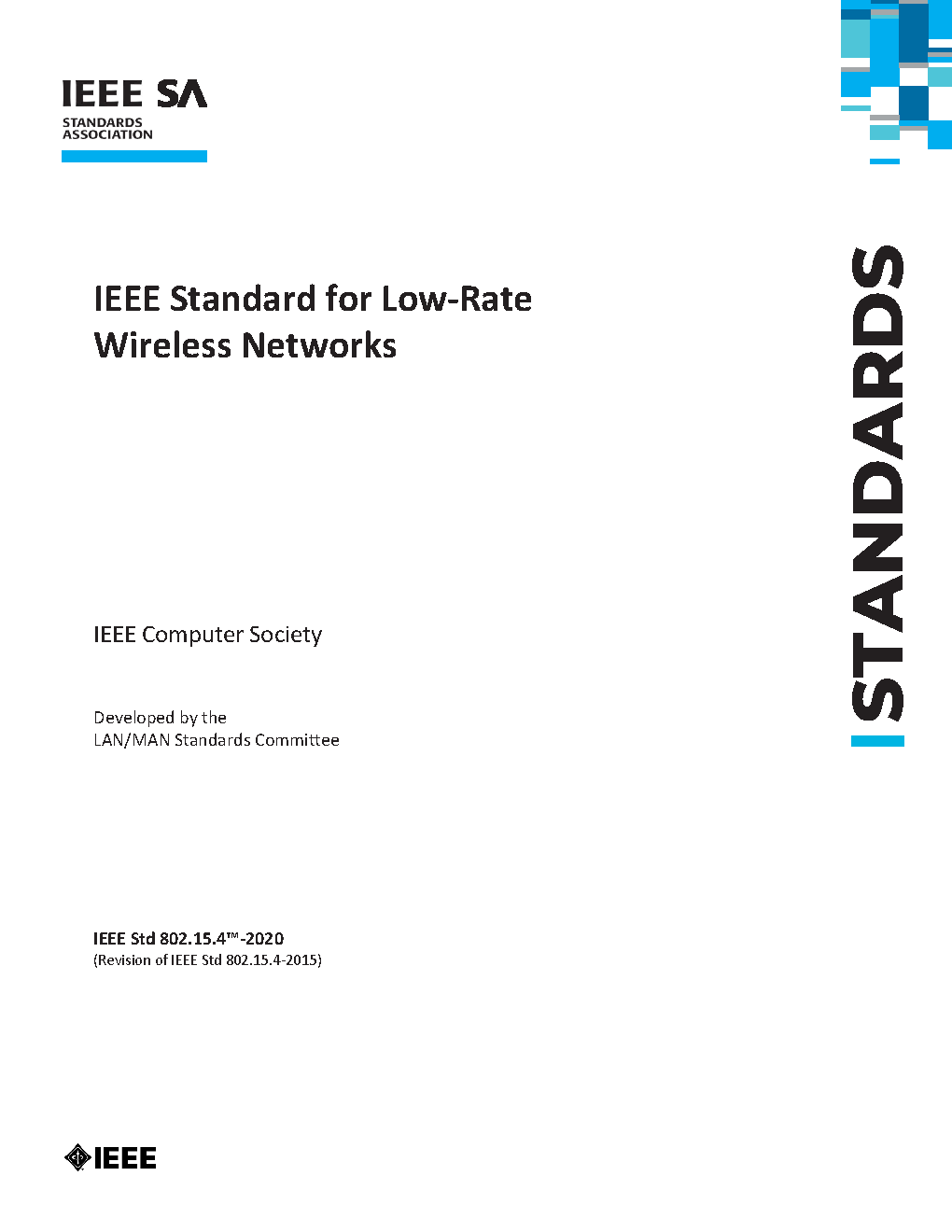
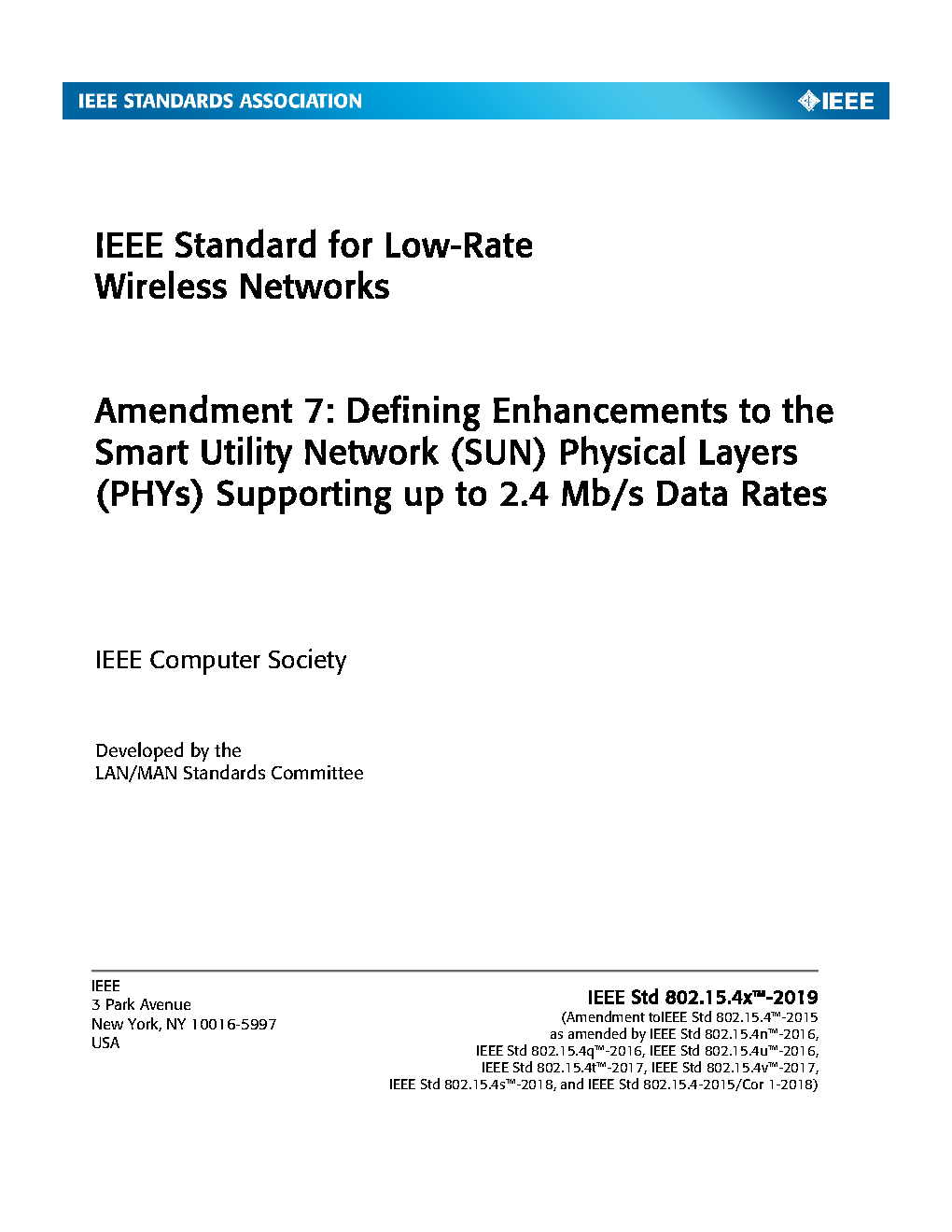
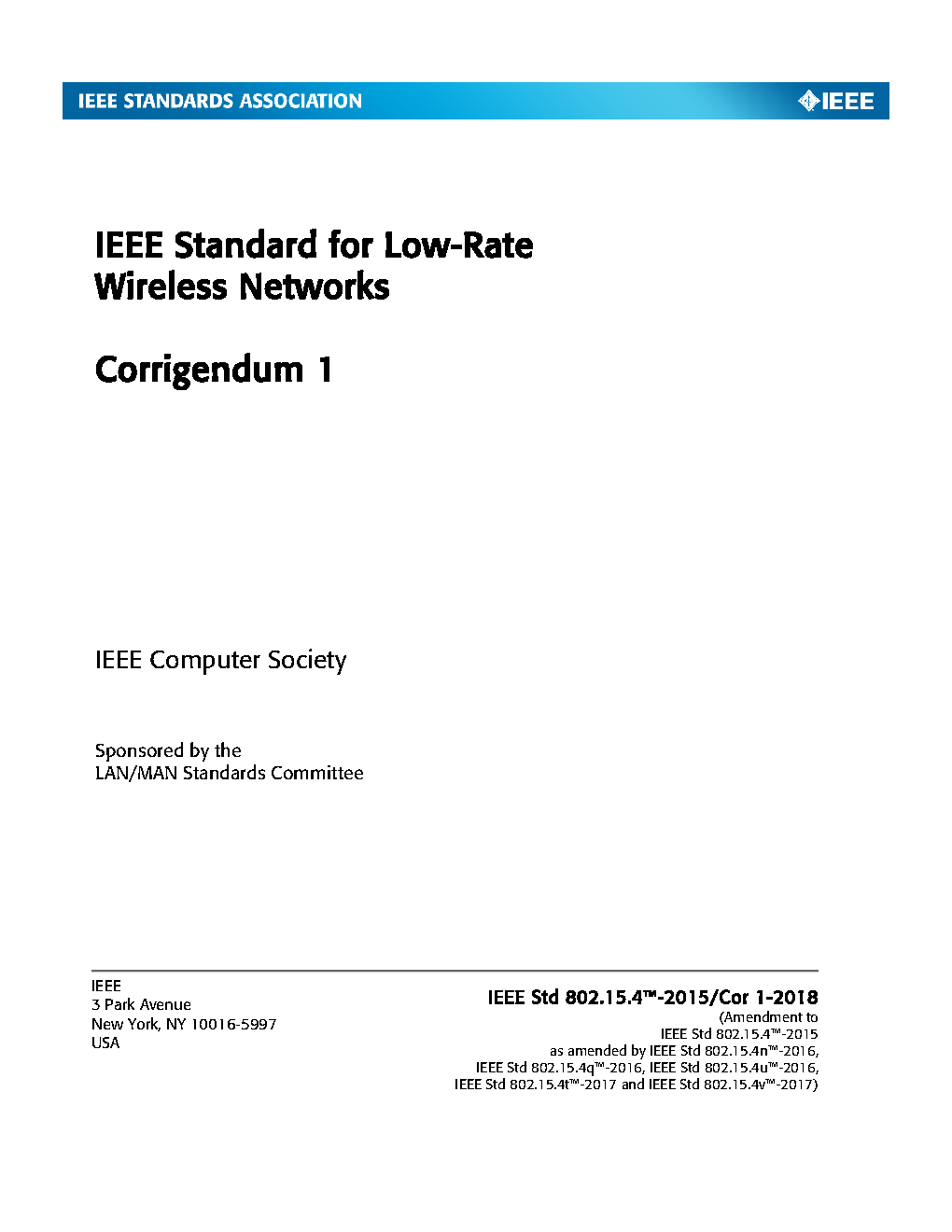
09/07/2018
Superseded
Historical
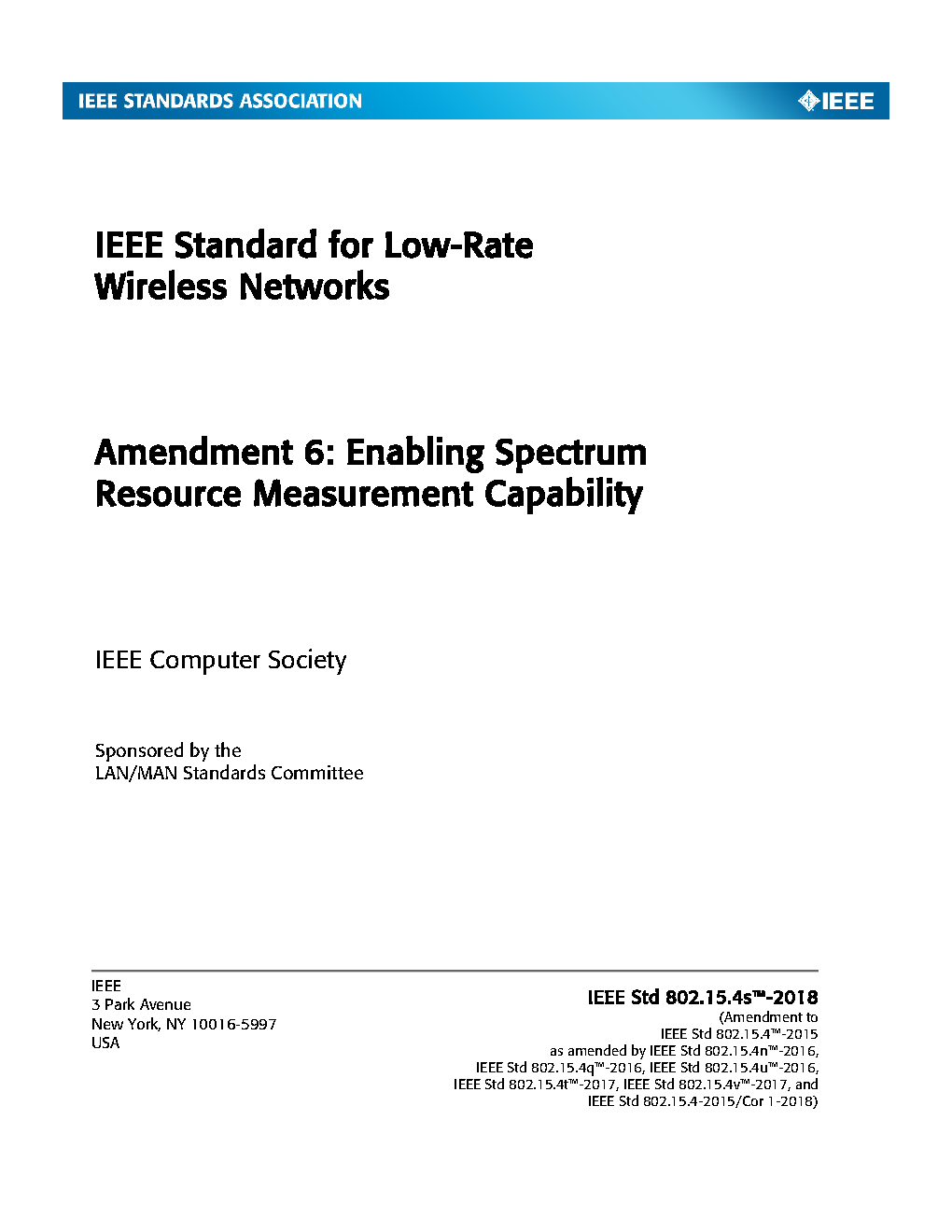
27/06/2018
Superseded
Historical
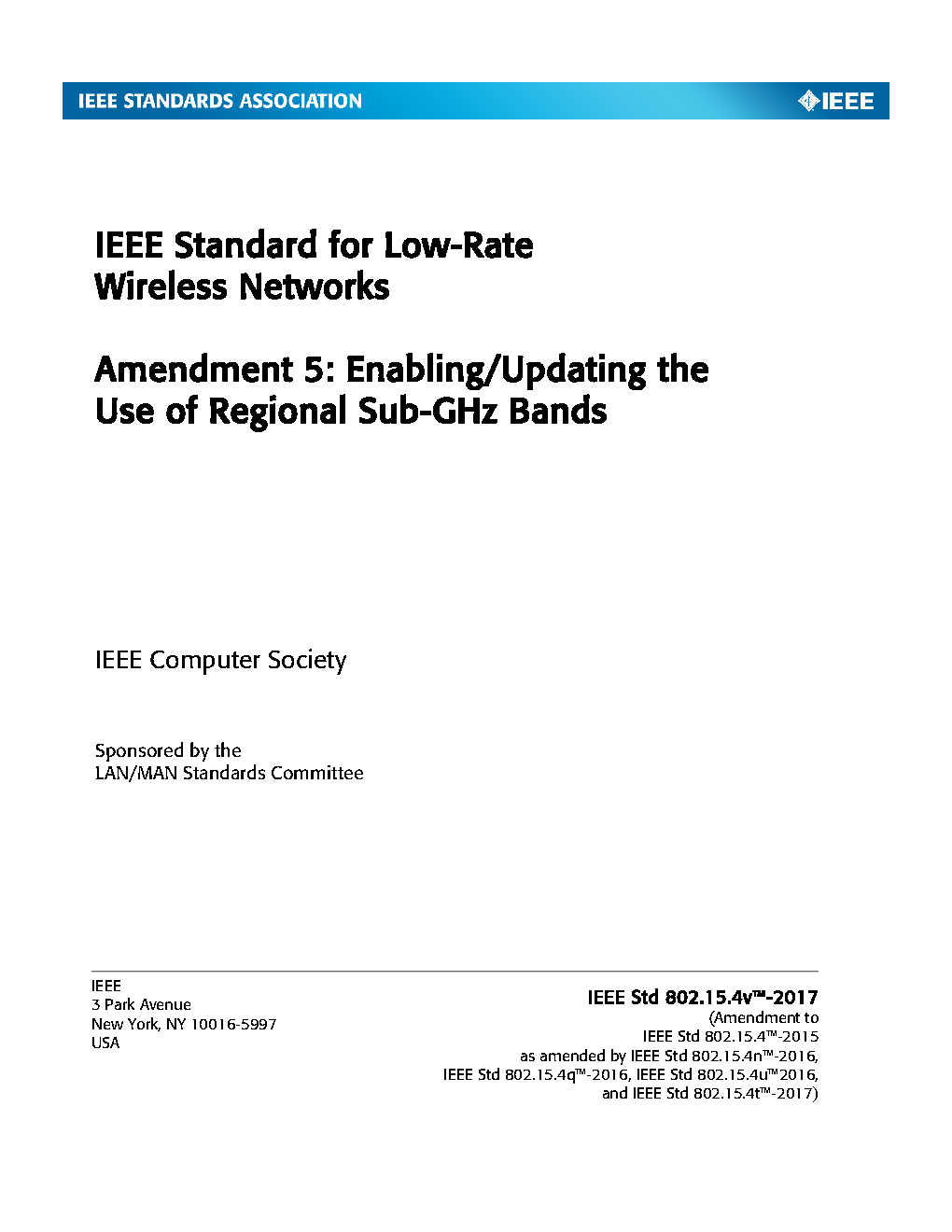
30/06/2017
Superseded
Historical
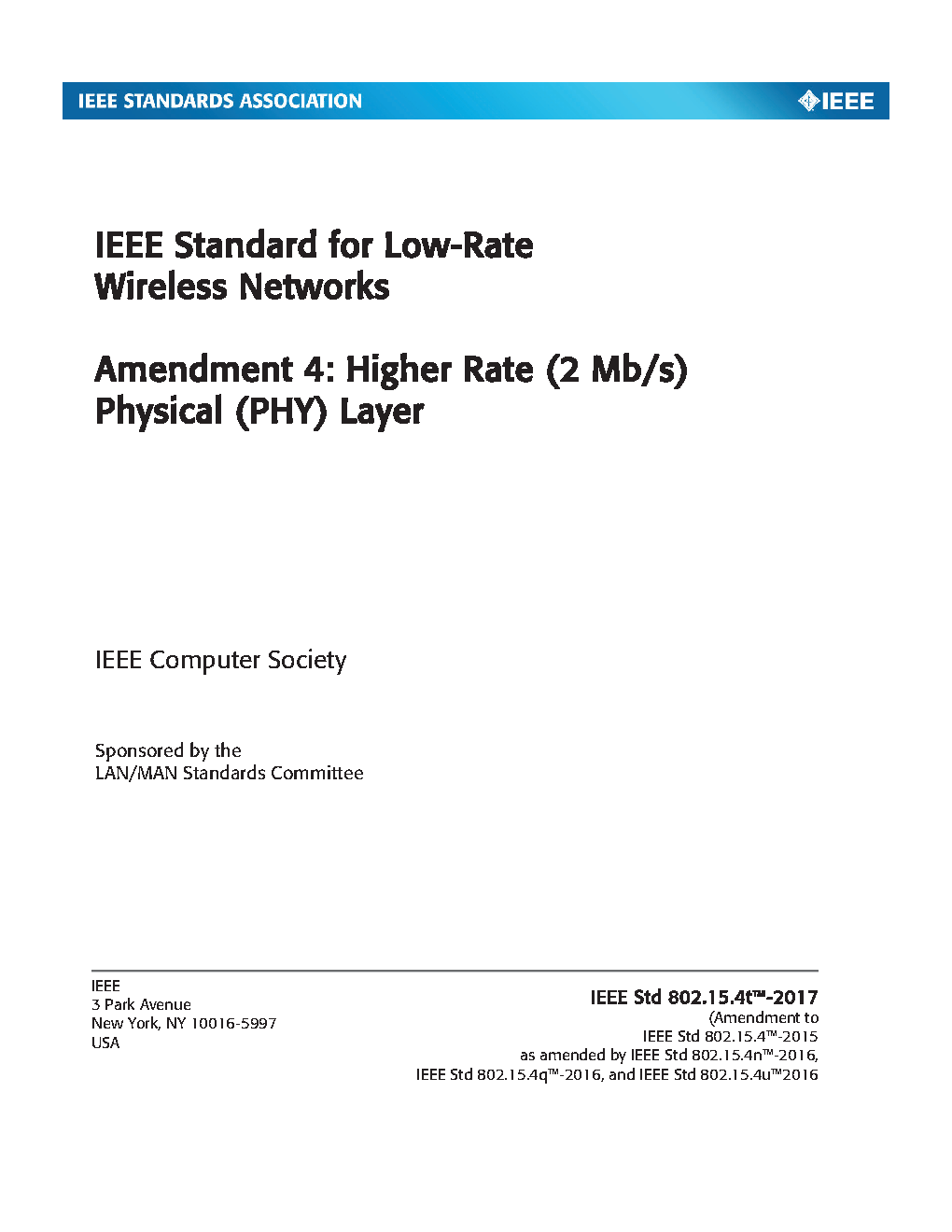
14/04/2017
Superseded
Historical
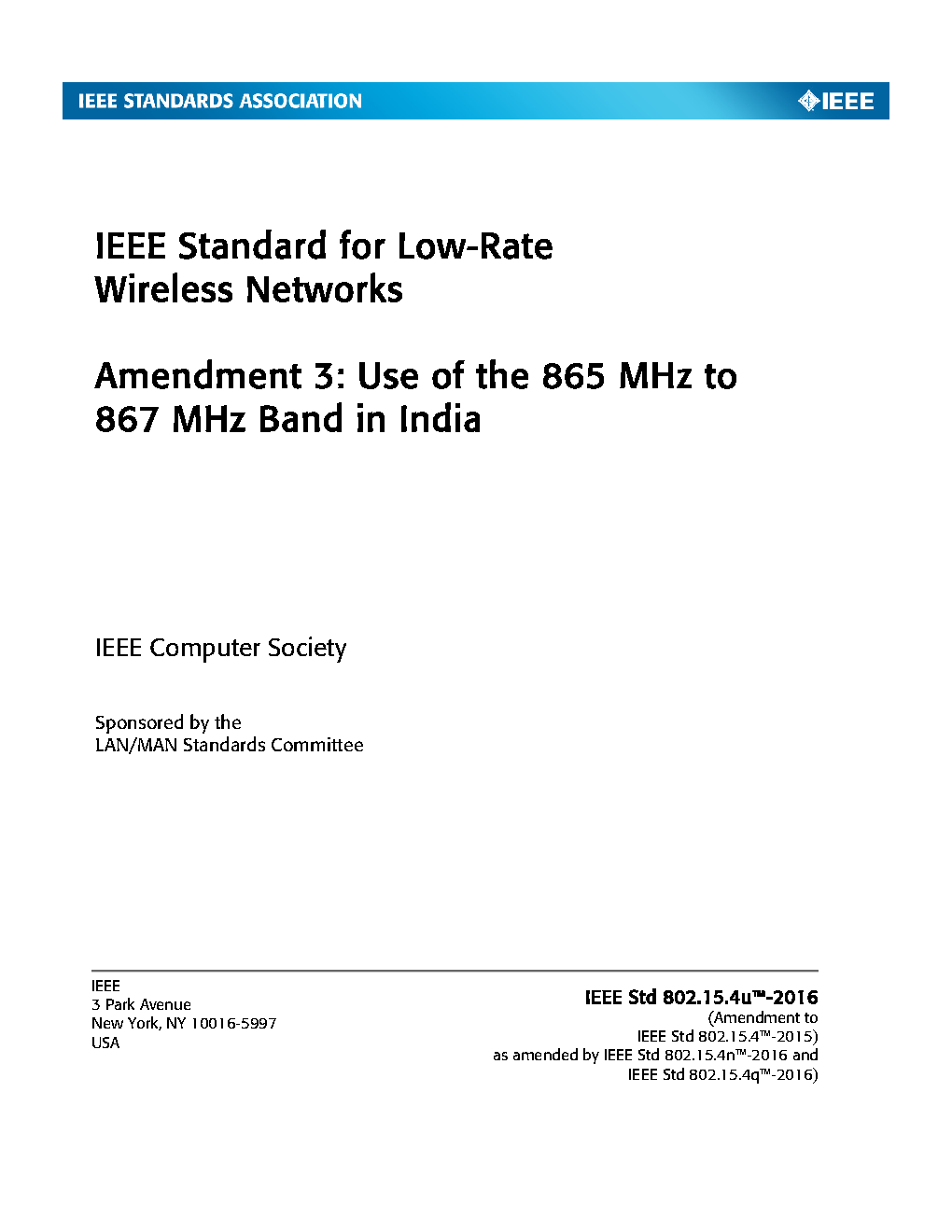
10/02/2017
Superseded
Historical
29/04/2016
Superseded
Historical
29/04/2016
Superseded
Historical
27/02/2013
Superseded
Historical
17/04/2009
Superseded
Historical
01/10/2003
Superseded
Historical