
Superseded
Standard amendment
Historical
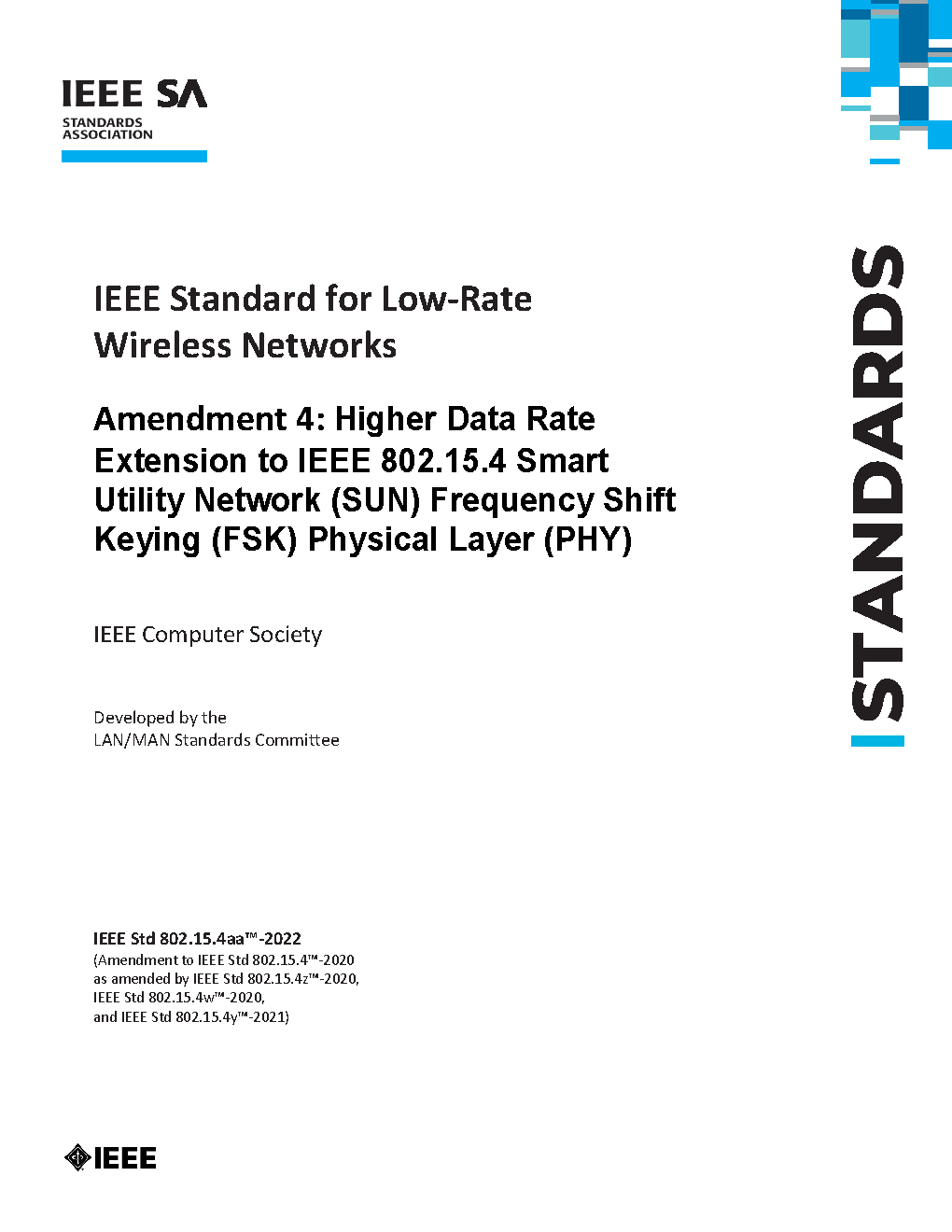
IEEE 802.15.4aa:2022
IEEE Standard for Low-Rate Wireless Networks Amendment 4: Higher Data Rate Extension to IEEE 802.15.4 Smart Utility Network (SUN) Frequency Shift Keying (FSK) Physical Layer (PHY)

Summary
Amendment Standard - Active.
This amendment defines a data rate extension of SUN FSK PHY to IEEE Std 802.15.4-2020. It adds data rate extensions for the SUN FSK modulation and channel parameters. These extensions focus on the Japanese frequency band. (The PDF of this standard is available at no cost via the IEEE GET program at https://ieeexplore.ieee.org/browse/standards/get-program/page/series?id=68)
This amendment defines a data rate extension of SUN FSK PHY to IEEE Std 802.15.4-2020. It adds data rate extensions for the SUN FSK modulation and channel parameters. These extensions focus on the Japanese frequency band, 920 to 928 MHz.
The standard provides for ultra low complexity, cost, and power consumption, along with low data rate wireless connectivity among inexpensive devices, especially targeting the communications requirements of what is now commonly referred to as the Internet of Things. In addition, some of the alternate PHYs provide precision ranging capability that is accurate to one meter. Multiple PHYs are defined to support a variety of frequency bands.
This amendment defines a data rate extension of SUN FSK PHY to IEEE Std 802.15.4-2020. It adds data rate extensions for the SUN FSK modulation and channel parameters. These extensions focus on the Japanese frequency band. (The PDF of this standard is available at no cost via the IEEE GET program at https://ieeexplore.ieee.org/browse/standards/get-program/page/series?id=68)
This amendment defines a data rate extension of SUN FSK PHY to IEEE Std 802.15.4-2020. It adds data rate extensions for the SUN FSK modulation and channel parameters. These extensions focus on the Japanese frequency band, 920 to 928 MHz.
The standard provides for ultra low complexity, cost, and power consumption, along with low data rate wireless connectivity among inexpensive devices, especially targeting the communications requirements of what is now commonly referred to as the Internet of Things. In addition, some of the alternate PHYs provide precision ranging capability that is accurate to one meter. Multiple PHYs are defined to support a variety of frequency bands.
Notes
Active
Technical characteristics
| Publisher | Institute of Electrical and Electronics Engineers (IEEE) |
| Publication Date | 04/07/2022 |
| Edition | |
| Page Count | 21 |
| EAN | --- |
| ISBN | --- |
| Weight (in grams) | --- |
| Brochures |

|
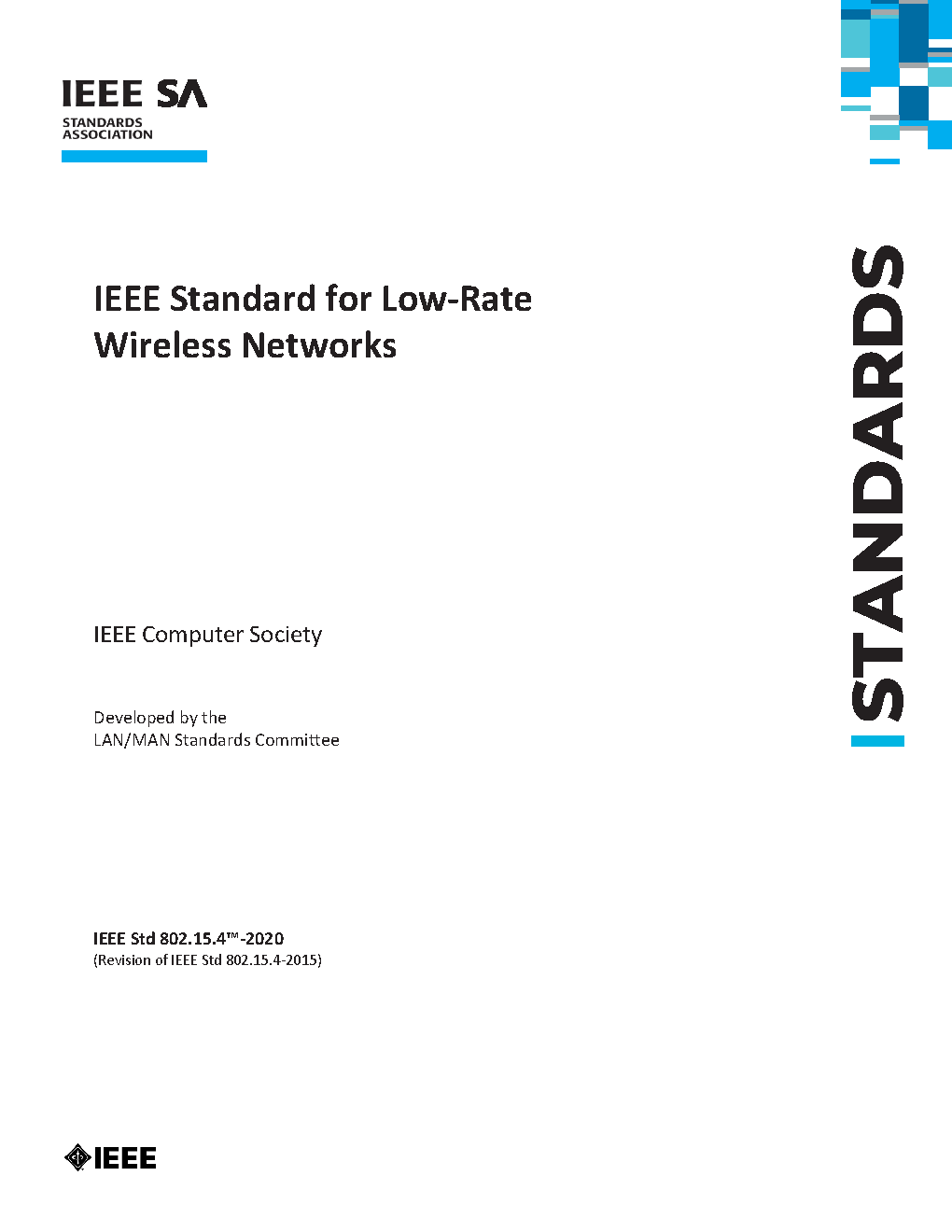
Amendments modifies
Previous versions
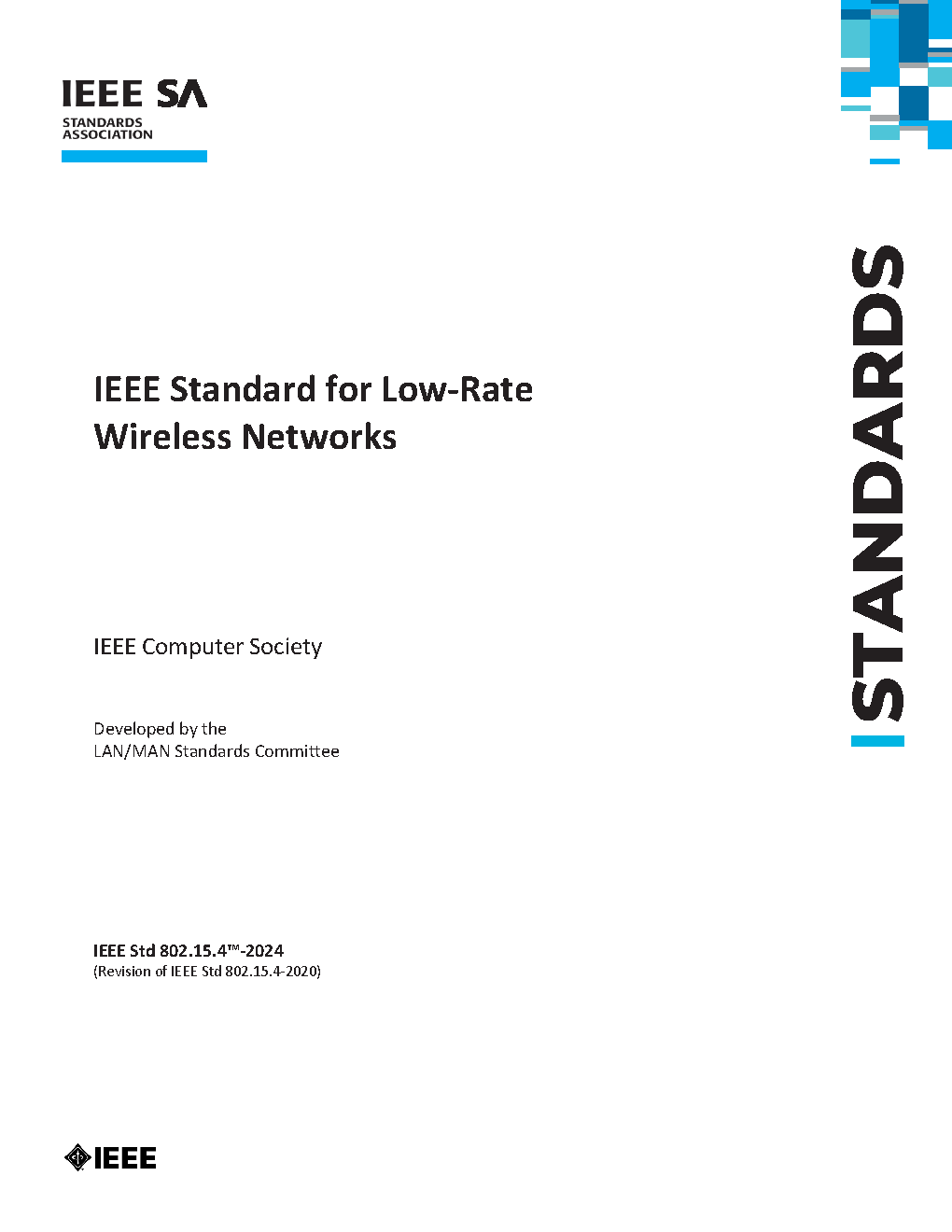
12/12/2024
Active
Most Recent
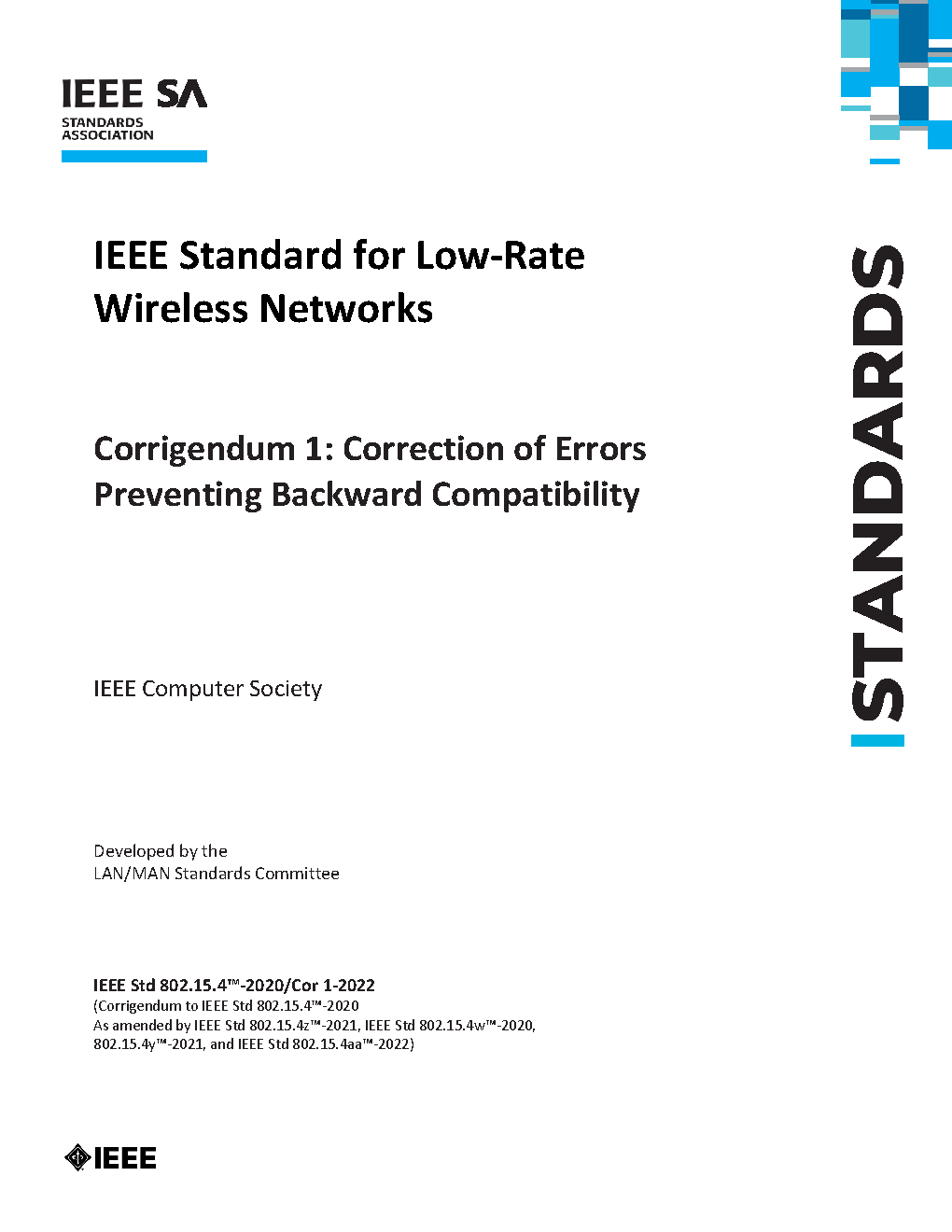
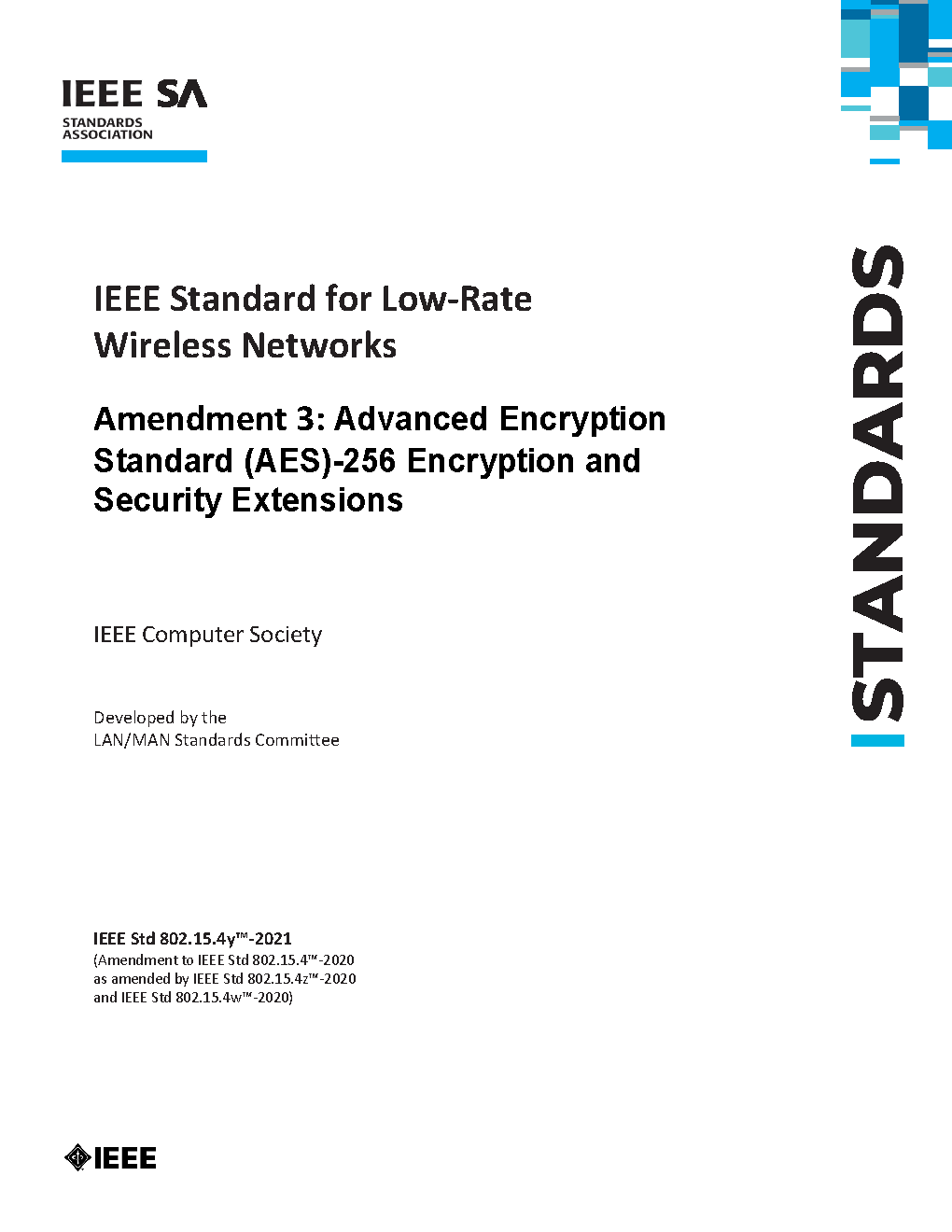
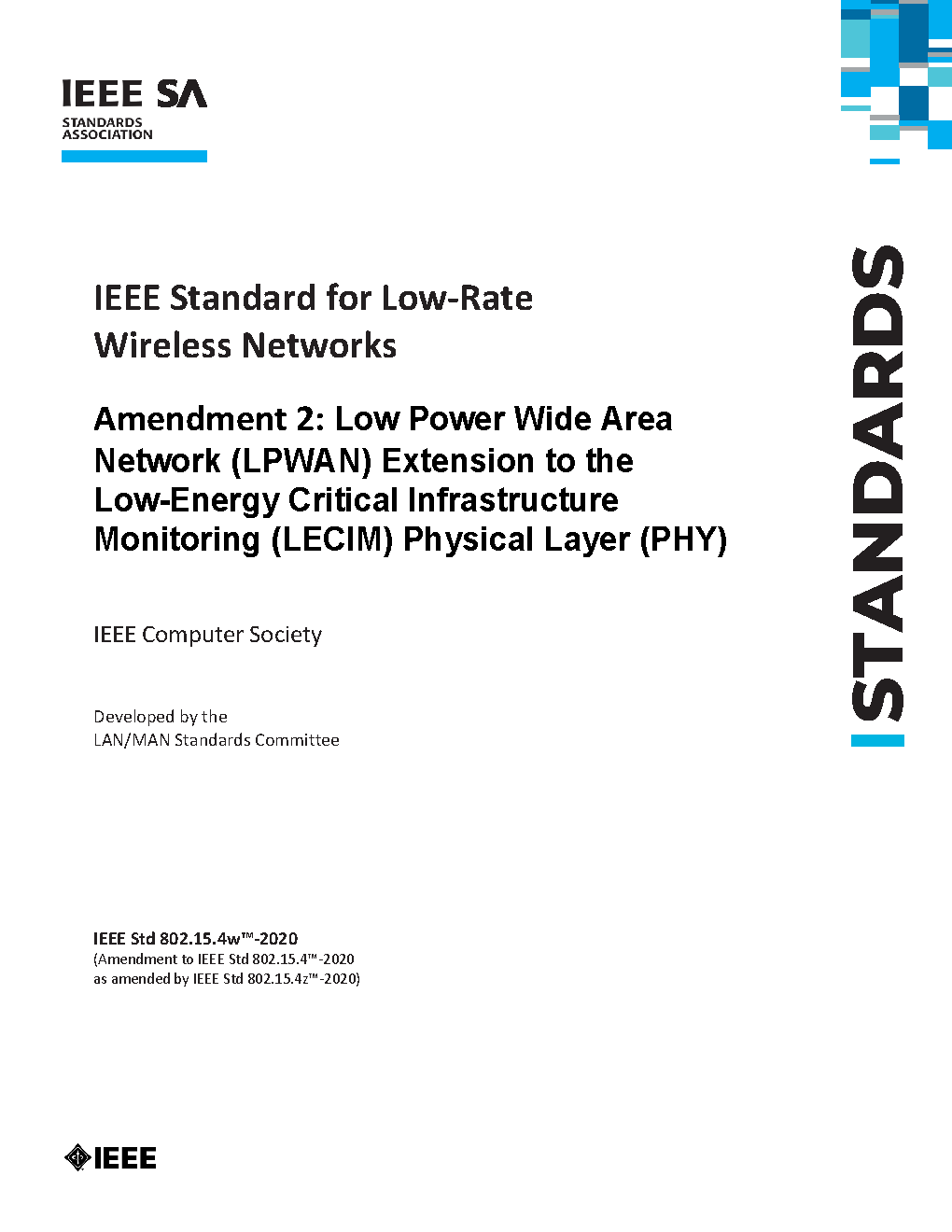
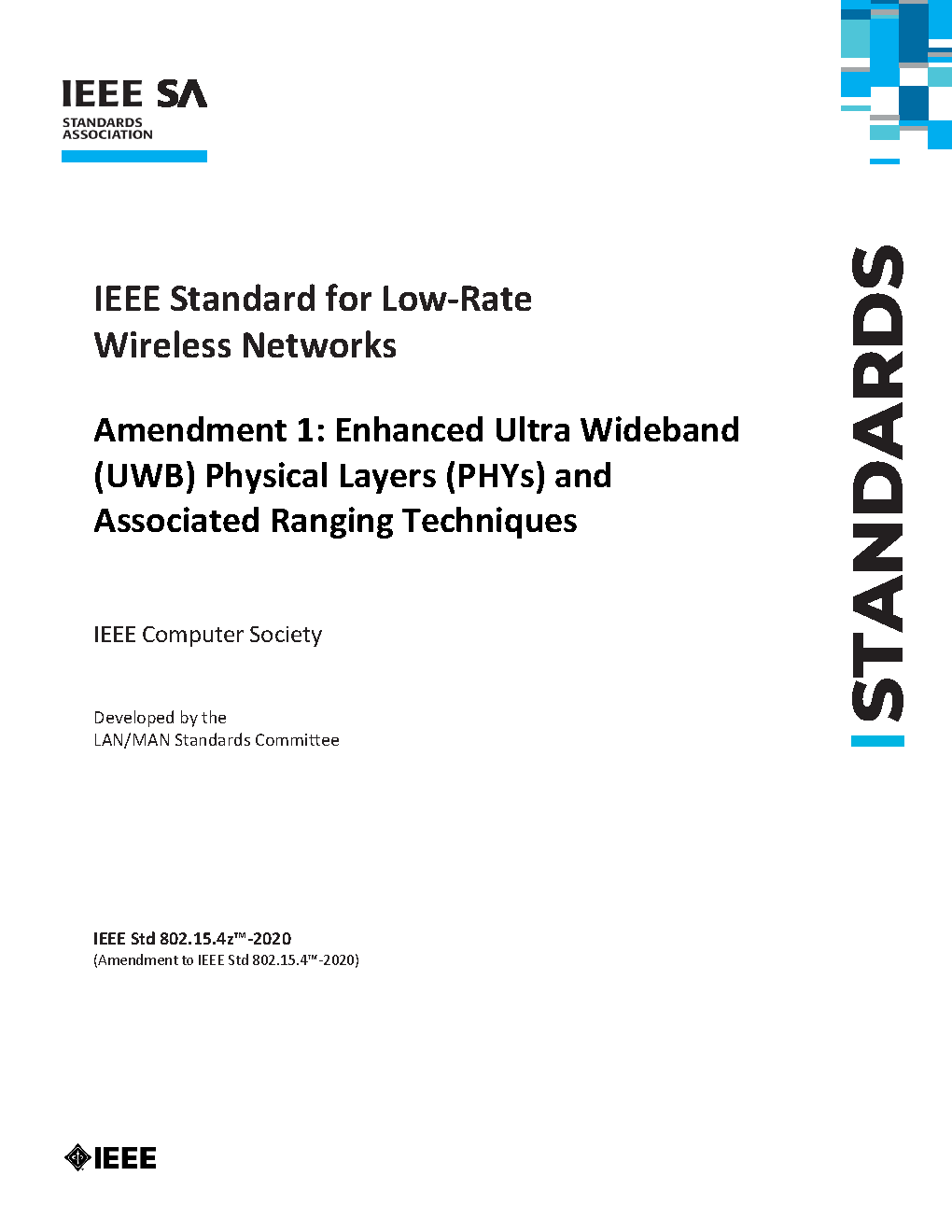
09/07/2018
Superseded
Historical
27/06/2018
Superseded
Historical
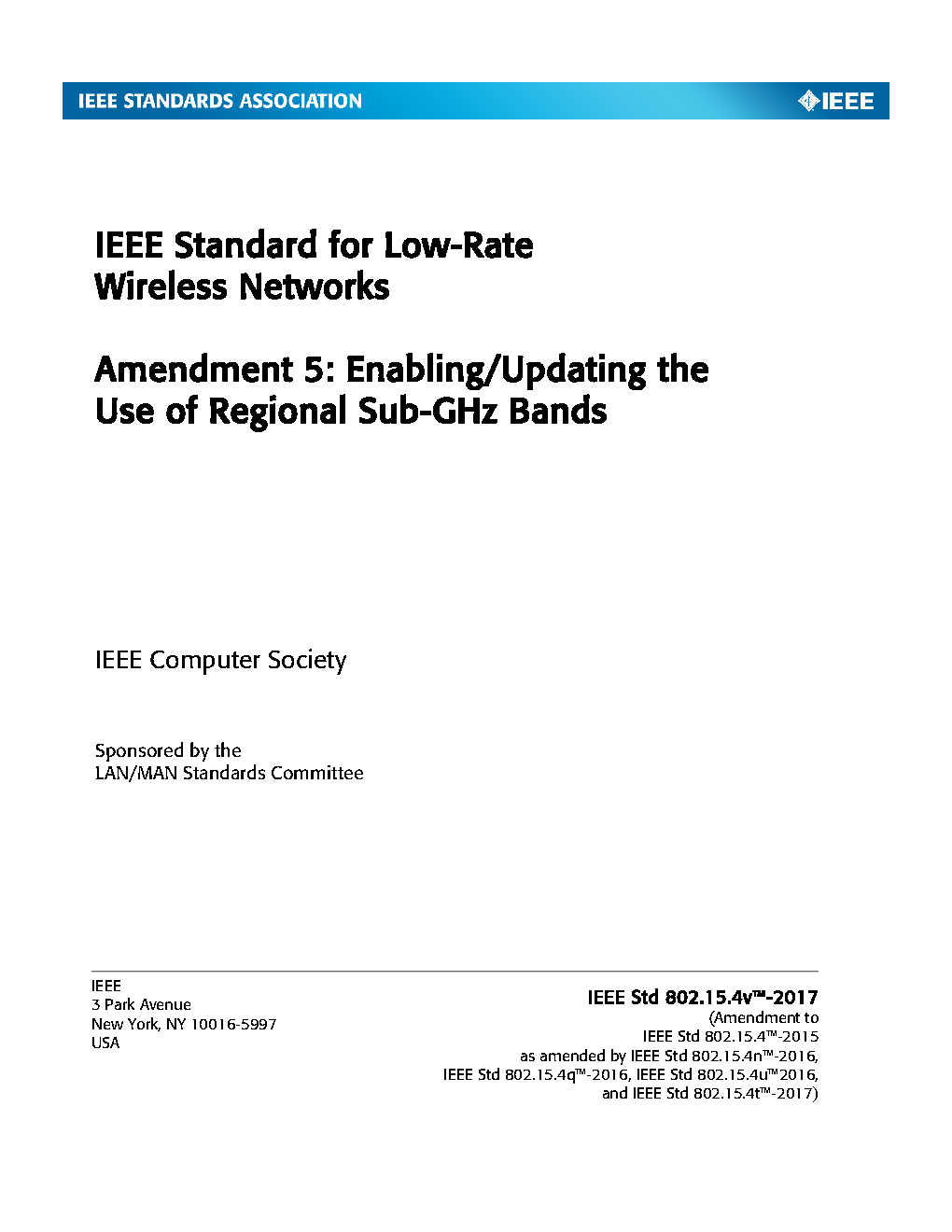
30/06/2017
Superseded
Historical
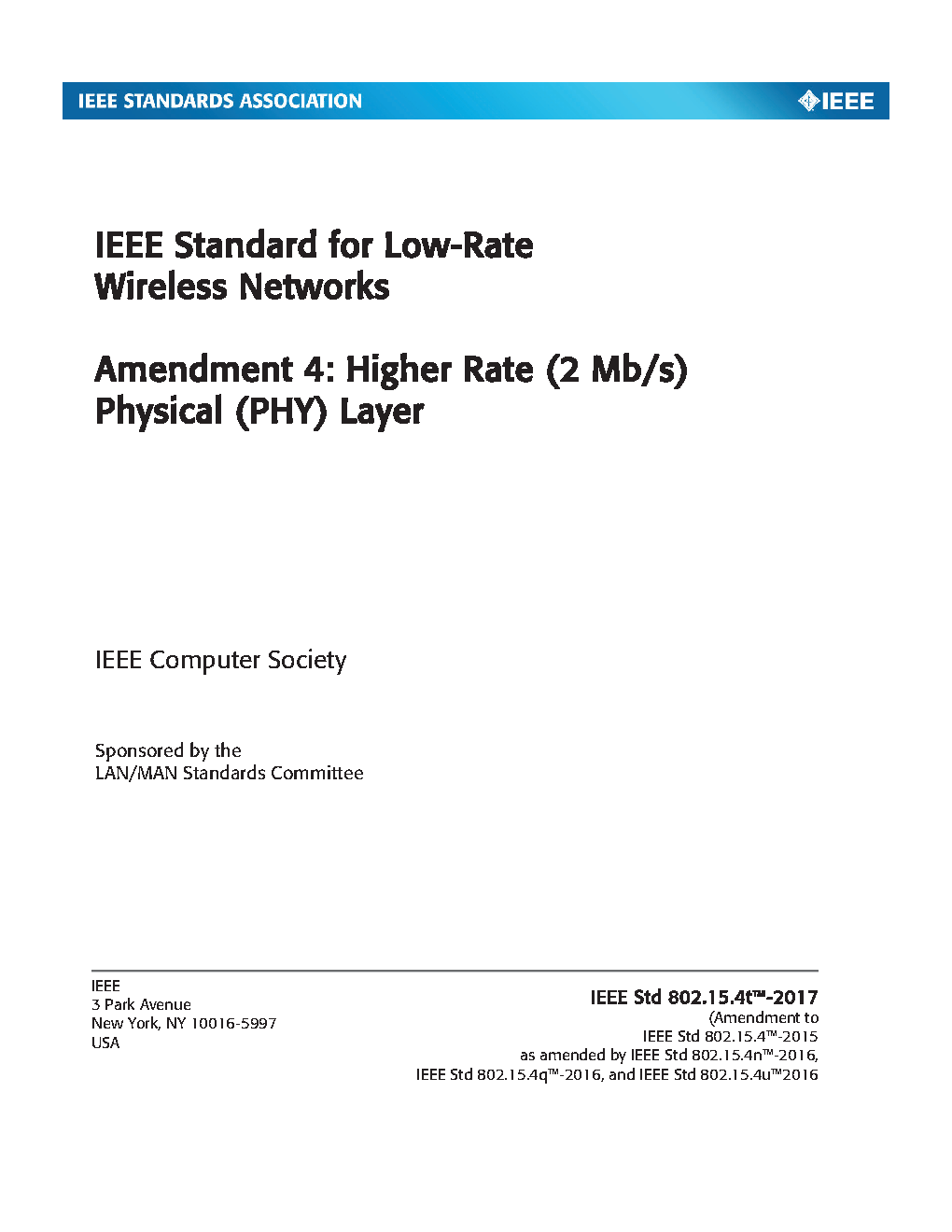
14/04/2017
Superseded
Historical
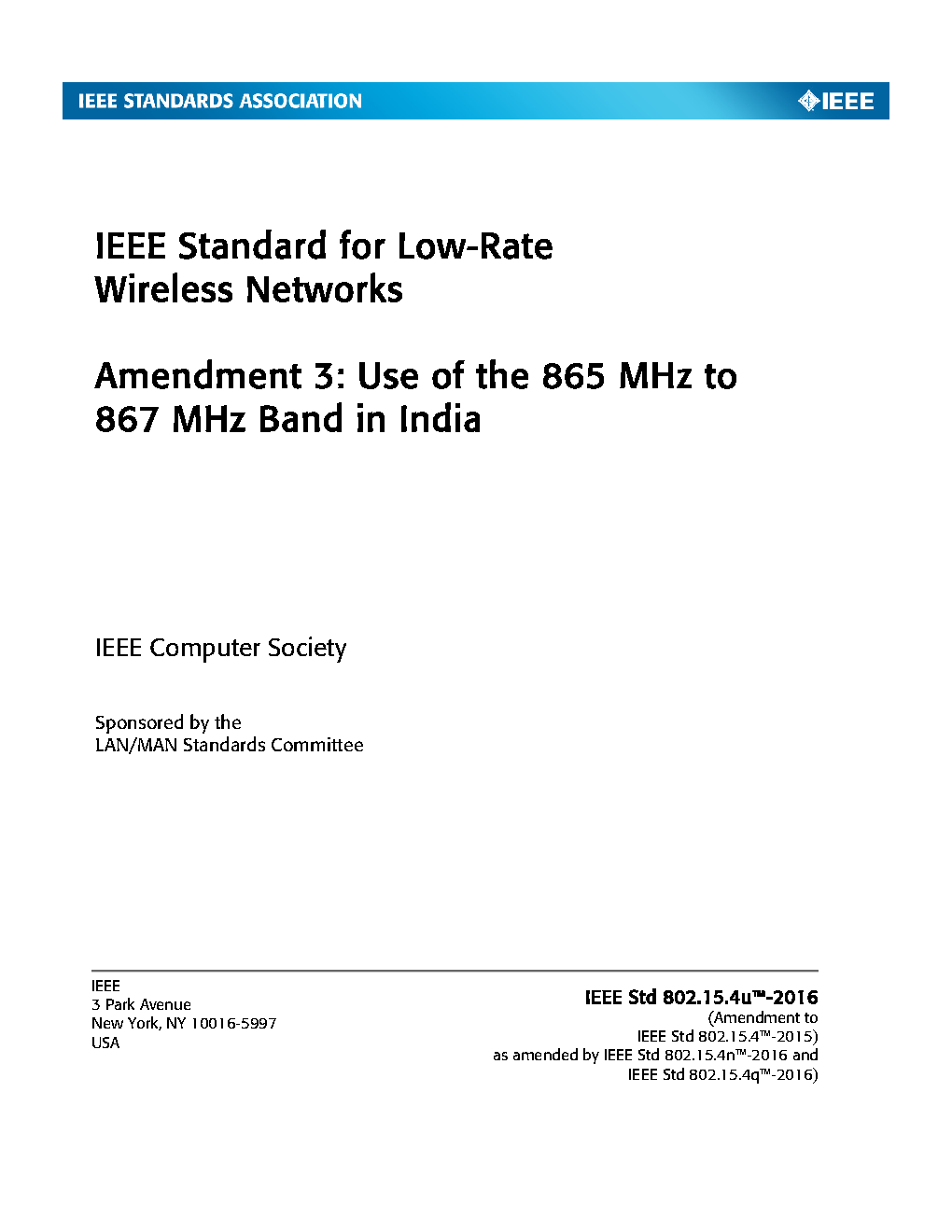
10/02/2017
Superseded
Historical
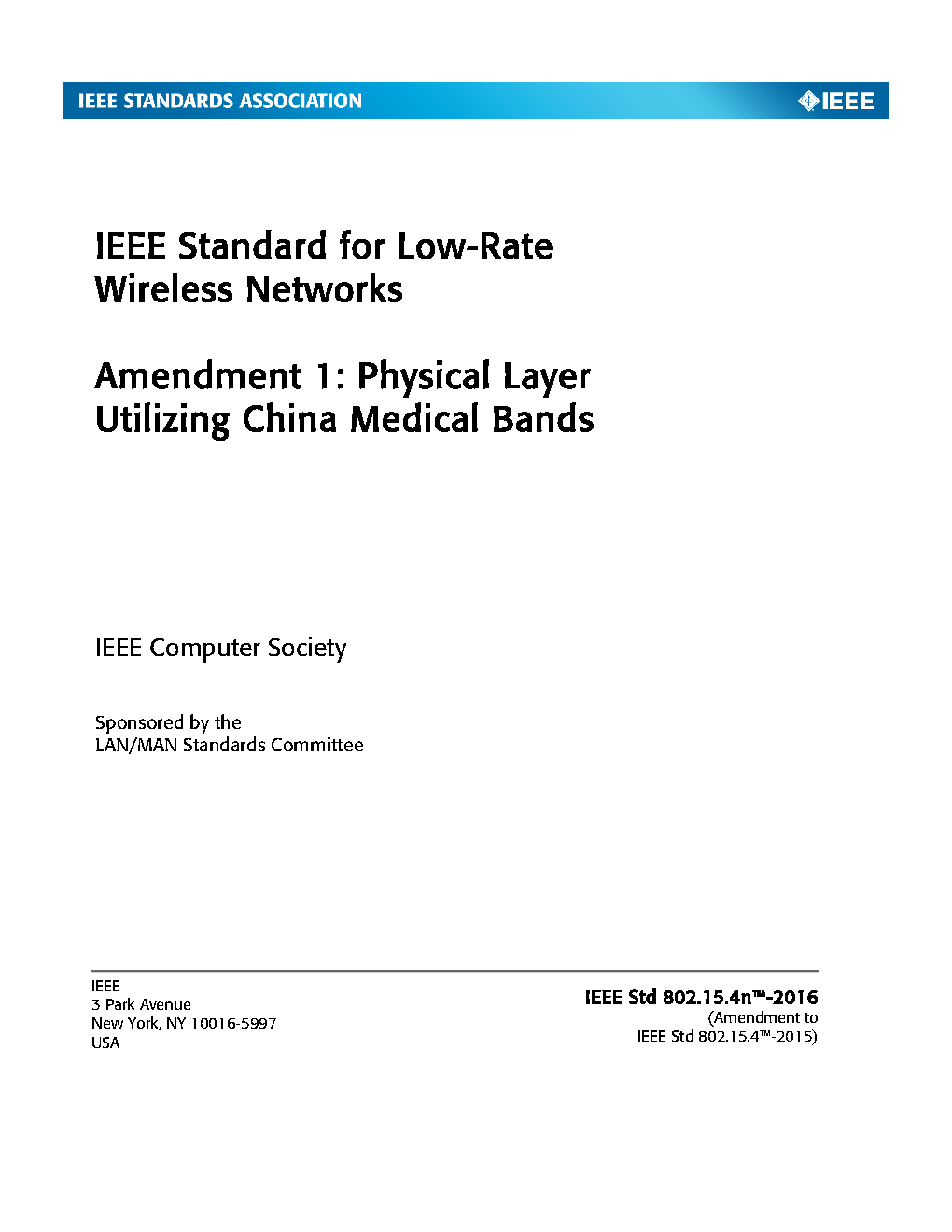
29/04/2016
Superseded
Historical
29/04/2016
Superseded
Historical
27/02/2013
Superseded
Historical
17/04/2009
Superseded
Historical
01/10/2003
Superseded
Historical