
Superseded
Standard
Historical
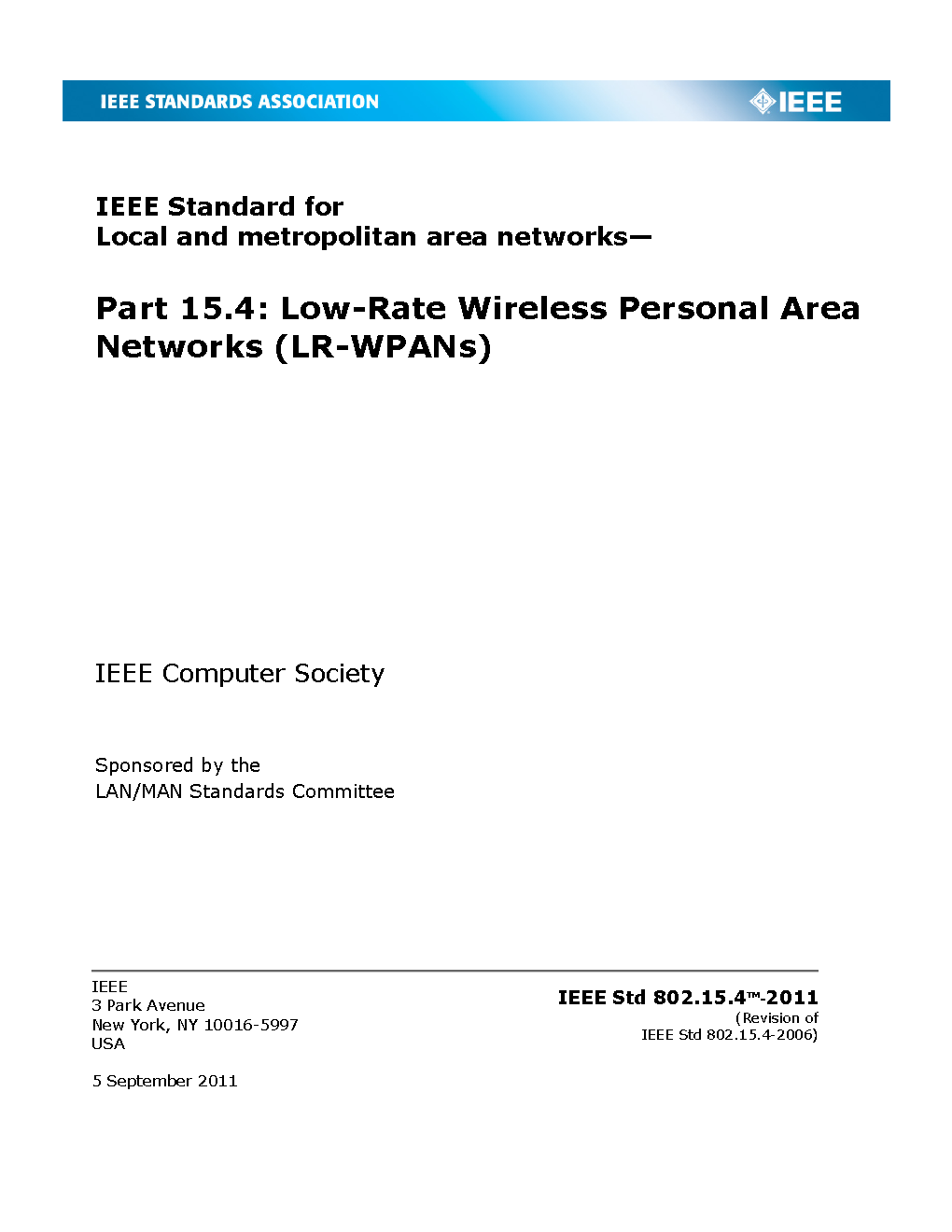
IEEE 802.15.4:2011
IEEE Standard for Local and metropolitan area networks--Part 15.4: Low-Rate Wireless Personal Area Networks (LR-WPANs)

Summary
Revision Standard - Superseded.
The protocol and compatible interconnection for data communication devices using low-data-rate, low-power, and low-complexity short-range radio frequency (RF) transmissions in a wireless personal area network (WPAN) were defined in IEEE Std 802.15.4-2006. In this revision, the market applicability of IEEE Std 802.15.4 is extended, the ambiguities in the standard are removed, and the improvements learned from implementations of IEEE Std 802.15.4-2006 are included.
This standard defines the physical layer (PHY) and medium access control (MAC) sublayer specifications for low-data-rate wireless connectivity with fixed, portable, and moving devices with no battery or very limited battery consumption requirements typically operating in the personal operating space (POS) of 10 m.
Physical layers (PHYs) are defined for
-- Devices operating in the license-free 868-868.6 MHz, 902-928 MHz, and 2400-2483.5 MHz bands
-- Devices with precision ranging, extended range, and enhanced robustness and mobility
-- Devices operating according the Chinese regulations, Radio Management of P. R. of China doc. #6326360786867187500 or current document, for one or more of the 314-316 MHz, 430-434 MHz,
and 779-787 MHz frequency bands
-- Devices operating in the 950-956 MHz allocation in Japan and coexisting with passive tag systems in the band
The standard provides for ultra low complexity, ultra low cost, ultra low power consumption, and low data rate wireless connectivity among inexpensive devices. The raw data rate is high enough (250 kb/s) to satisfy a set of applications but is also scaleable down to the needs of sensor and automation needs (20 kb/s or below) for wireless communications.
In addition, one of the alternate PHYs provides precision ranging capability that is accurate to one meter.
Multiple PHYs are defined to support a variety of frequency bands including
-- 868-868.6 MHz
-- 902-928 MHz
-- 2400-2483.5 MHz
-- 314-316 MHz, 430-434 MHz, and 779-787 MHz band for LR-WPAN systems in China
-- 950-956 MHz in Japan
The protocol and compatible interconnection for data communication devices using low-data-rate, low-power, and low-complexity short-range radio frequency (RF) transmissions in a wireless personal area network (WPAN) were defined in IEEE Std 802.15.4-2006. In this revision, the market applicability of IEEE Std 802.15.4 is extended, the ambiguities in the standard are removed, and the improvements learned from implementations of IEEE Std 802.15.4-2006 are included.
This standard defines the physical layer (PHY) and medium access control (MAC) sublayer specifications for low-data-rate wireless connectivity with fixed, portable, and moving devices with no battery or very limited battery consumption requirements typically operating in the personal operating space (POS) of 10 m.
Physical layers (PHYs) are defined for
-- Devices operating in the license-free 868-868.6 MHz, 902-928 MHz, and 2400-2483.5 MHz bands
-- Devices with precision ranging, extended range, and enhanced robustness and mobility
-- Devices operating according the Chinese regulations, Radio Management of P. R. of China doc. #6326360786867187500 or current document, for one or more of the 314-316 MHz, 430-434 MHz,
and 779-787 MHz frequency bands
-- Devices operating in the 950-956 MHz allocation in Japan and coexisting with passive tag systems in the band
The standard provides for ultra low complexity, ultra low cost, ultra low power consumption, and low data rate wireless connectivity among inexpensive devices. The raw data rate is high enough (250 kb/s) to satisfy a set of applications but is also scaleable down to the needs of sensor and automation needs (20 kb/s or below) for wireless communications.
In addition, one of the alternate PHYs provides precision ranging capability that is accurate to one meter.
Multiple PHYs are defined to support a variety of frequency bands including
-- 868-868.6 MHz
-- 902-928 MHz
-- 2400-2483.5 MHz
-- 314-316 MHz, 430-434 MHz, and 779-787 MHz band for LR-WPAN systems in China
-- 950-956 MHz in Japan
Notes
Superseded
Technical characteristics
| Publisher | Institute of Electrical and Electronics Engineers (IEEE) |
| Publication Date | 09/05/2011 |
| Edition | |
| Page Count | 314 |
| EAN | --- |
| ISBN | --- |
| Weight (in grams) | --- |
| Brochures |

|
Amendments replaces
Previous versions
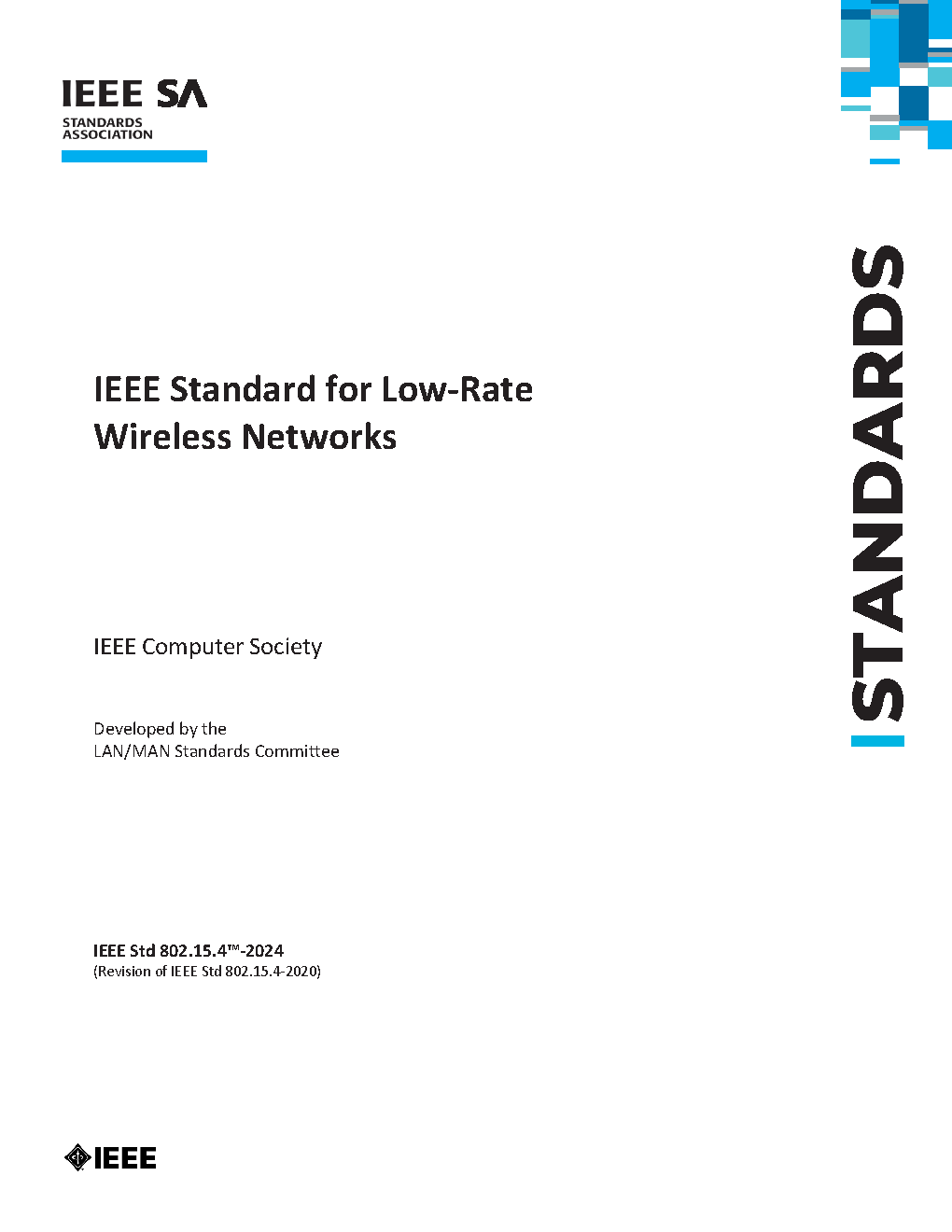
12/12/2024
Active
Most Recent
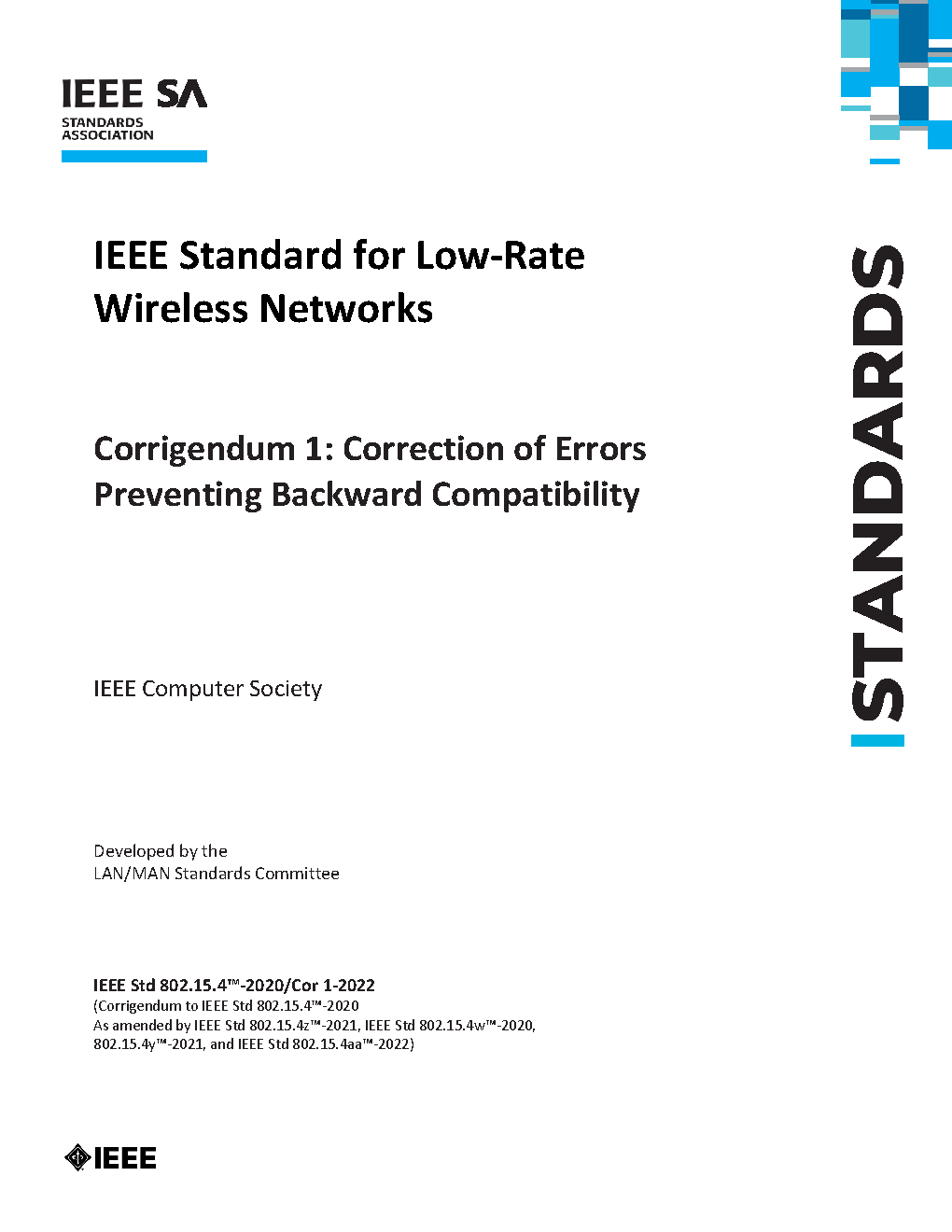
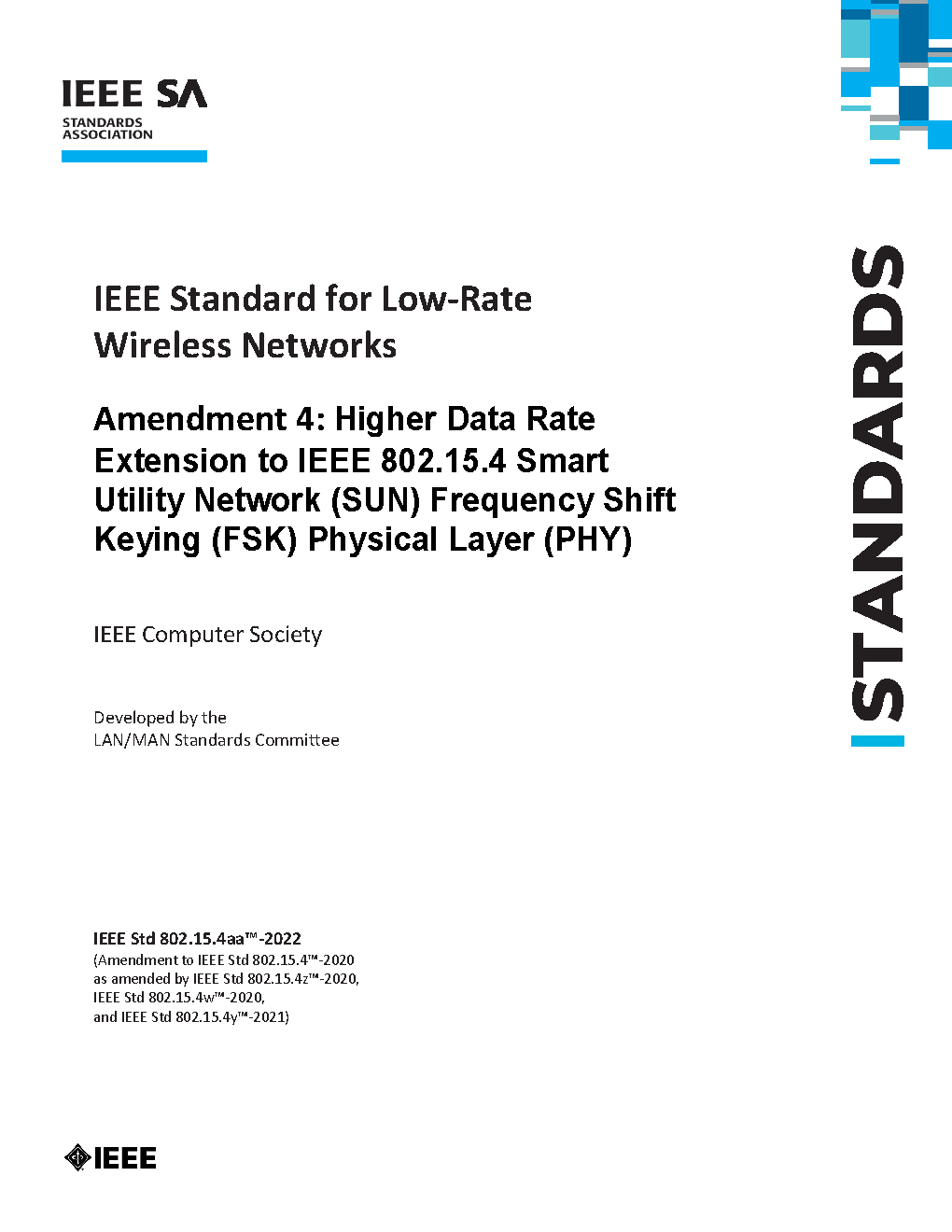
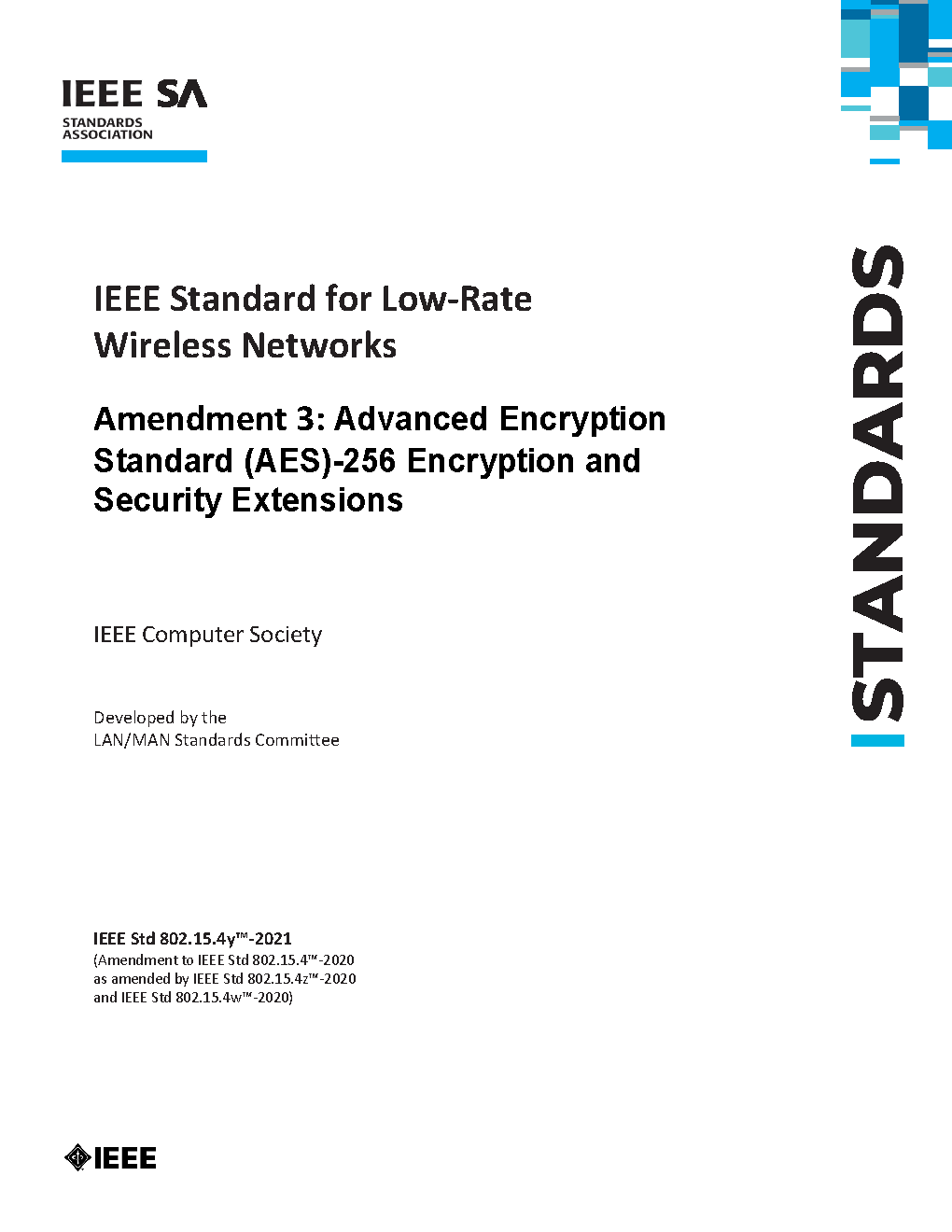
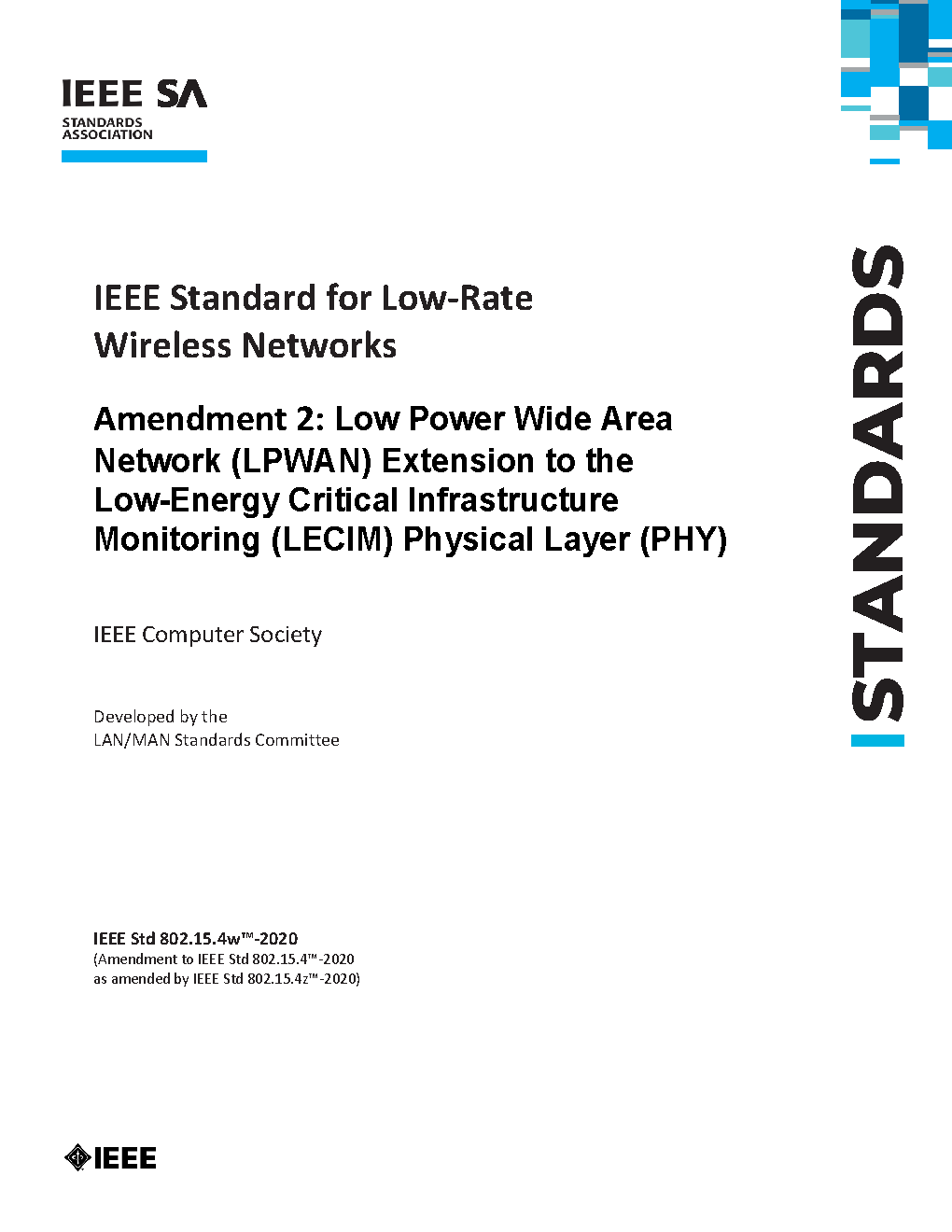
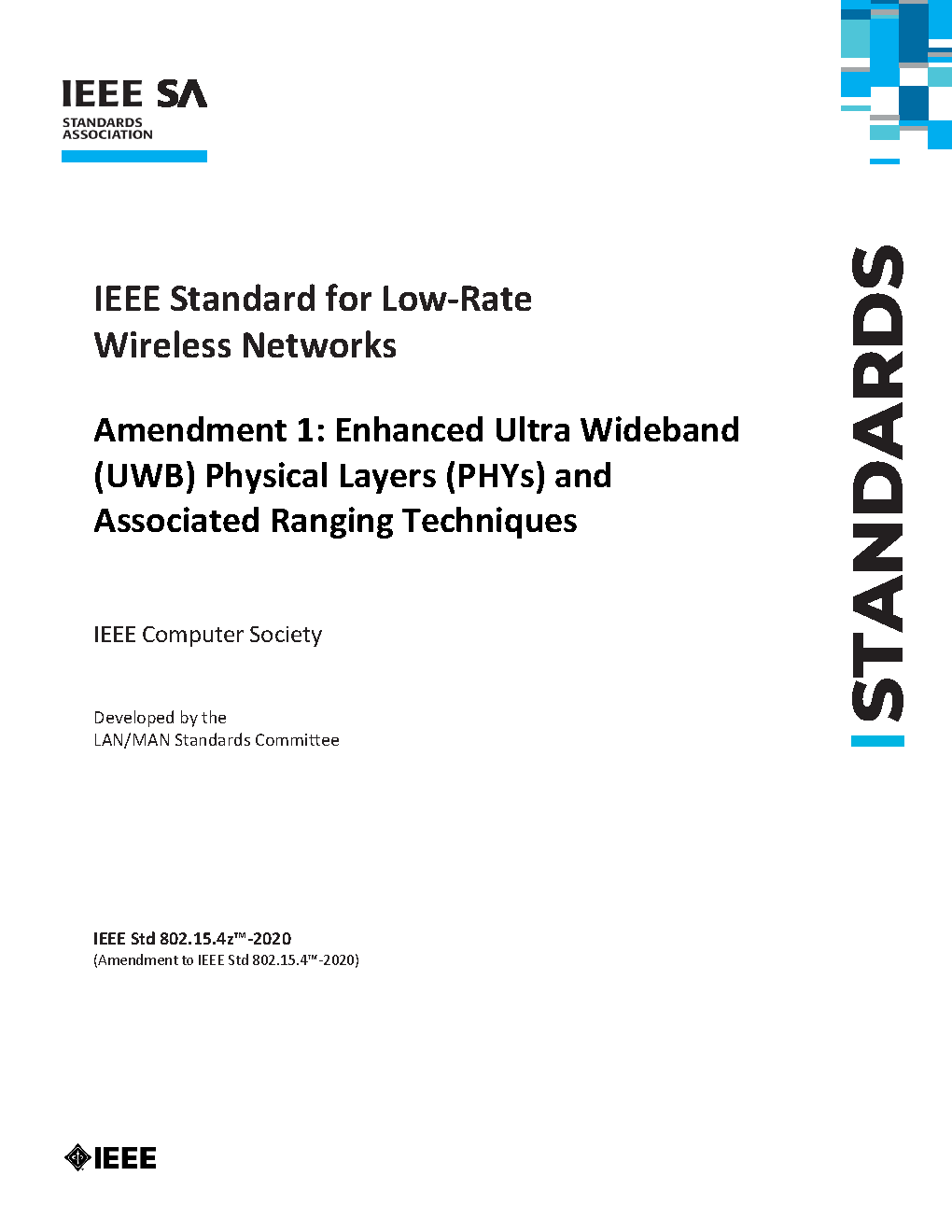
09/07/2018
Superseded
Historical
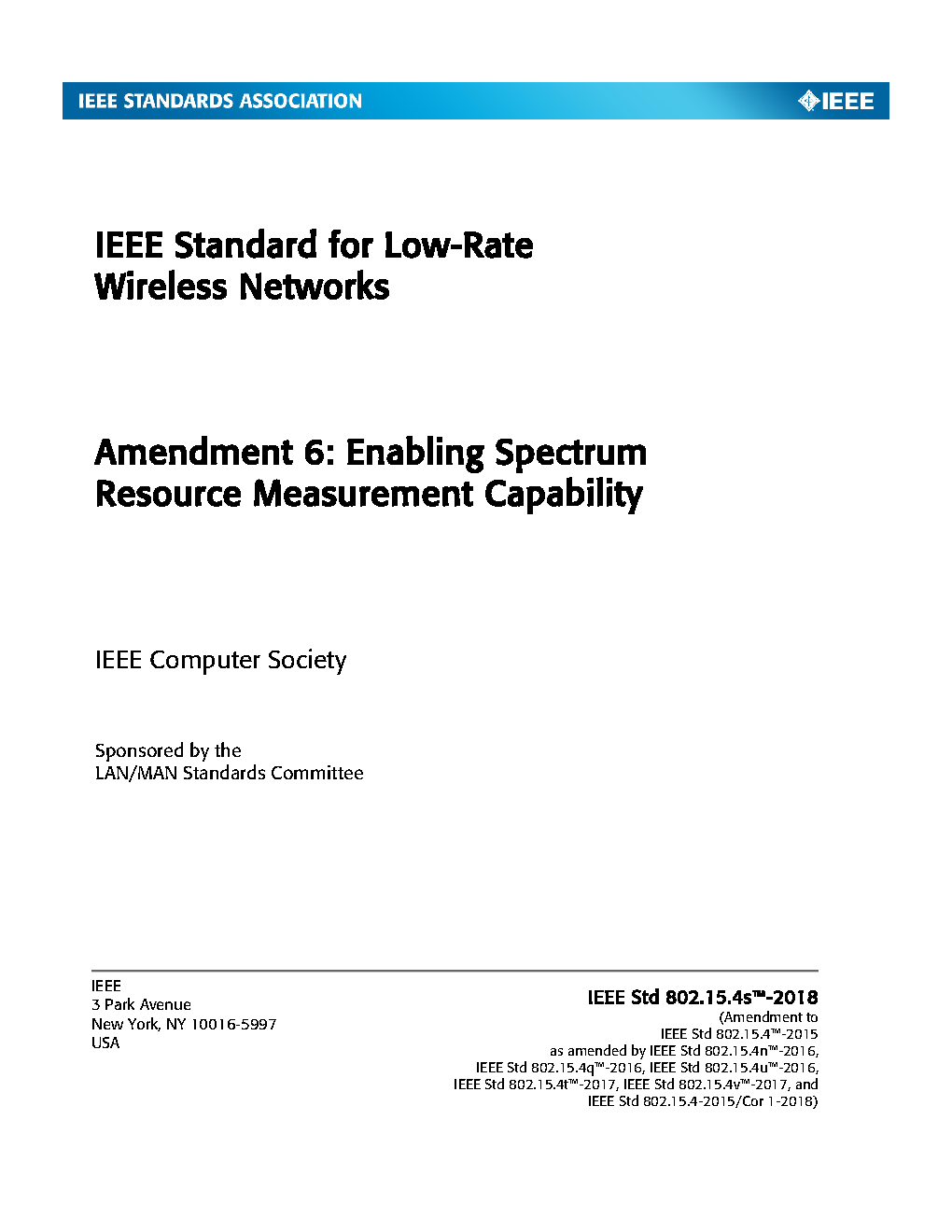
27/06/2018
Superseded
Historical
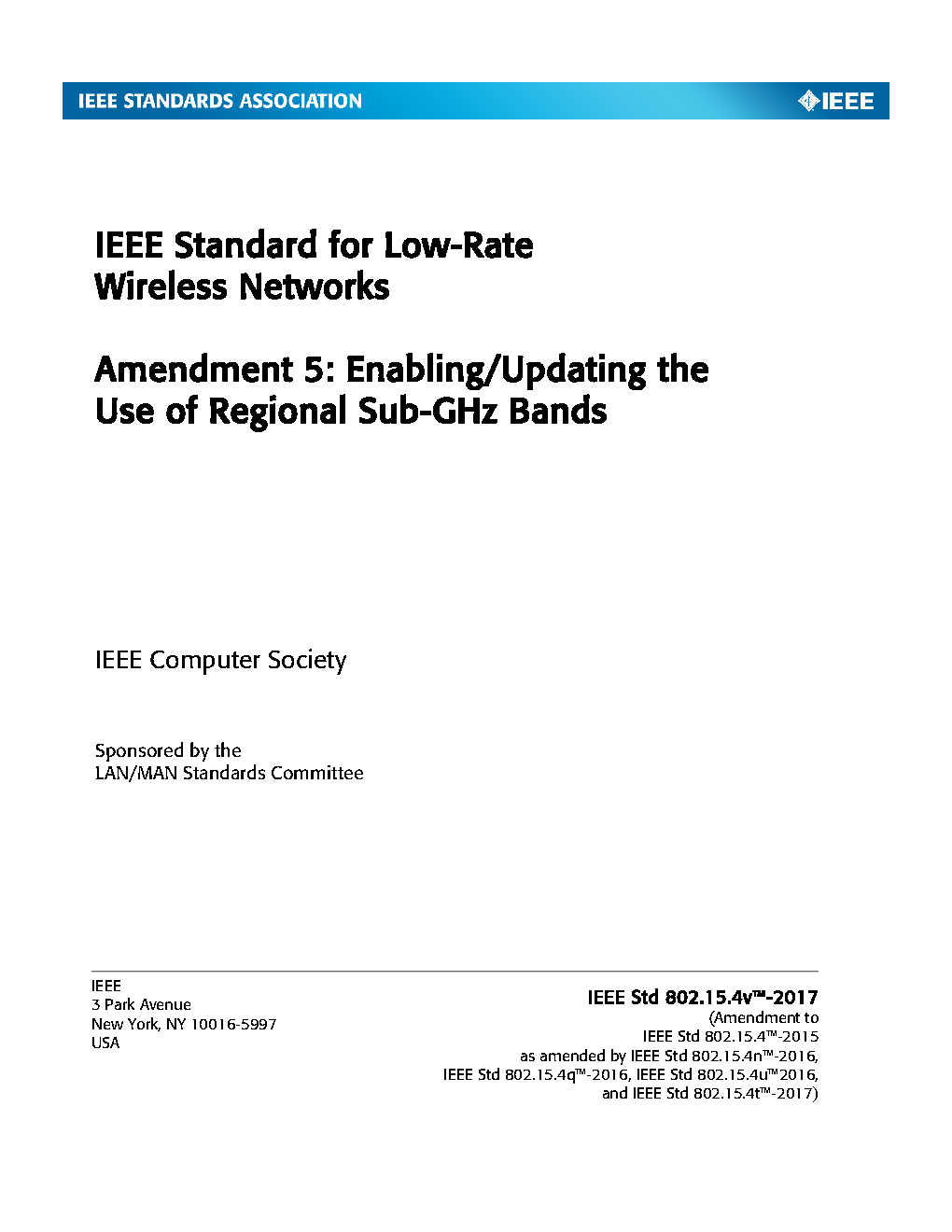
30/06/2017
Superseded
Historical
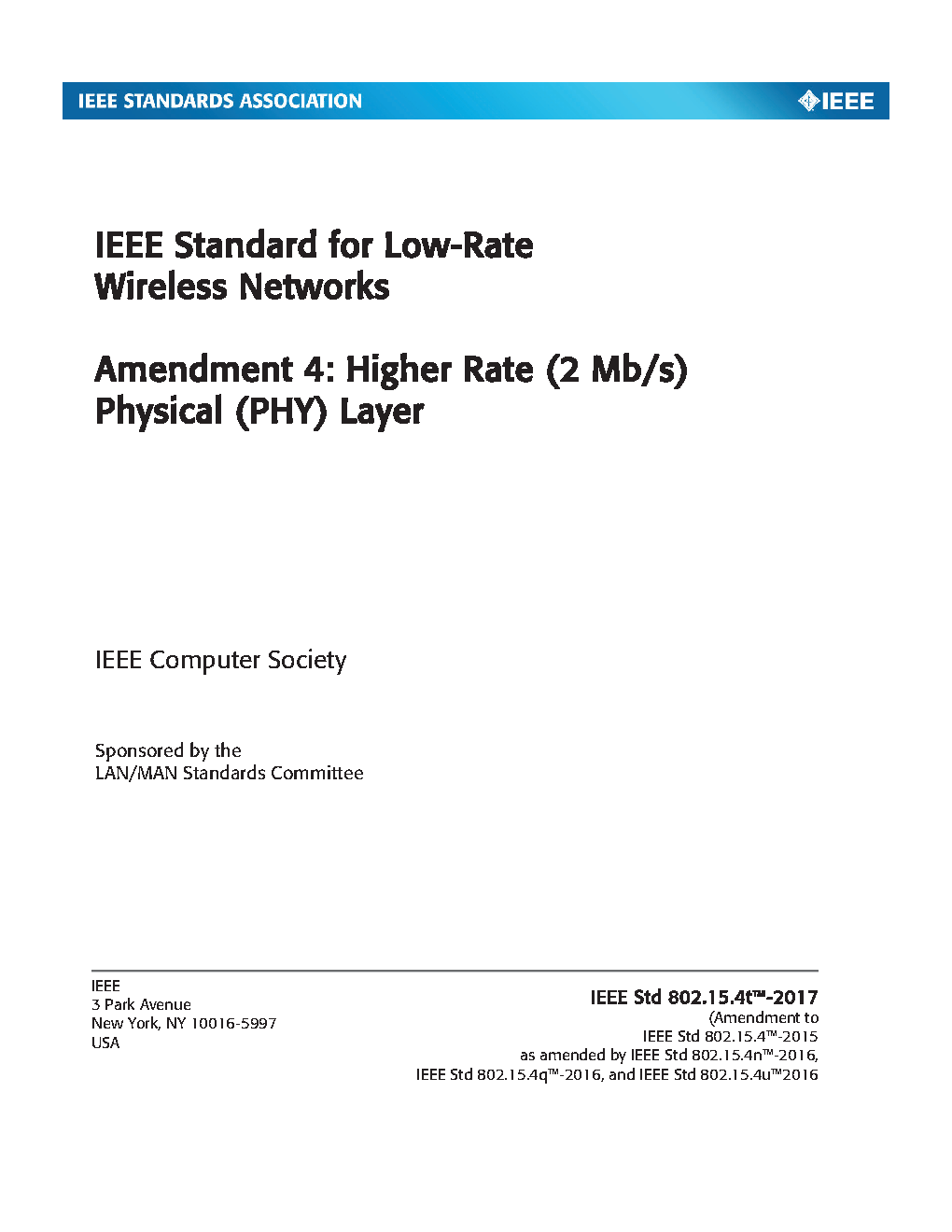
14/04/2017
Superseded
Historical
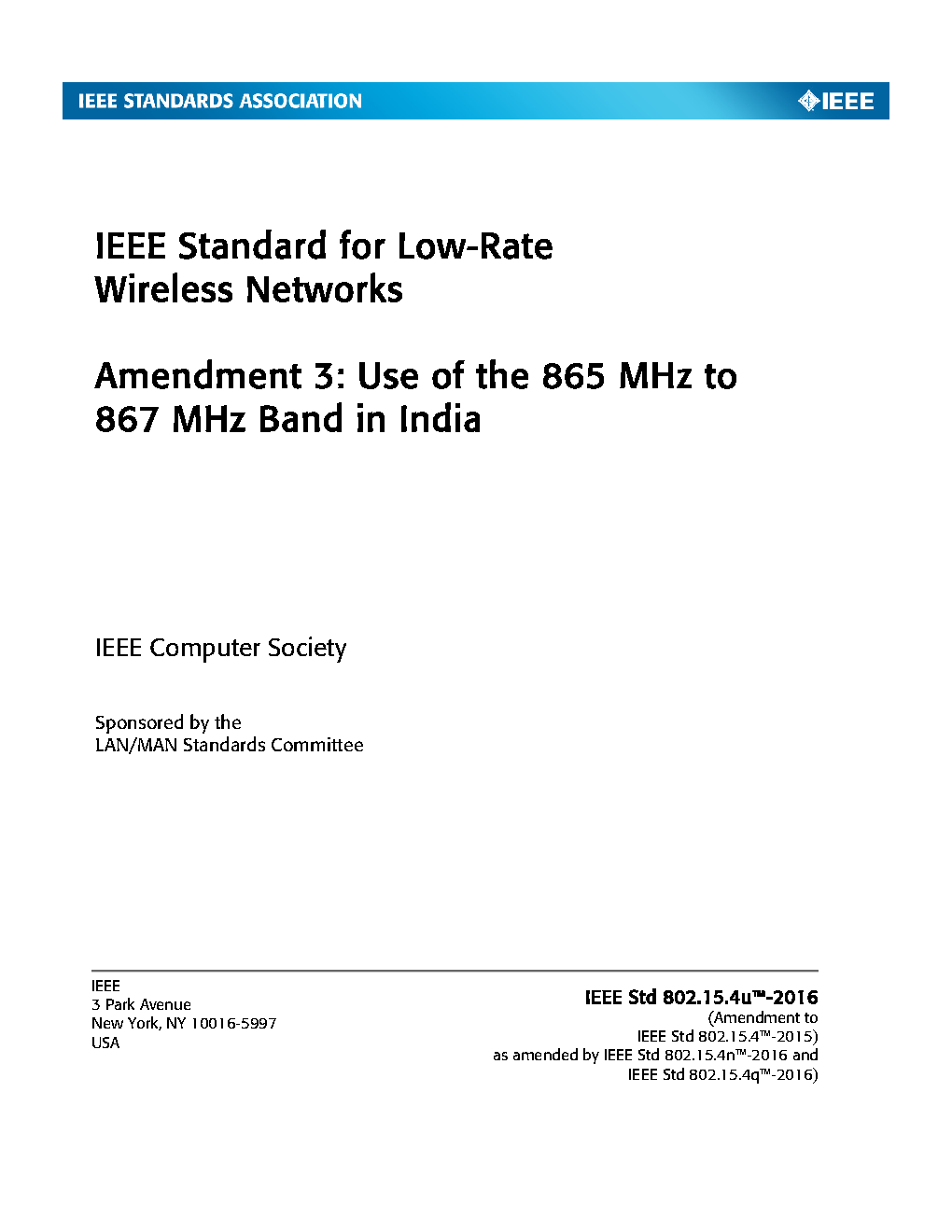
10/02/2017
Superseded
Historical
29/04/2016
Superseded
Historical
29/04/2016
Superseded
Historical
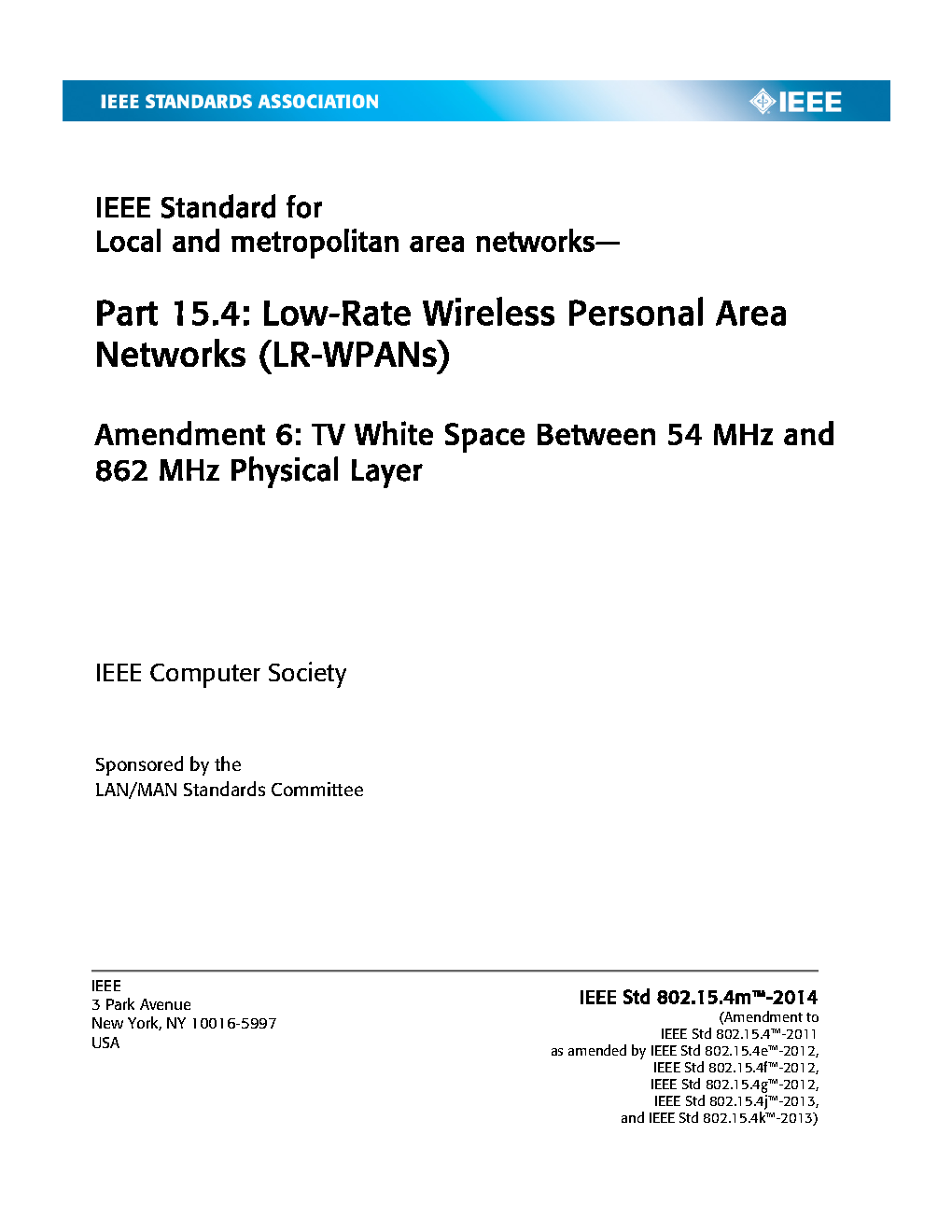
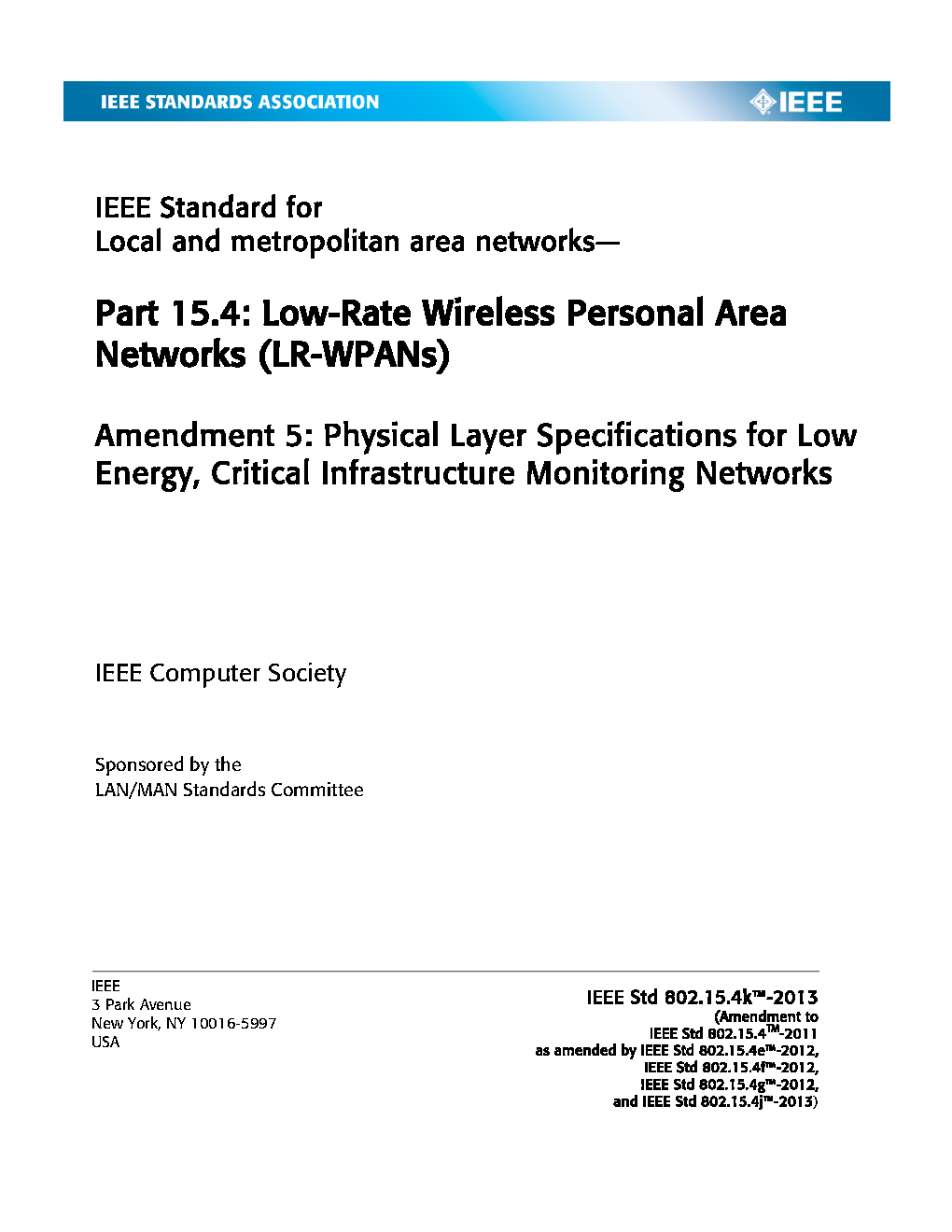
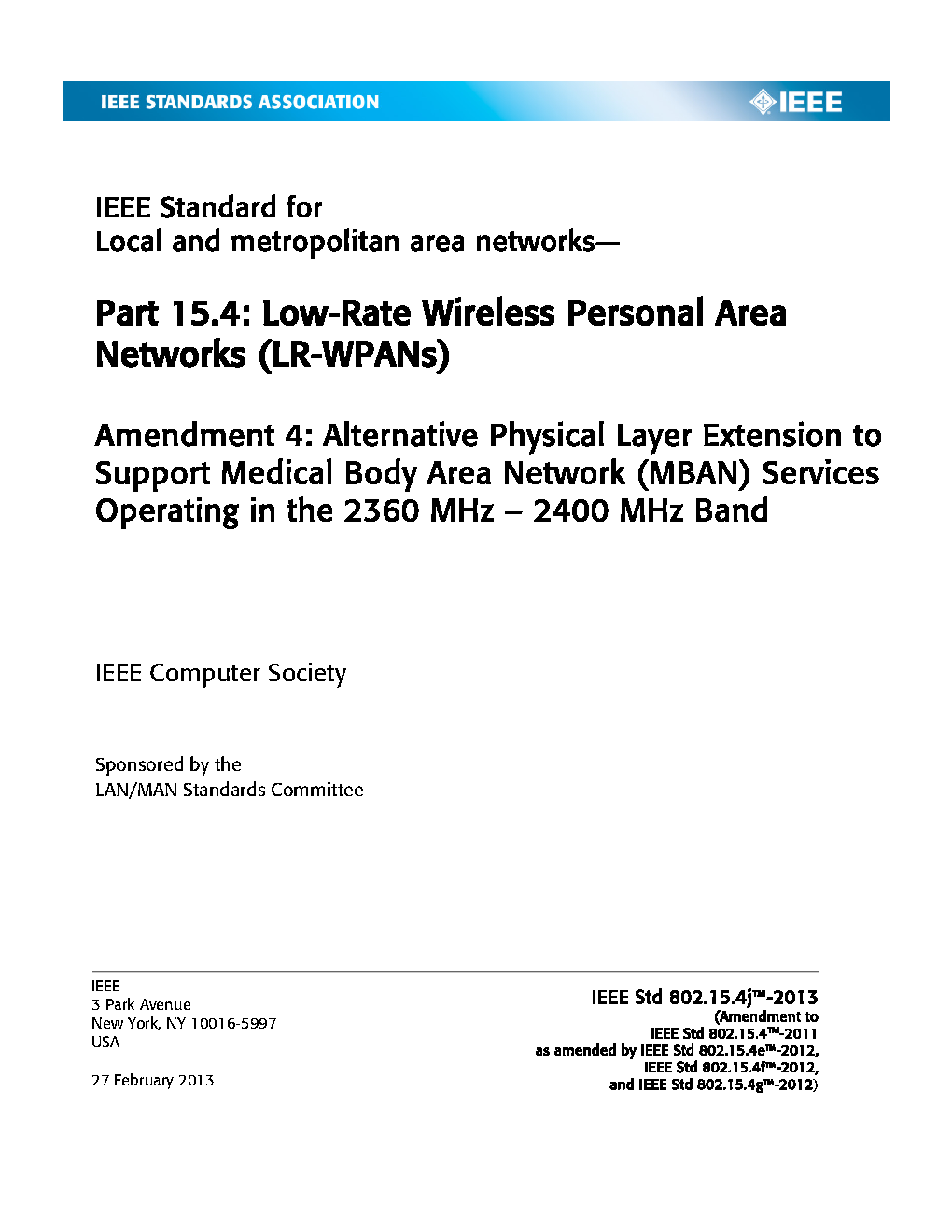
27/02/2013
Superseded
Historical
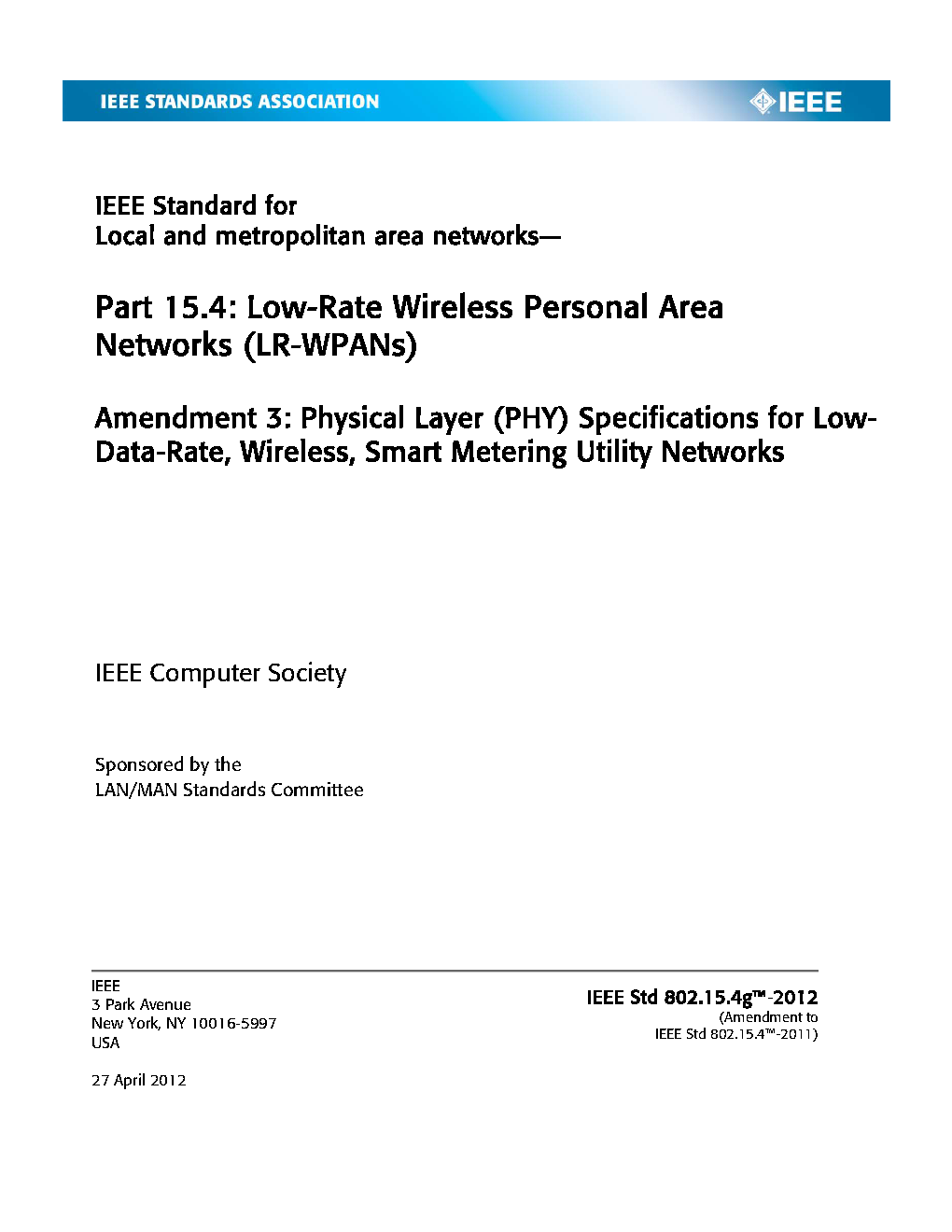
17/04/2009
Superseded
Historical
01/10/2003
Superseded
Historical