
Active
Standard amendment
Most Recent
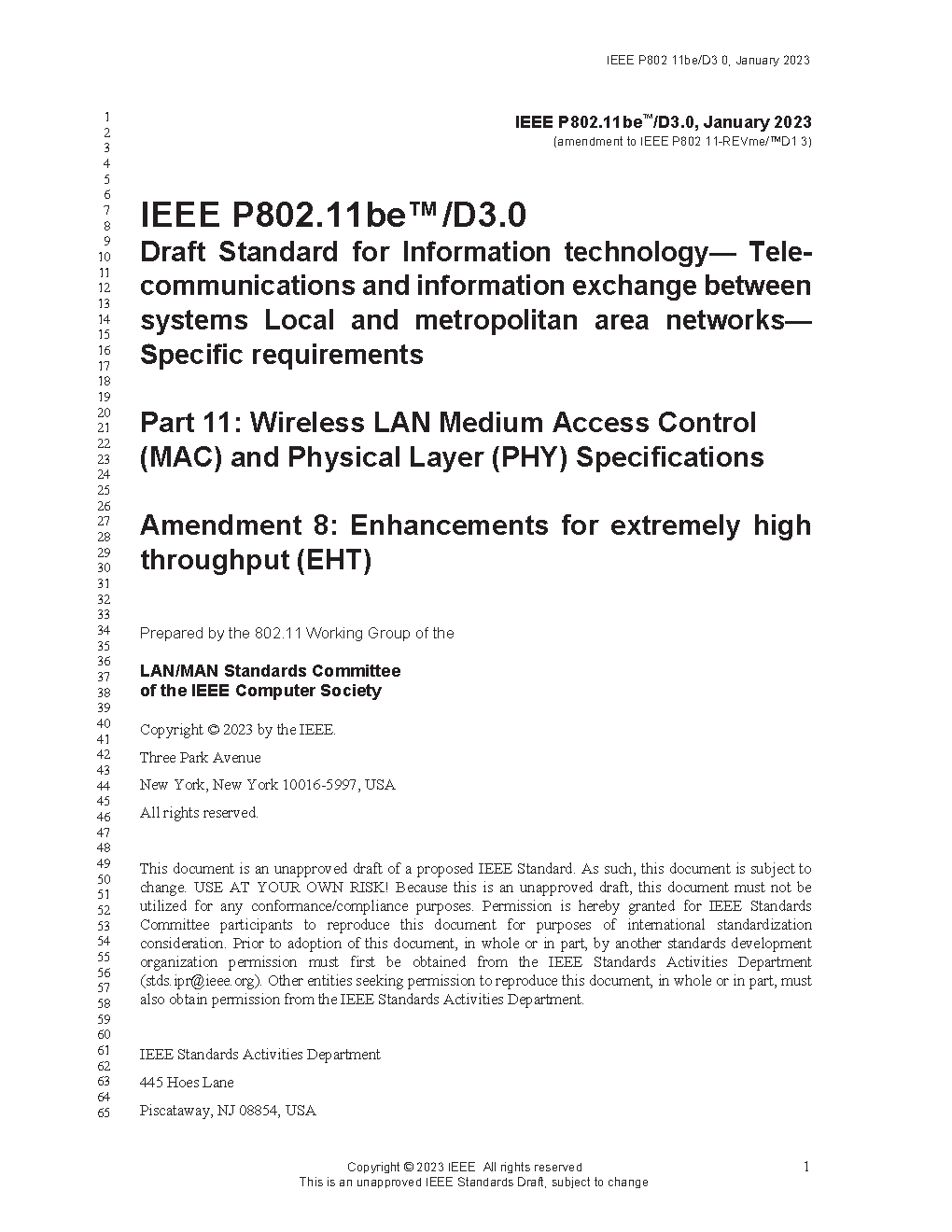
IEEE 802.11be:2024
IEEE Draft Standard for Information technology--Telecommunications and information exchange between systems Local and metropolitan area networks--Specific requirements - Part 11: Wireless LAN Medium Access Control (MAC) and Physical Layer (PHY) Specifications Amendment: Enhancements for Extremely High Throughput (EHT)

Summary
Amendment Standard - Active - Draft.
This amendment defines standardized modifications to both the IEEE Std 802.11 physical layers (PHY) and the Medium Access Control Layer (MAC) that enable at least one mode of operation capable of supporting a maximum throughput of at least 30 Gbit/s, as measured at the MAC data service access point (SAP), with carrier frequency operation between 1 and 7.250 GHz while ensuring backward compatibility and coexistence with legacy IEEE Std 802.11 compliant devices operating in the 2.4 GHz, 5 GHz, and 6 GHz bands. This amendment defines at least one mode of operation capable of improved worst case latency and jitter.
This amendment defines standardized modifications to both the IEEE Std 802.11 physical layers (PHY) and the Medium Access Control Layer (MAC) that enable at least one mode of operation capable of supporting a maximum throughput of at least 30 Gbps, as measured at the MAC data service access point (SAP), with carrier frequency operation between 1 and 7.250 GHz while ensuring backward compatibility and coexistence with legacy IEEE Std 802.11 compliant devices operating in the 2.4 GHz, 5 GHz, and 6 GHz bands. This amendment defines at least one mode of operation capable of improved worst case latency and jitter.
The purpose of this standard is to provide wireless connectivity for fixed, portable, and moving stations within a local area. This standard also offers regulatory bodies a means of standardizing access to one or more frequency bands for the purpose of local area communication.
This amendment defines standardized modifications to both the IEEE Std 802.11 physical layers (PHY) and the Medium Access Control Layer (MAC) that enable at least one mode of operation capable of supporting a maximum throughput of at least 30 Gbit/s, as measured at the MAC data service access point (SAP), with carrier frequency operation between 1 and 7.250 GHz while ensuring backward compatibility and coexistence with legacy IEEE Std 802.11 compliant devices operating in the 2.4 GHz, 5 GHz, and 6 GHz bands. This amendment defines at least one mode of operation capable of improved worst case latency and jitter.
This amendment defines standardized modifications to both the IEEE Std 802.11 physical layers (PHY) and the Medium Access Control Layer (MAC) that enable at least one mode of operation capable of supporting a maximum throughput of at least 30 Gbps, as measured at the MAC data service access point (SAP), with carrier frequency operation between 1 and 7.250 GHz while ensuring backward compatibility and coexistence with legacy IEEE Std 802.11 compliant devices operating in the 2.4 GHz, 5 GHz, and 6 GHz bands. This amendment defines at least one mode of operation capable of improved worst case latency and jitter.
The purpose of this standard is to provide wireless connectivity for fixed, portable, and moving stations within a local area. This standard also offers regulatory bodies a means of standardizing access to one or more frequency bands for the purpose of local area communication.
Notes
Active
Technical characteristics
| Publisher | Institute of Electrical and Electronics Engineers (IEEE) |
| Publication Date | 07/22/2025 |
| Edition | |
| Page Count | 1020 |
| EAN | --- |
| ISBN | --- |
| Weight (in grams) | --- |
| Brochures |

|
Amendments modifies
Previous versions
26/02/2021
Superseded
, Modified
Historical

14/12/2016
Superseded
Historical
29/03/2012
Superseded
Historical
15/07/2010
Superseded
Historical
12/06/2008
Superseded
Historical
12/06/2007
Superseded
Historical
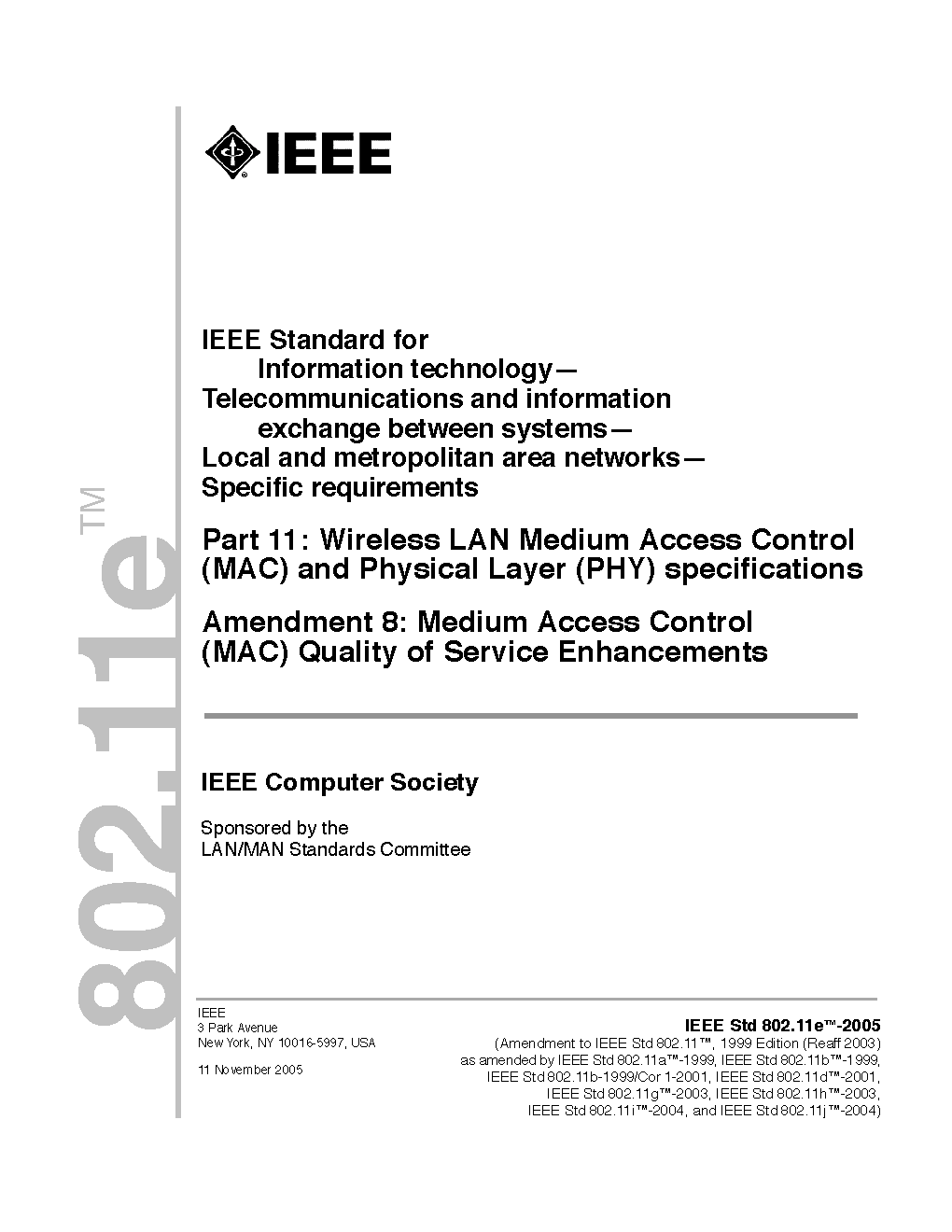
11/11/2005
Superseded
Historical
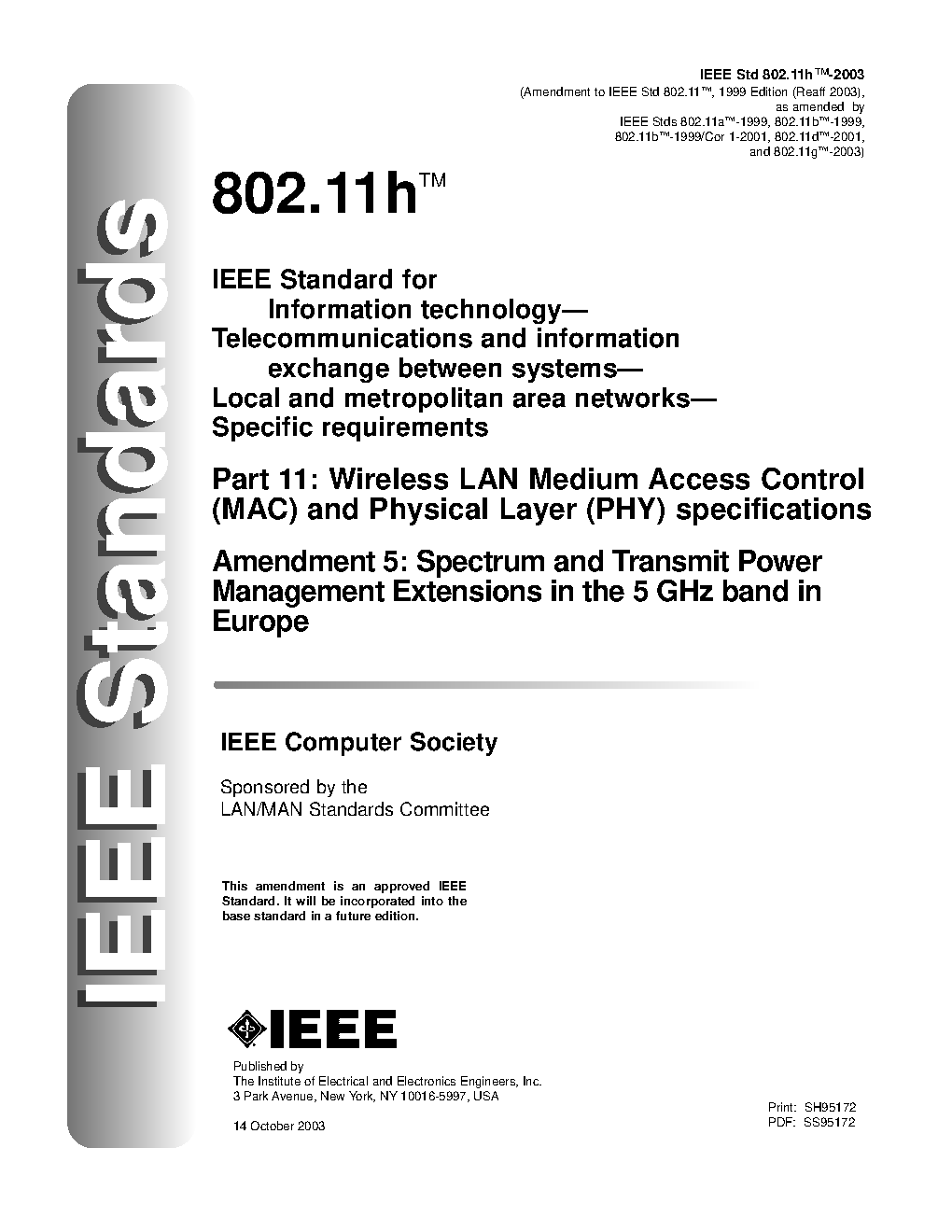
14/10/2003
Superseded
Historical
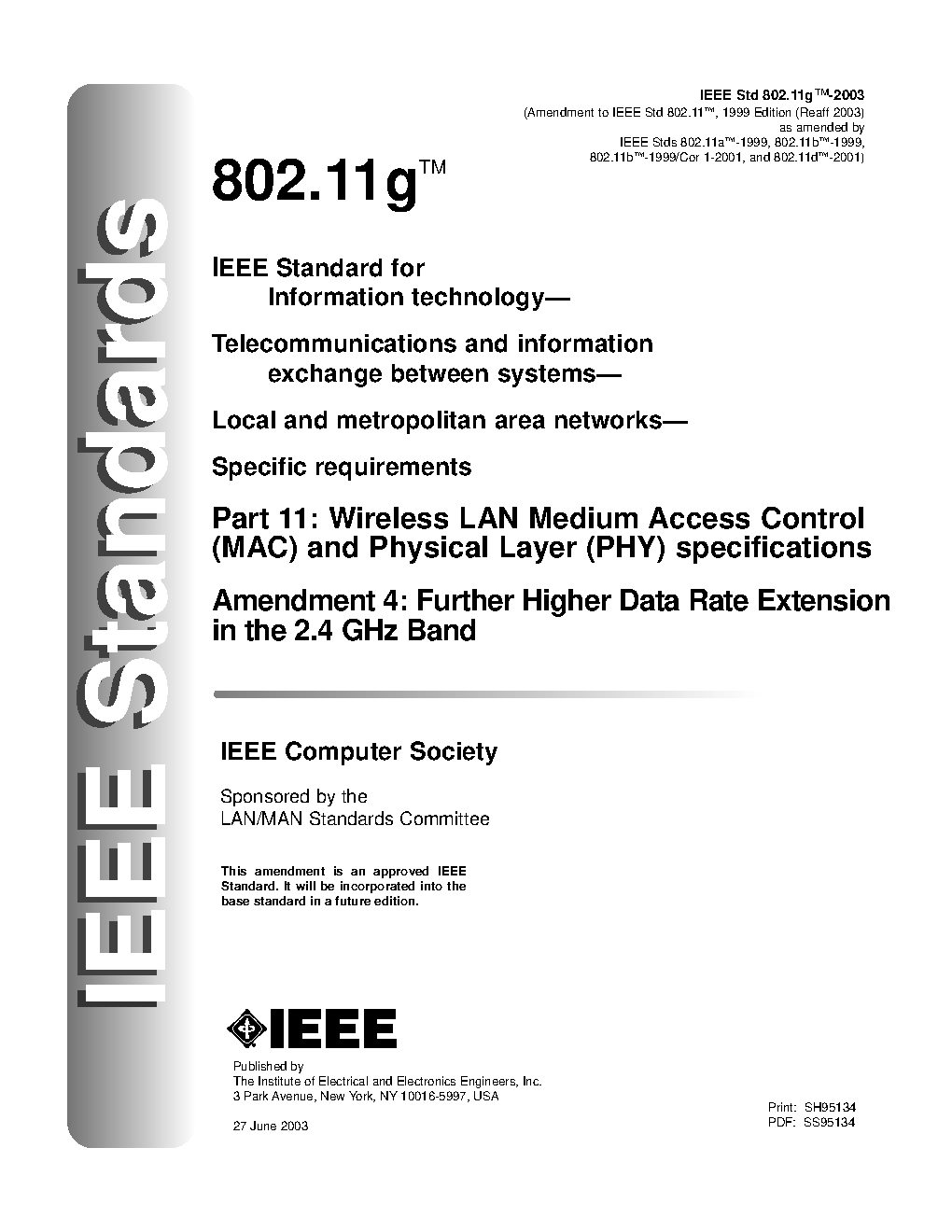
27/06/2003
Superseded
Historical
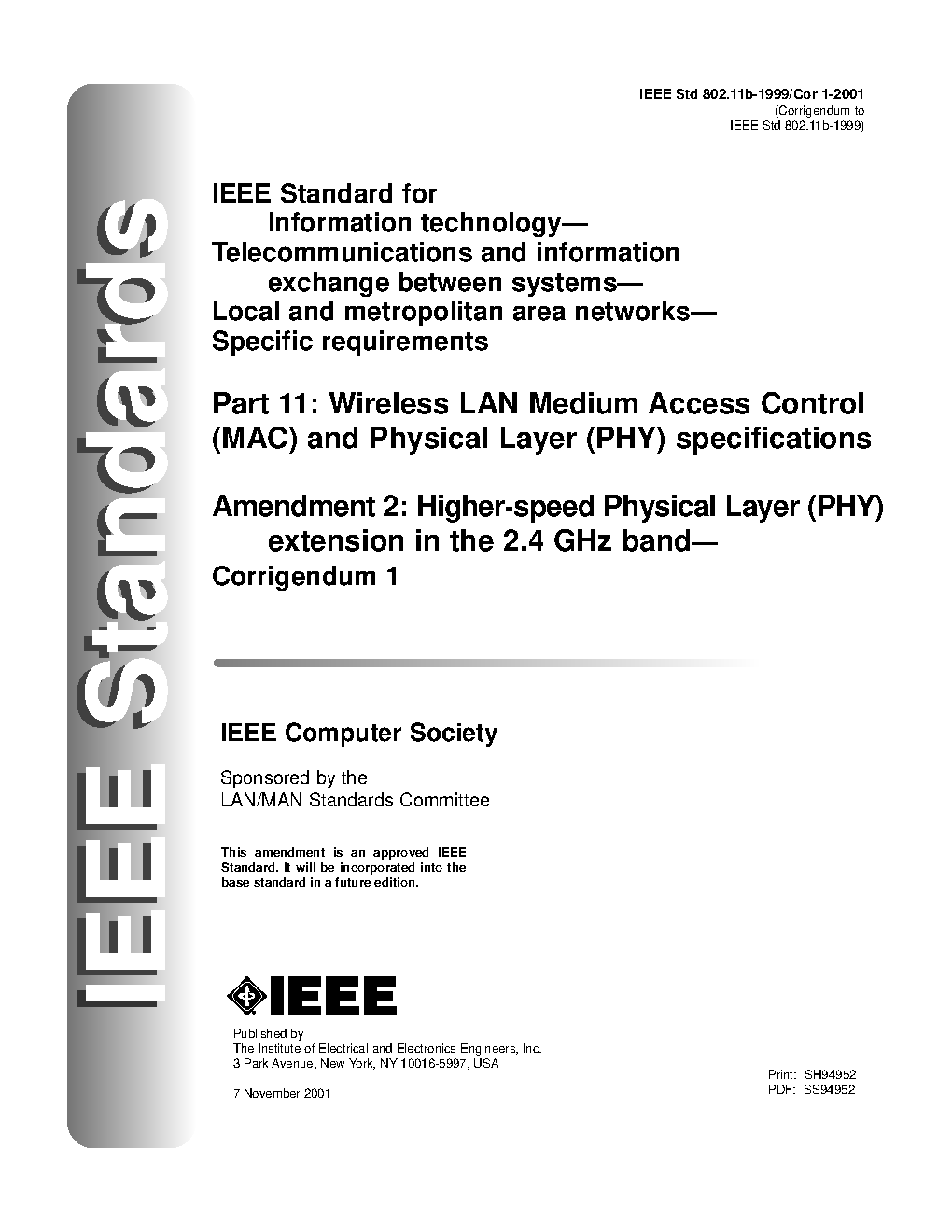
07/11/2001
Superseded
, Confirmed
Historical
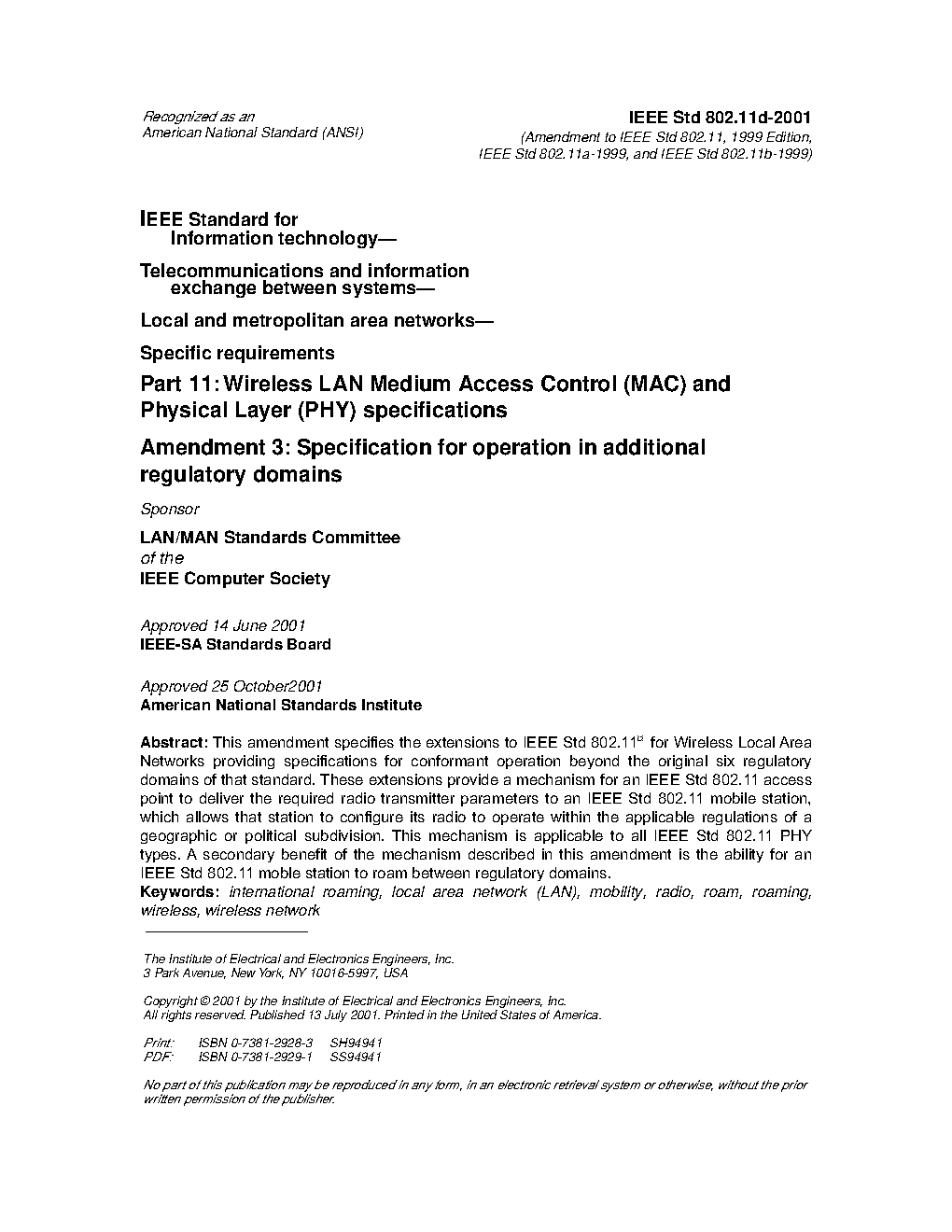
13/07/2001
Superseded
, Confirmed
Historical
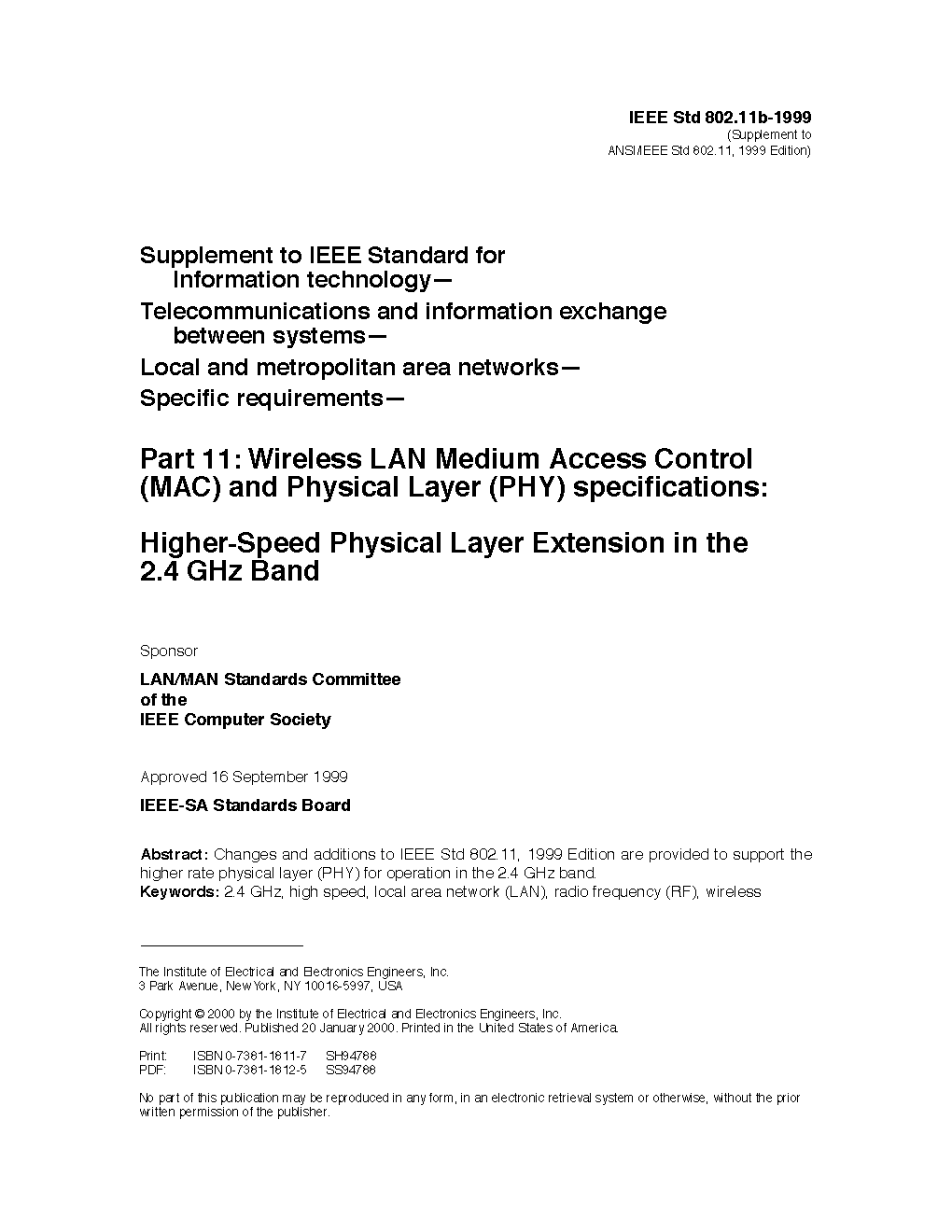
20/01/2000
Superseded
, Confirmed
Historical
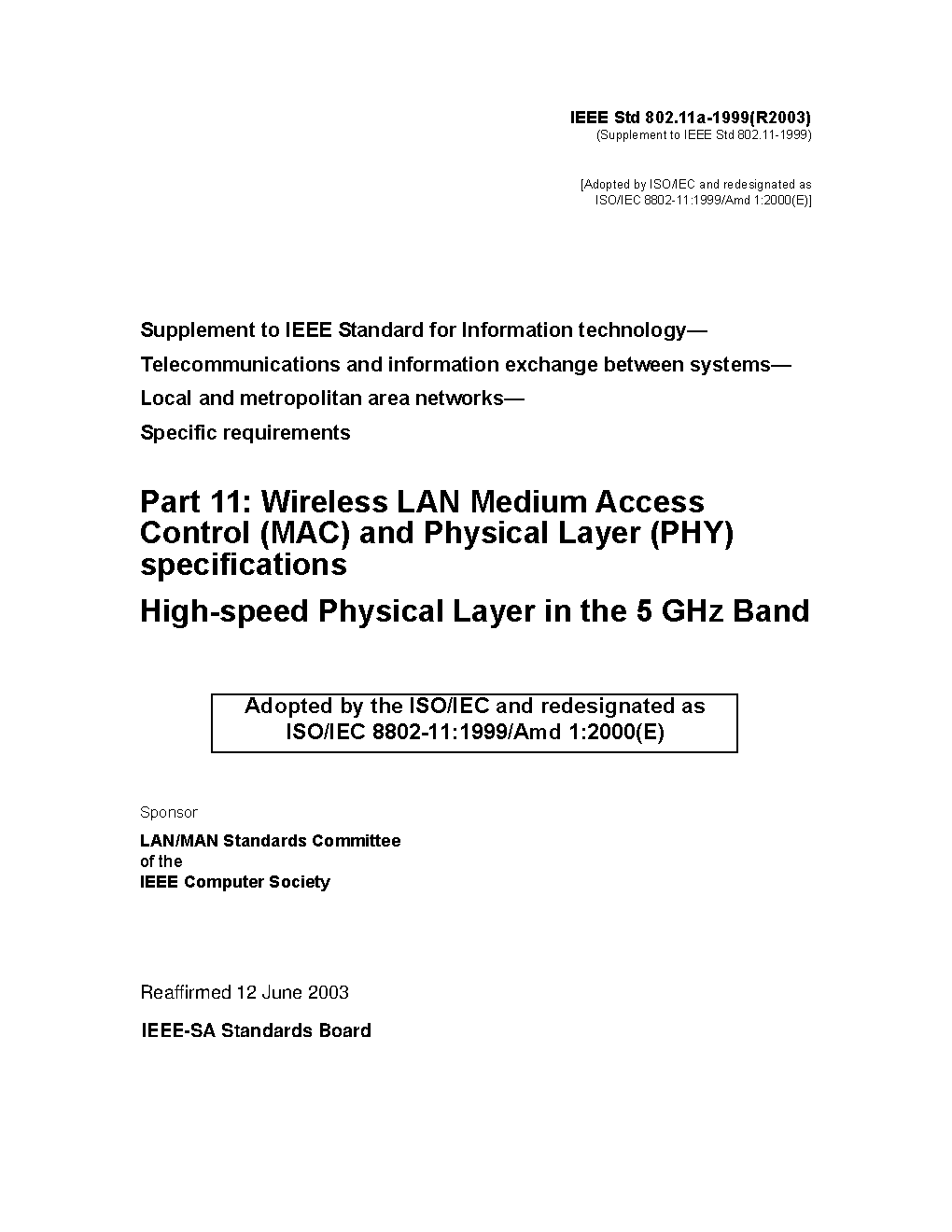
30/12/1999
Superseded
, Confirmed
Historical
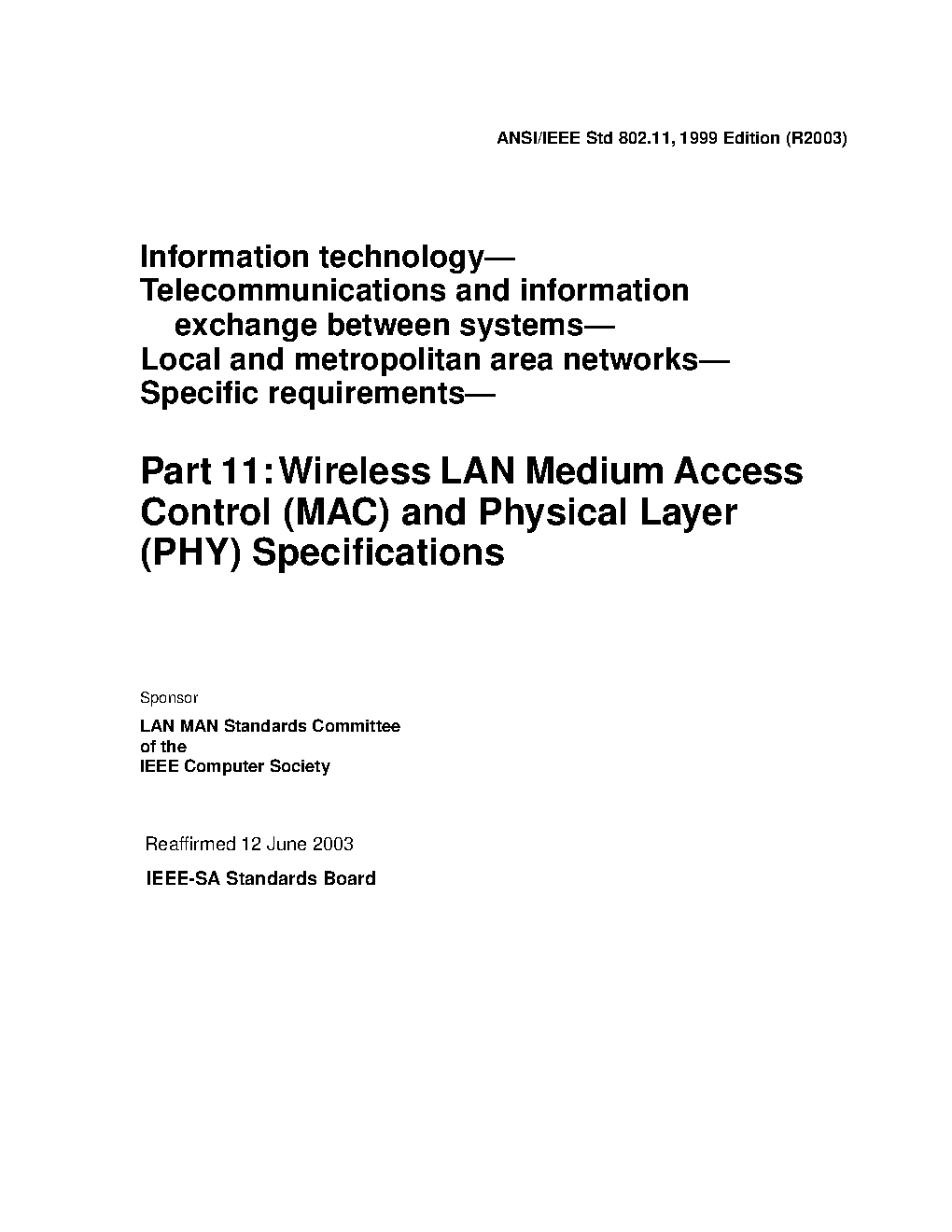
30/11/1998
Superseded
, Confirmed
Historical
18/11/1997
Superseded
Historical