
Withdrawn
Standard
Most Recent
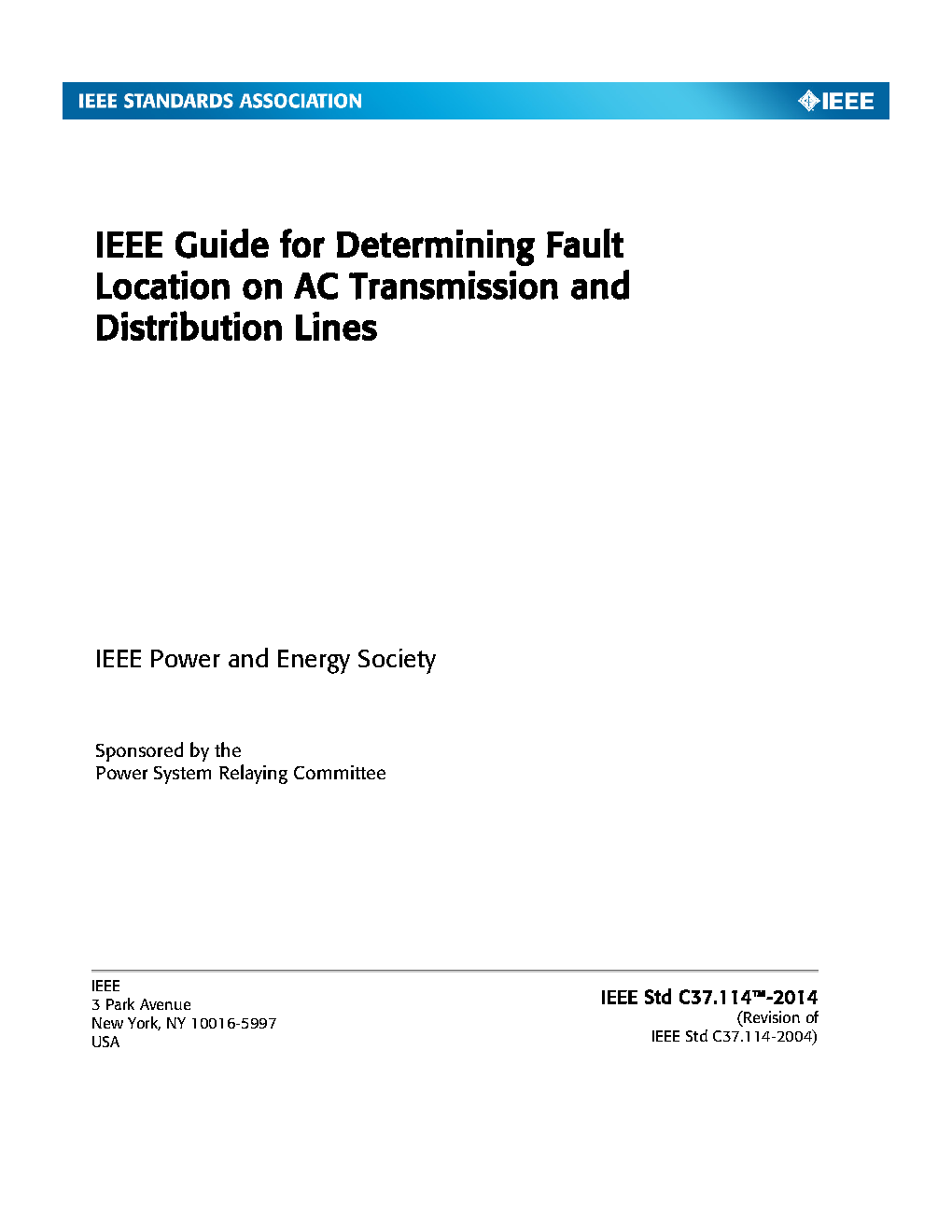
IEEE C37.114:2014
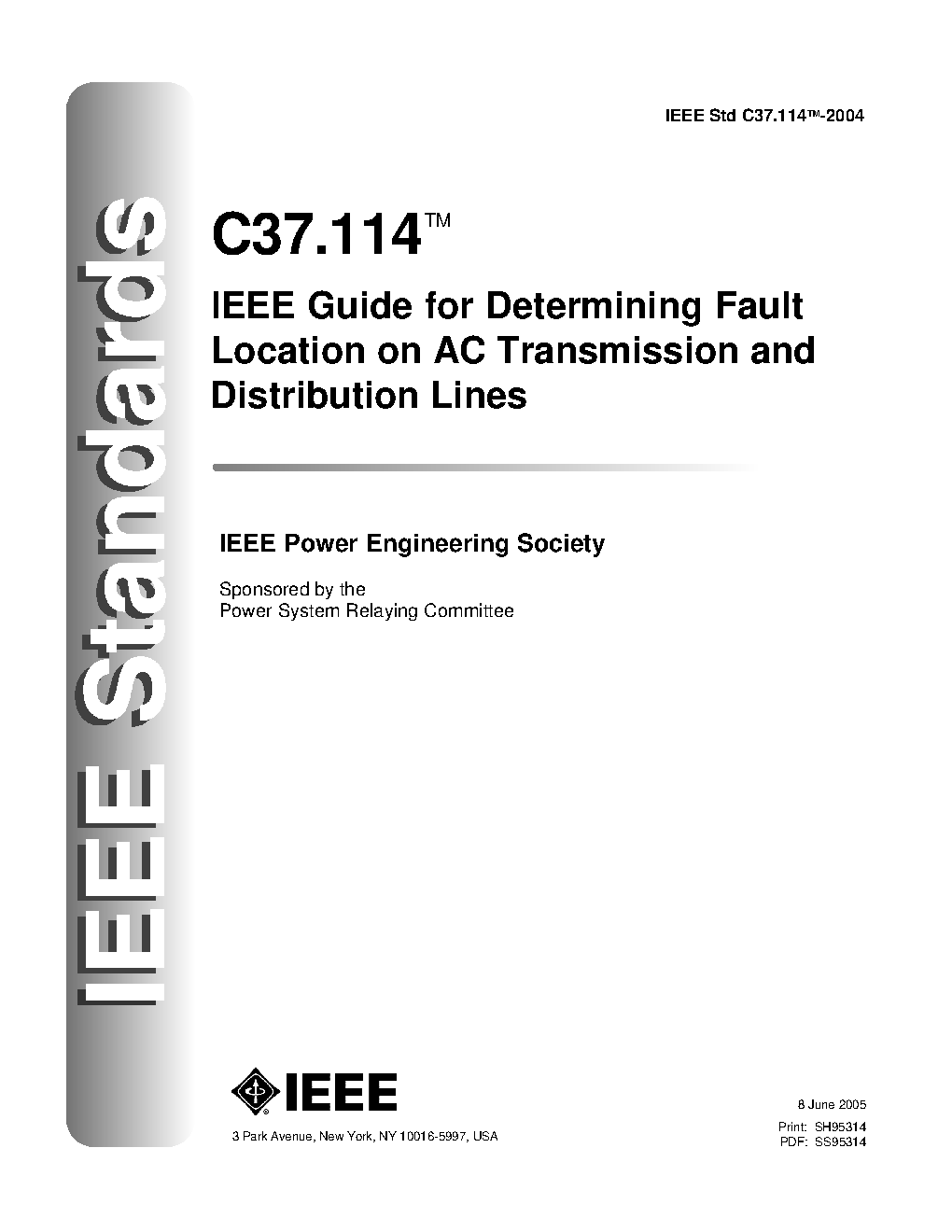
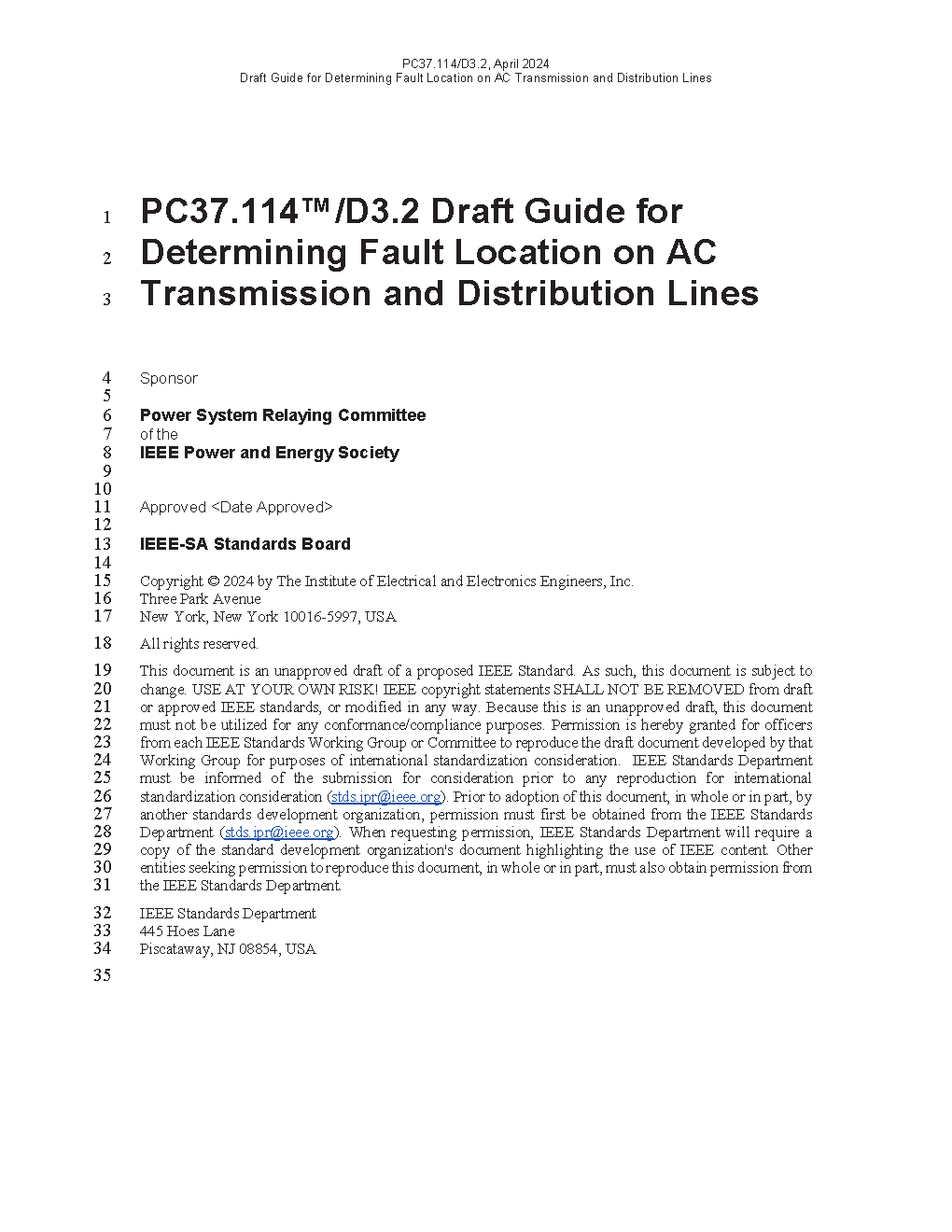
IEEE Guide for Determining Fault Location on AC Transmission and Distribution Lines

Summary
Revision Standard - Active.
Electrical faults on transmission and distribution lines are detected and isolated by system protective devices. Once the fault has been cleared, outage times can be reduced if the location of the fault can be determined more quickly. The techniques and application considerations for determining the location of a fault on ac transmission and distribution lines are outlined in this guide. Traditional approaches and the primary measurement techniques used in modern devices are reviewed: one- and two-terminal impedance-based methods and traveling-wave methods. Application considerations include: two- and three-terminal lines, series-compensated lines, parallel lines, untransposed lines, underground cables, fault resistance effects, and other power system conditions, including those unique to distribution systems.
This guide outlines the techniques and application considerations for determining the location of a fault on ac transmission and distribution lines. This document reviews traditional approaches and the primary measurement techniques used in modern devices: one- and two-terminal impedance-based methods, synchronized sampling methods and traveling-wave methods. Application considerations include: two-and three-terminal lines, series-compensated lines, parallel lines, untransposed lines, tapped lines, underground cables, fault resistance effects, and other power system conditions, including those unique to distribution systems.
The guide assists power system engineers and operators in applying fault-locating techniques on their systems. Users learn the strengths and limitations of fault location data and when further analysis is required using additional methods and when more data must be gathereed. This guide assists in fault location and therefore faster restoration of power systems through improved understanding of fault-locating techniques.
Electrical faults on transmission and distribution lines are detected and isolated by system protective devices. Once the fault has been cleared, outage times can be reduced if the location of the fault can be determined more quickly. The techniques and application considerations for determining the location of a fault on ac transmission and distribution lines are outlined in this guide. Traditional approaches and the primary measurement techniques used in modern devices are reviewed: one- and two-terminal impedance-based methods and traveling-wave methods. Application considerations include: two- and three-terminal lines, series-compensated lines, parallel lines, untransposed lines, underground cables, fault resistance effects, and other power system conditions, including those unique to distribution systems.
This guide outlines the techniques and application considerations for determining the location of a fault on ac transmission and distribution lines. This document reviews traditional approaches and the primary measurement techniques used in modern devices: one- and two-terminal impedance-based methods, synchronized sampling methods and traveling-wave methods. Application considerations include: two-and three-terminal lines, series-compensated lines, parallel lines, untransposed lines, tapped lines, underground cables, fault resistance effects, and other power system conditions, including those unique to distribution systems.
The guide assists power system engineers and operators in applying fault-locating techniques on their systems. Users learn the strengths and limitations of fault location data and when further analysis is required using additional methods and when more data must be gathereed. This guide assists in fault location and therefore faster restoration of power systems through improved understanding of fault-locating techniques.
Notes
Active
Technical characteristics
| Publisher | Institute of Electrical and Electronics Engineers (IEEE) |
| Publication Date | 01/30/2015 |
| Cancellation Date | 03/27/2025 |
| Edition | |
| Page Count | 76 |
| EAN | --- |
| ISBN | --- |
| Weight (in grams) | --- |
| Brochures |

|
Amendments replaces
08/06/2005
Superseded
, Confirmed
Historical
Previous versions
26/04/2024
Active
Most Recent
30/01/2015
Withdrawn
Most Recent
08/06/2005
Superseded
, Confirmed
Historical