
Superseded
Draft standard
Historical
IEEE P519
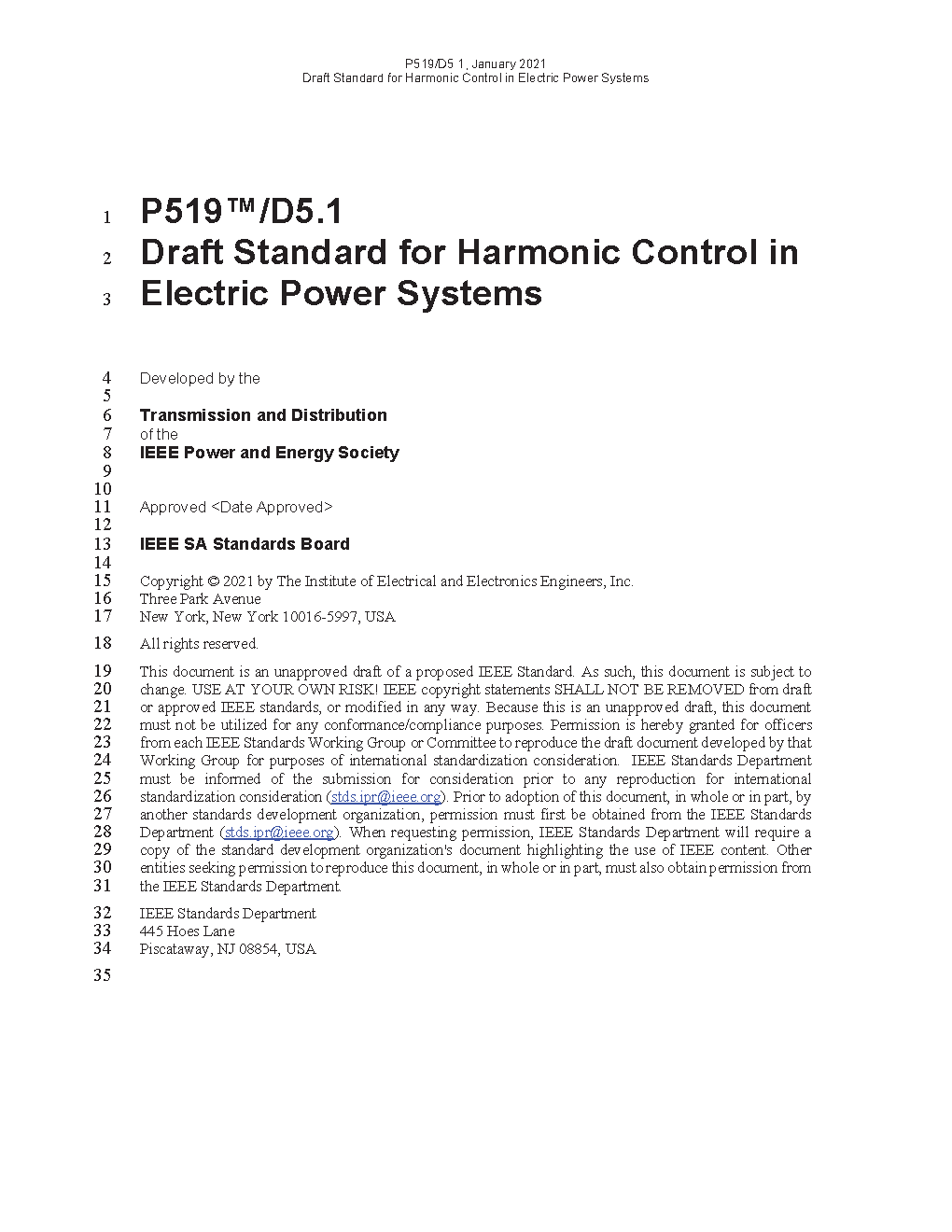
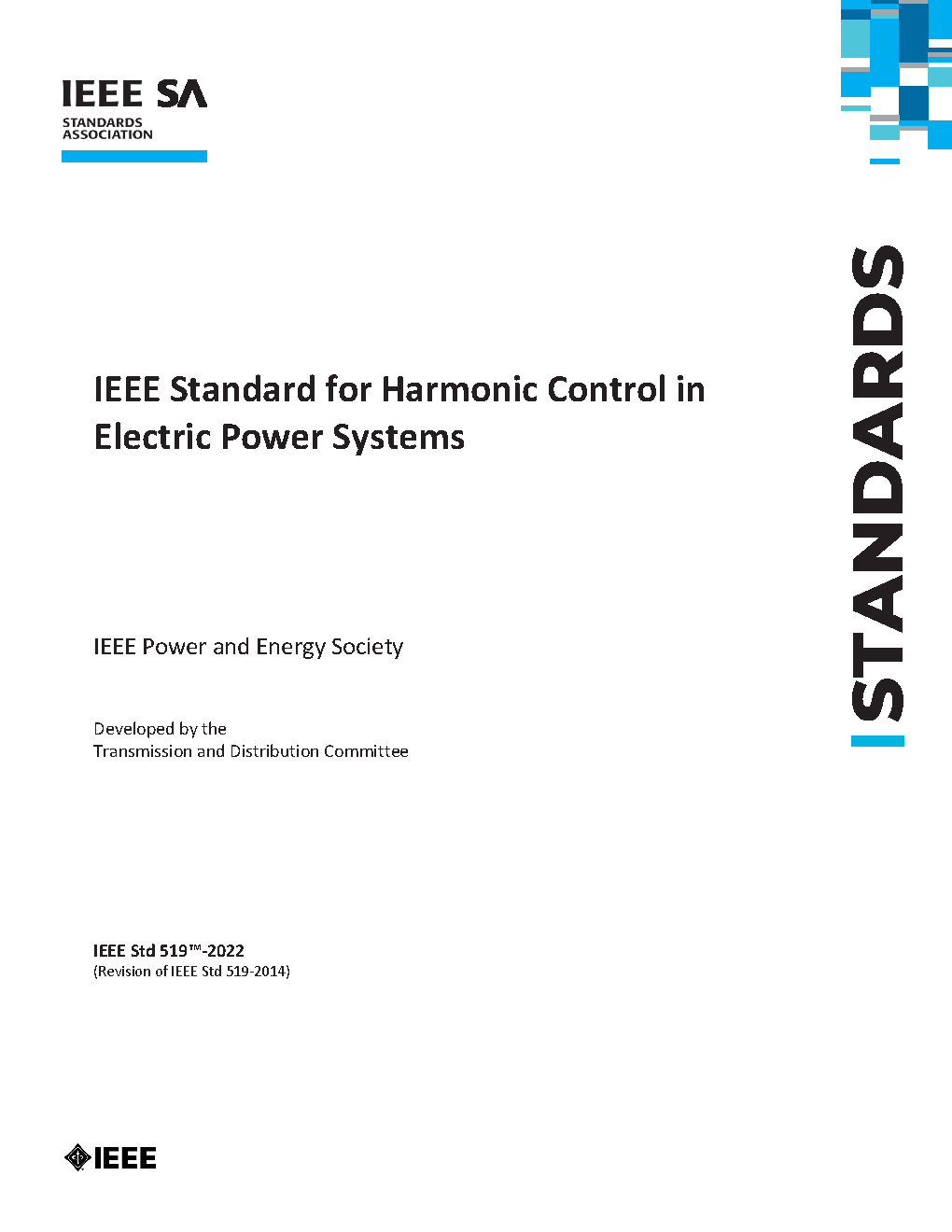
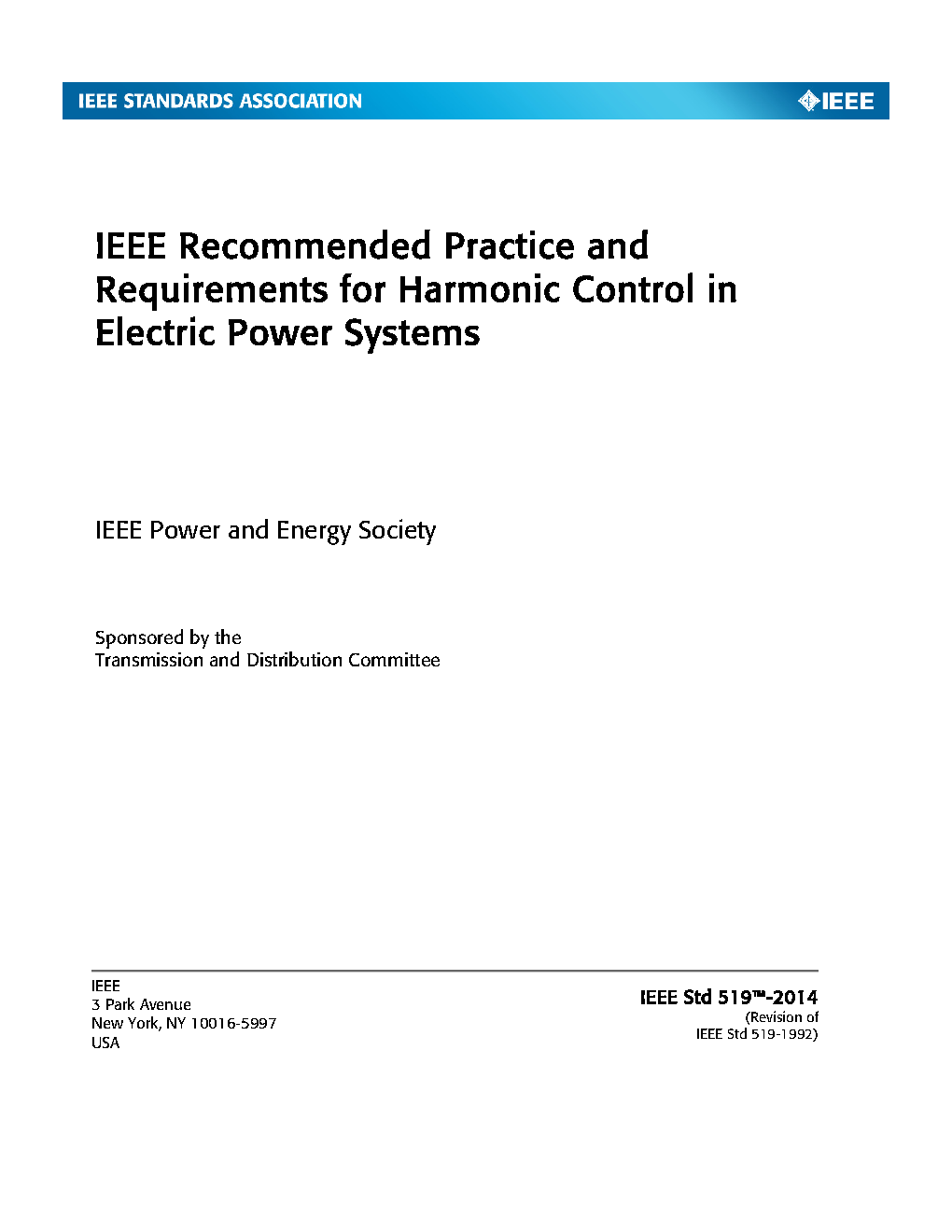
IEEE Draft Standard for Harmonic Control in Electric Power Systems

Summary
Revision Standard - Superseded - Draft.
Goals for the design of electrical systems that include both linear and nonlinear loads are established in this standard. The voltage and current waveforms that may exist throughout the system are described, and waveform distortion goals for the system designer are established. The interface between sources and loads is described as the point of common coupling and observance of the design goals will reduce interference between electrical equipment. This standard addresses steady-state limitations. Transient conditions exceeding these limitations may be encountered. This document sets the quality of power that is to be provided at the point of common coupling. This document does not cover the effects of radio-frequency interference; however, guidance is offered for wired telephone systems
This standard establishes goals for the design of electrical systems that include both linear and nonlinear loads. The voltage and current waveforms that may exist throughout the system are summarized and waveform distortion goals for the system designer are established. The interface between sources and loads is described as the point of common coupling; and observance of the design goals will minimize interference between electrical equipment. The limits in this standard represent a shared responsibility for harmonic control between system owners or operators and users. Users produce harmonic currents that flow through the system owner's or operator's system which lead to voltage harmonics in the voltages supplied to other users. The amount of harmonic voltage distortion supplied to other users is a function of the aggregate effects of the harmonic current producing loads of all users and the impedance characteristics of the supply system. Harmonic voltage distortion limits are provided to reduce the potential negative effects on user and system equipment. This standard addresses steady-state limitations.
This document sets the quality of power related to harmonics that is to be provided at the point of common coupling, and is not intended for application to individual pieces of electrical equipment.
Goals for the design of electrical systems that include both linear and nonlinear loads are established in this standard. The voltage and current waveforms that may exist throughout the system are described, and waveform distortion goals for the system designer are established. The interface between sources and loads is described as the point of common coupling and observance of the design goals will reduce interference between electrical equipment. This standard addresses steady-state limitations. Transient conditions exceeding these limitations may be encountered. This document sets the quality of power that is to be provided at the point of common coupling. This document does not cover the effects of radio-frequency interference; however, guidance is offered for wired telephone systems
This standard establishes goals for the design of electrical systems that include both linear and nonlinear loads. The voltage and current waveforms that may exist throughout the system are summarized and waveform distortion goals for the system designer are established. The interface between sources and loads is described as the point of common coupling; and observance of the design goals will minimize interference between electrical equipment. The limits in this standard represent a shared responsibility for harmonic control between system owners or operators and users. Users produce harmonic currents that flow through the system owner's or operator's system which lead to voltage harmonics in the voltages supplied to other users. The amount of harmonic voltage distortion supplied to other users is a function of the aggregate effects of the harmonic current producing loads of all users and the impedance characteristics of the supply system. Harmonic voltage distortion limits are provided to reduce the potential negative effects on user and system equipment. This standard addresses steady-state limitations.
This document sets the quality of power related to harmonics that is to be provided at the point of common coupling, and is not intended for application to individual pieces of electrical equipment.
Notes
Superseded
Technical characteristics
| Publisher | Institute of Electrical and Electronics Engineers (IEEE) |
| Publication Date | 07/22/2022 |
| Edition | |
| Page Count | 30 |
| EAN | --- |
| ISBN | --- |
| Weight (in grams) | --- |
| Brochures |

|
No products.
Previous versions
05/08/2022
Active
Most Recent
22/07/2022
Superseded
Historical
11/06/2014
Superseded
Historical

09/04/1993
Superseded
Historical