
Active
Draft standard
Most Recent
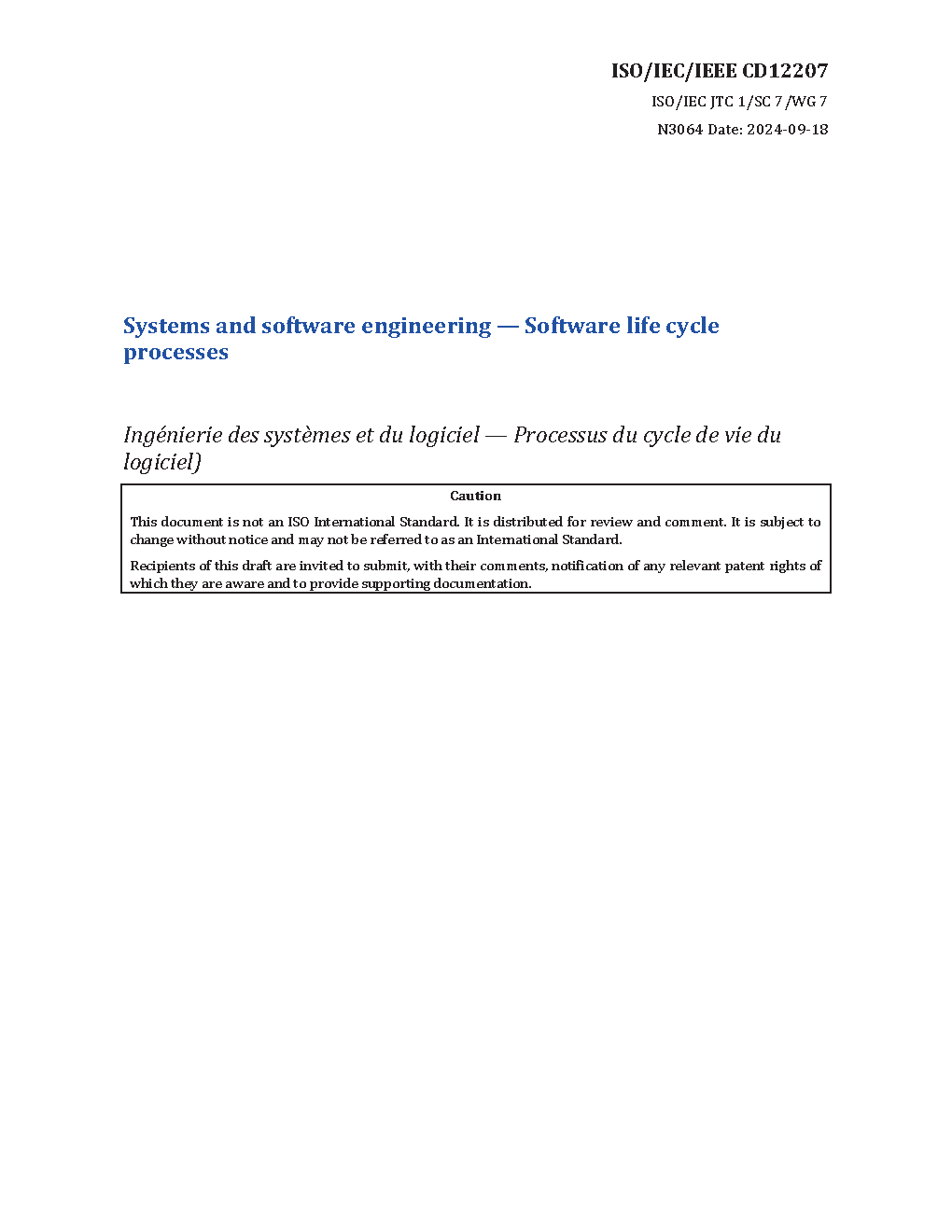
IEEE/ISO/IEC P12207
IEEE/ISO/IEC Draft International standard - Systems and software engineering -- Software life cycle processes

Summary
Revision Standard - Active - Draft.
This document establishes a common framework for software life cycle processes, with well defined terminology, that can be referenced by the software industry. It contains processes, activities, and tasks that are to be applied during the acquisition of a software system, product or service and during the supply, development, operation, maintenance and disposal of software products. This is accomplished through the involvement of stakeholders, with the ultimate goal of achieving customer satisfaction. Software includes the software portion of firmware. This document includes those aspects of system definition needed to provide the context for software systems and services. This document also provides processes that can be employed for defining, controlling, and improving software life cycle processes within an organization or a project.
The purpose of this International Standard is to provide a defined set of processes to facilitate communication among acquirers, suppliers and other stakeholders in the life cycle of a software system.
This International Standard is written for acquirers of software systems, products and services and for suppliers, developers, integrators, operators, maintainers, managers, quality assurance managers, and users of software systems and products. It can be used by a single organization in a self-imposed mode or in a multi-party situation. Parties can be from the same organization or from different organizations and the situation can range from an informal agreement to a formal contract.
The processes in this International Standard can be used as a basis for establishing business environments, e.g., methods, procedures, techniques, tools and trained personnel. Annex A provides normative direction regarding the tailoring of these software life cycle processes.
This document establishes a common framework for software life cycle processes, with well defined terminology, that can be referenced by the software industry. It contains processes, activities, and tasks that are to be applied during the acquisition of a software system, product or service and during the supply, development, operation, maintenance and disposal of software products. This is accomplished through the involvement of stakeholders, with the ultimate goal of achieving customer satisfaction. Software includes the software portion of firmware. This document includes those aspects of system definition needed to provide the context for software systems and services. This document also provides processes that can be employed for defining, controlling, and improving software life cycle processes within an organization or a project.
The purpose of this International Standard is to provide a defined set of processes to facilitate communication among acquirers, suppliers and other stakeholders in the life cycle of a software system.
This International Standard is written for acquirers of software systems, products and services and for suppliers, developers, integrators, operators, maintainers, managers, quality assurance managers, and users of software systems and products. It can be used by a single organization in a self-imposed mode or in a multi-party situation. Parties can be from the same organization or from different organizations and the situation can range from an informal agreement to a formal contract.
The processes in this International Standard can be used as a basis for establishing business environments, e.g., methods, procedures, techniques, tools and trained personnel. Annex A provides normative direction regarding the tailoring of these software life cycle processes.
Notes
Active
Technical characteristics
| Publisher | Institute of Electrical and Electronics Engineers (IEEE) |
| Publication Date | 09/20/2024 |
| Page Count | 165 |
| EAN | --- |
| ISBN | --- |
| Weight (in grams) | --- |
| Brochures |

|
Amendments replaces
Previous versions
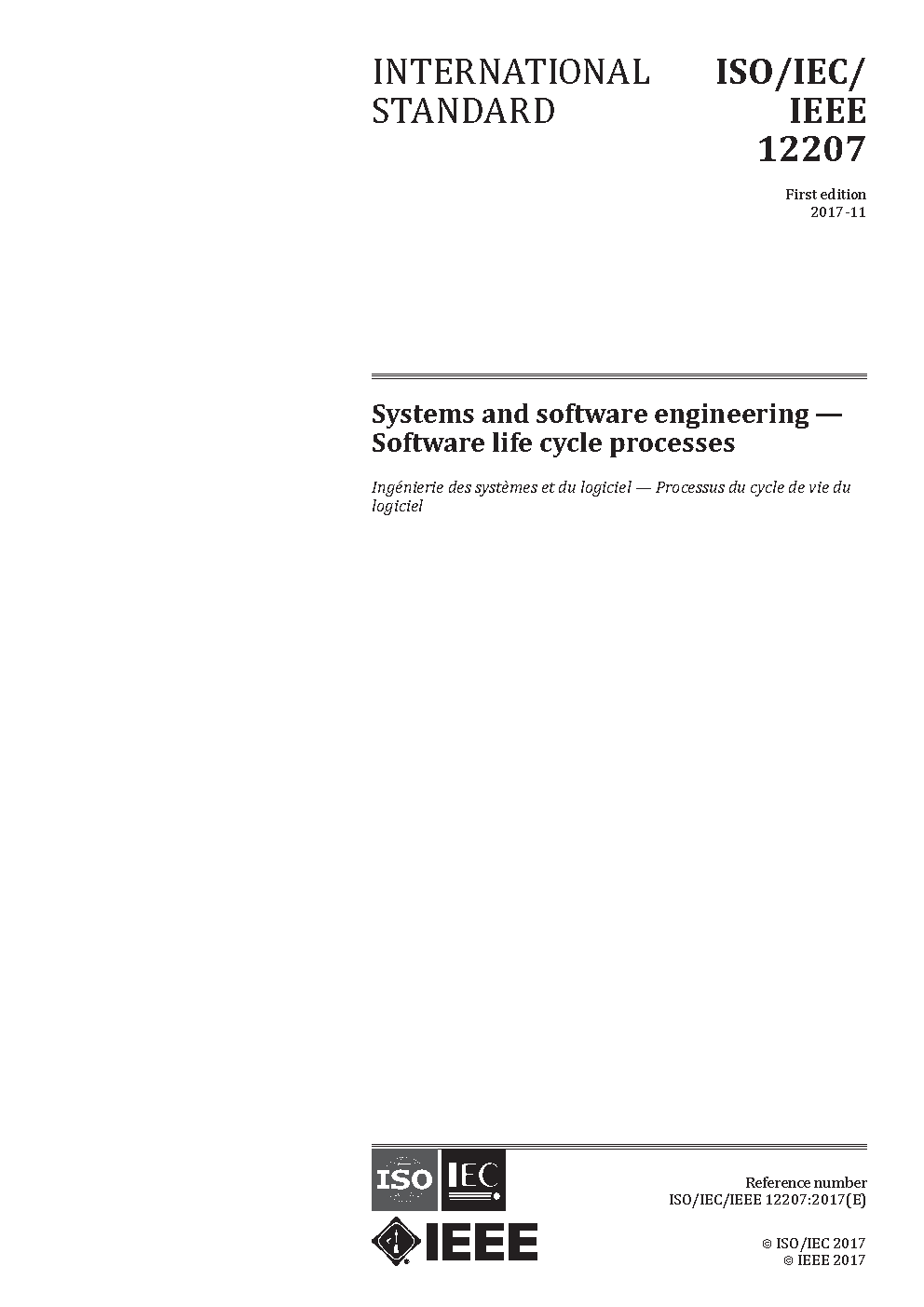
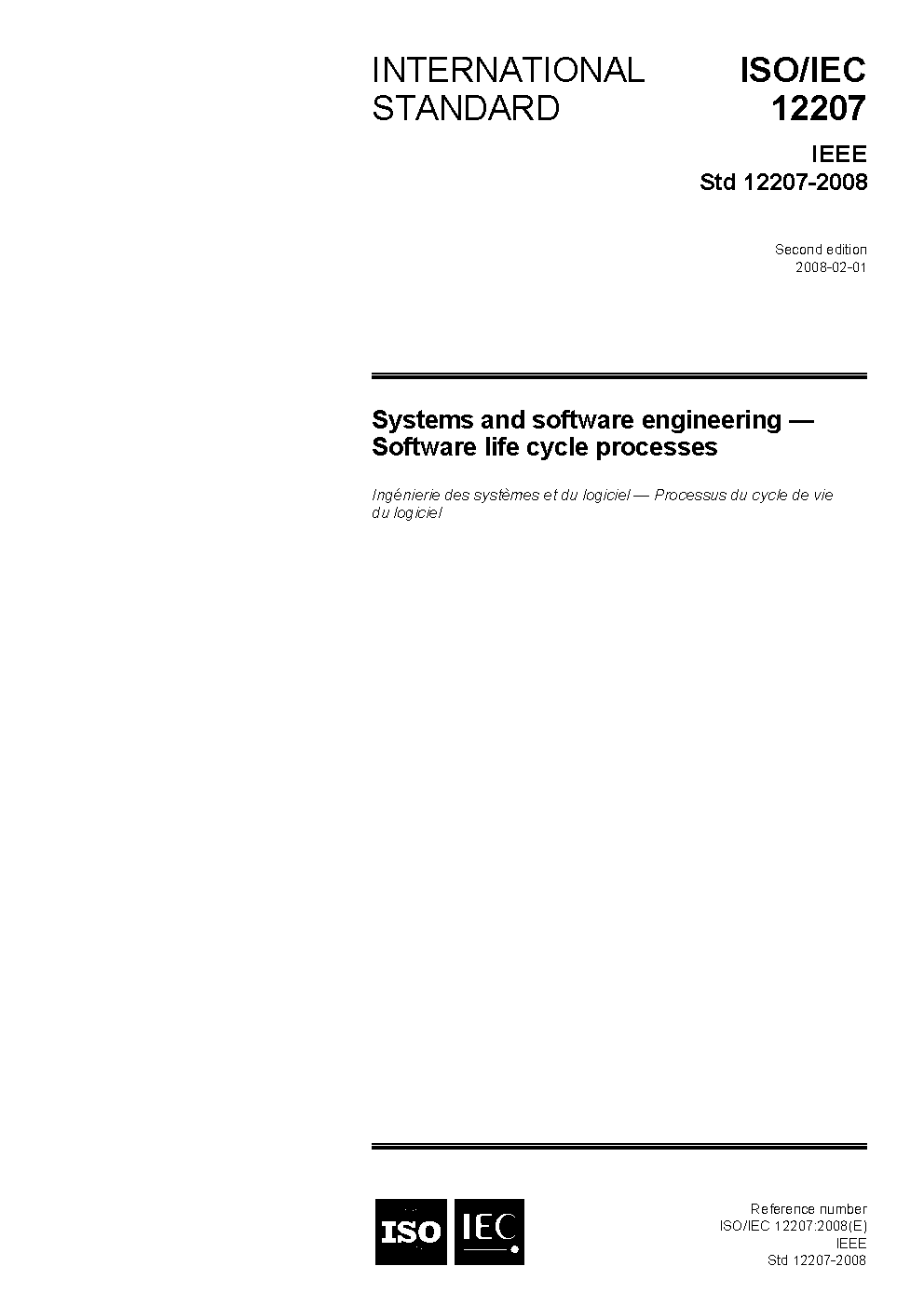
31/01/2008
Superseded
Historical