Superseded
Standard
Historical
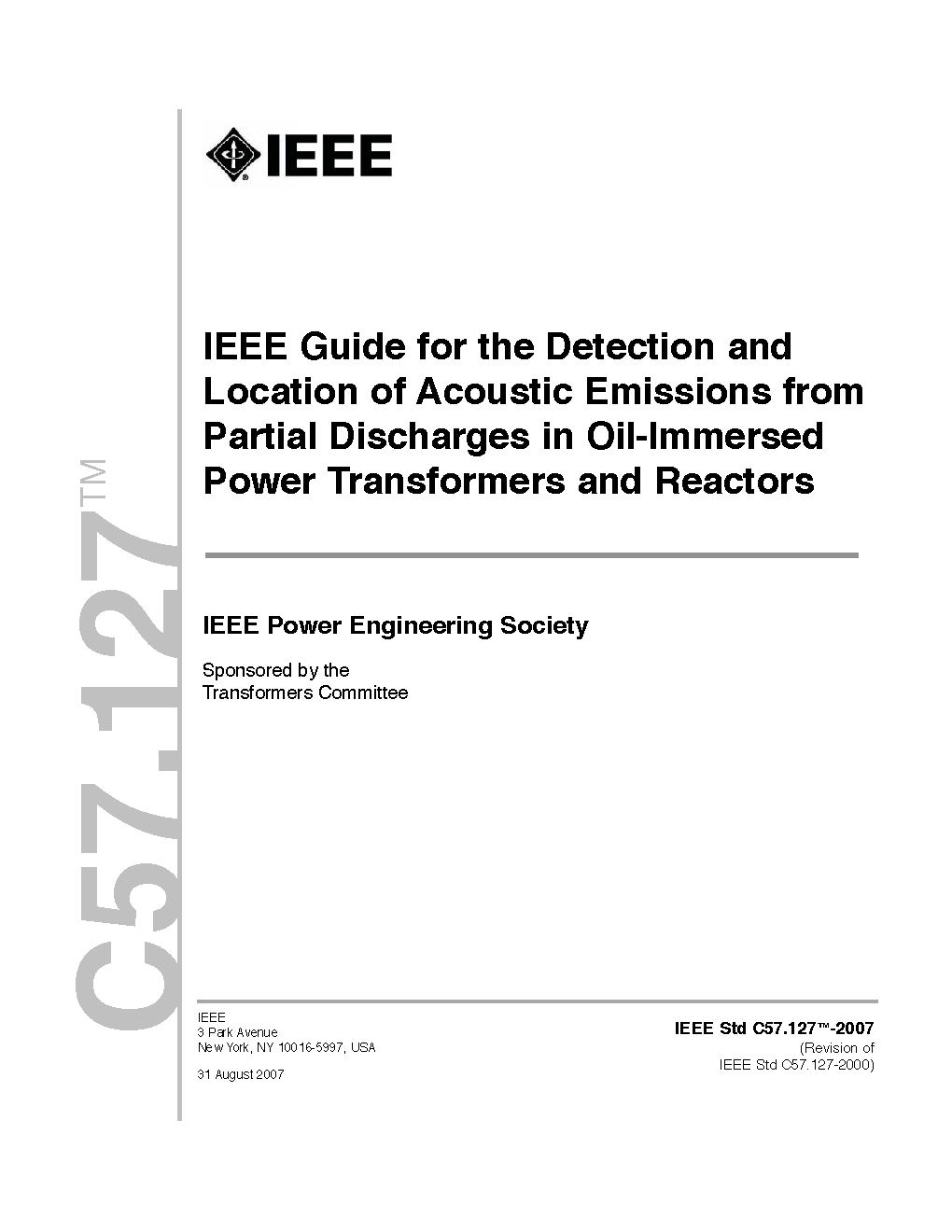
IEEE C57.127:2007
IEEE Guide for the Detection and Location of Acoustic Emissions from Partial Discharges in Oil-Immersed Power Transformers and Reactors

Summary
Revision Standard - Superseded.
This guide is applicable to the detection and location of acoustic emissions from partial discharges and other sources in oil immersed power transformers and reactors. It is intended to provide a means of associating the relative magnitude and position of partial discharges and other sources with the acoustic signals obtained by strategically located transducers.
This guide is applicable to the detection and location of acoustic emissions from partial discharges and other sources in oil immersed power transformers and reactors. Both electrical sources (partial discharge) and mechanical sources (such as loose clamping, bolts, or insulation parts) generate these emissions. There are descriptions of acoustic instrumentation, test procedures, and interpretation of results. When this guide is used with oil-immersed reactors, it must be understood that interpretation of signals may be different
because of the construction of the reactor.
Accuracy of location depends on the type of fault, configuration of tank, type of instrumentation, and
experience.
This guide is intended to provide information that may be helpful in planning, installing, and operating acoustic monitoring equipment and in meaningful interpretation of resulting data. Users are intended to be persons knowledgeable in this field such as utility engineers, consultants, academics, and manufacturers.
This guide is applicable to the detection and location of acoustic emissions from partial discharges and other sources in oil immersed power transformers and reactors. It is intended to provide a means of associating the relative magnitude and position of partial discharges and other sources with the acoustic signals obtained by strategically located transducers.
This guide is applicable to the detection and location of acoustic emissions from partial discharges and other sources in oil immersed power transformers and reactors. Both electrical sources (partial discharge) and mechanical sources (such as loose clamping, bolts, or insulation parts) generate these emissions. There are descriptions of acoustic instrumentation, test procedures, and interpretation of results. When this guide is used with oil-immersed reactors, it must be understood that interpretation of signals may be different
because of the construction of the reactor.
Accuracy of location depends on the type of fault, configuration of tank, type of instrumentation, and
experience.
This guide is intended to provide information that may be helpful in planning, installing, and operating acoustic monitoring equipment and in meaningful interpretation of resulting data. Users are intended to be persons knowledgeable in this field such as utility engineers, consultants, academics, and manufacturers.
Notes
Superseded
Technical characteristics
| Publisher | Institute of Electrical and Electronics Engineers (IEEE) |
| Publication Date | 08/24/2007 |
| Edition | |
| Page Count | 55 |
| EAN | --- |
| ISBN | --- |
| Weight (in grams) | --- |
| Brochures |

|
Amendments replaces
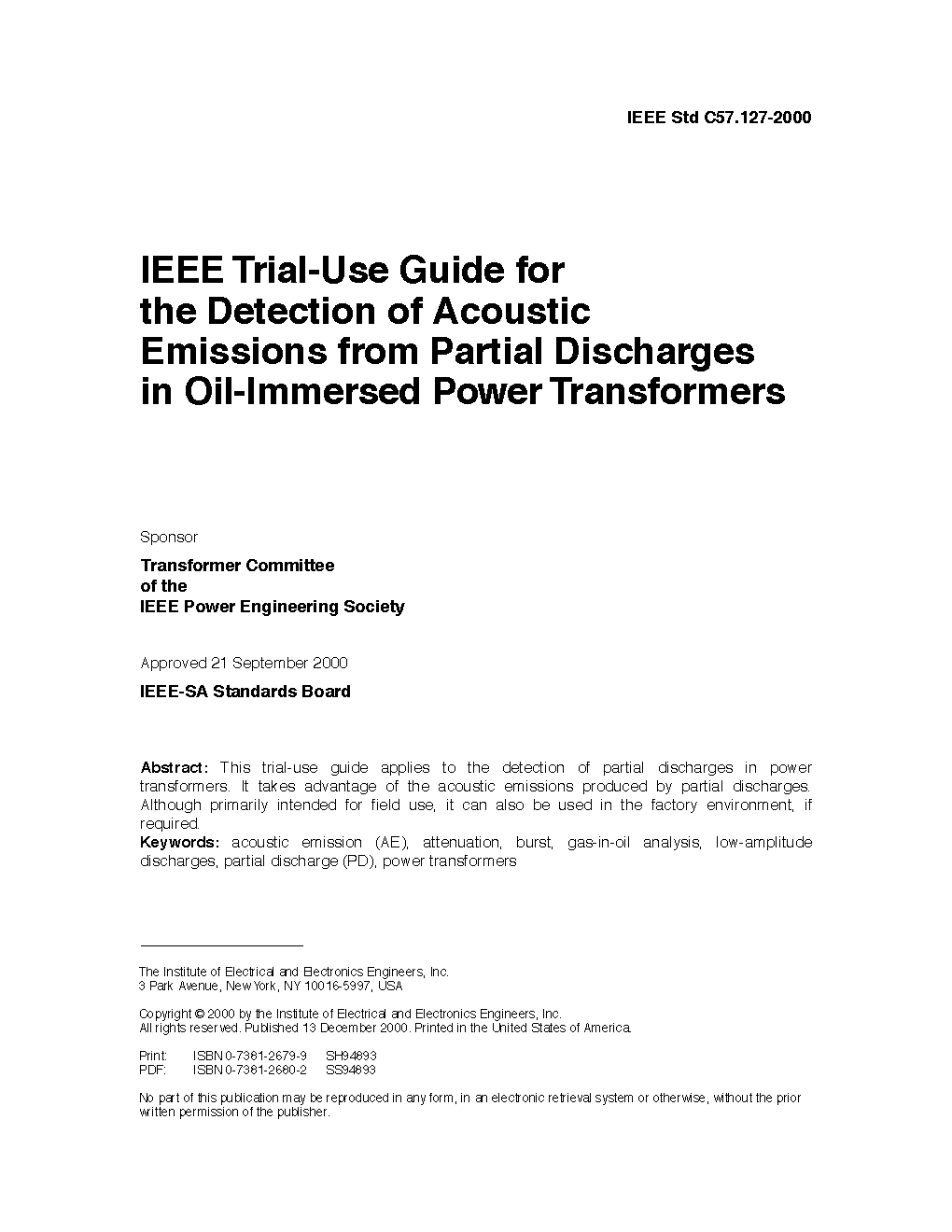
13/12/2000
Superseded
Historical
Previous versions
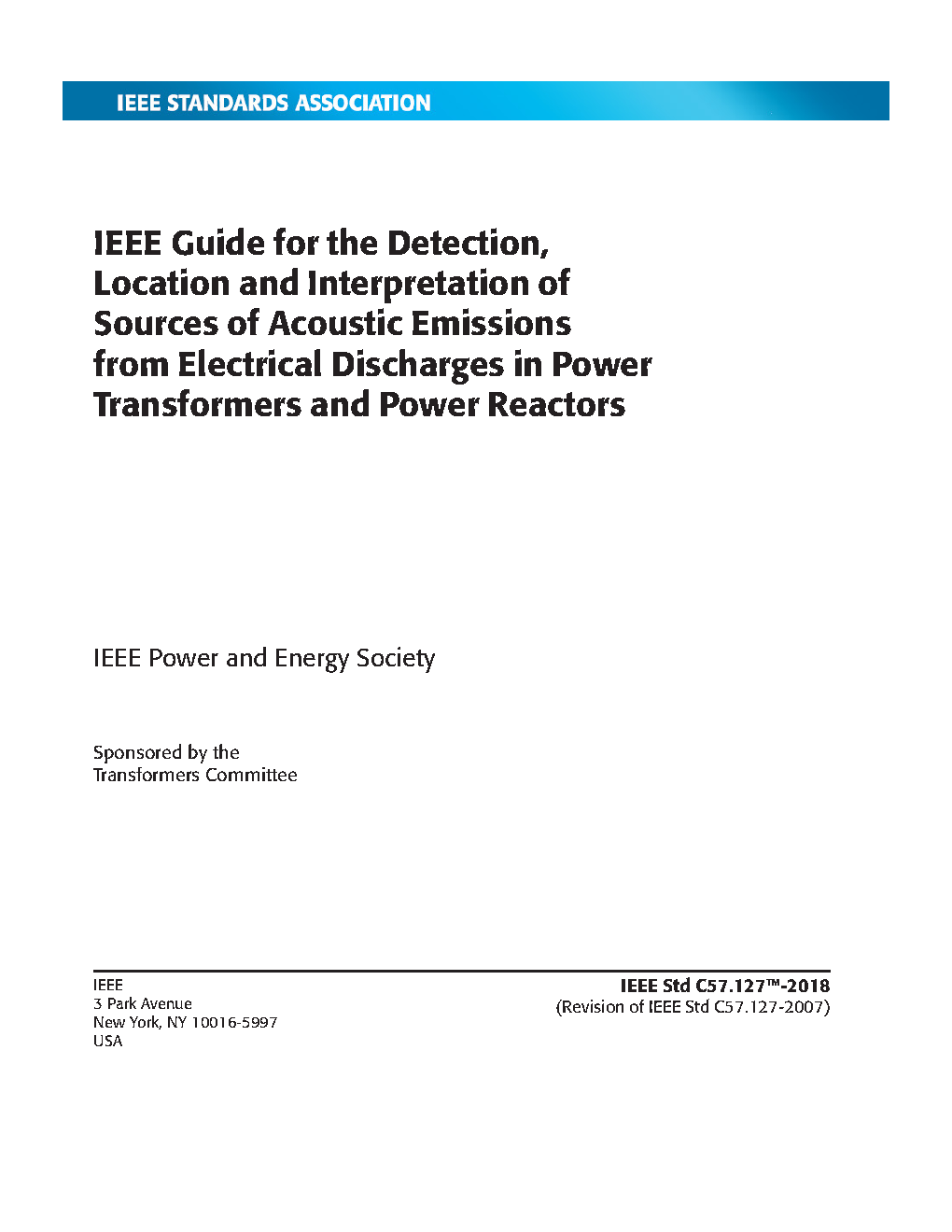
13/12/2000
Superseded
Historical