Superseded
Standard
Historical
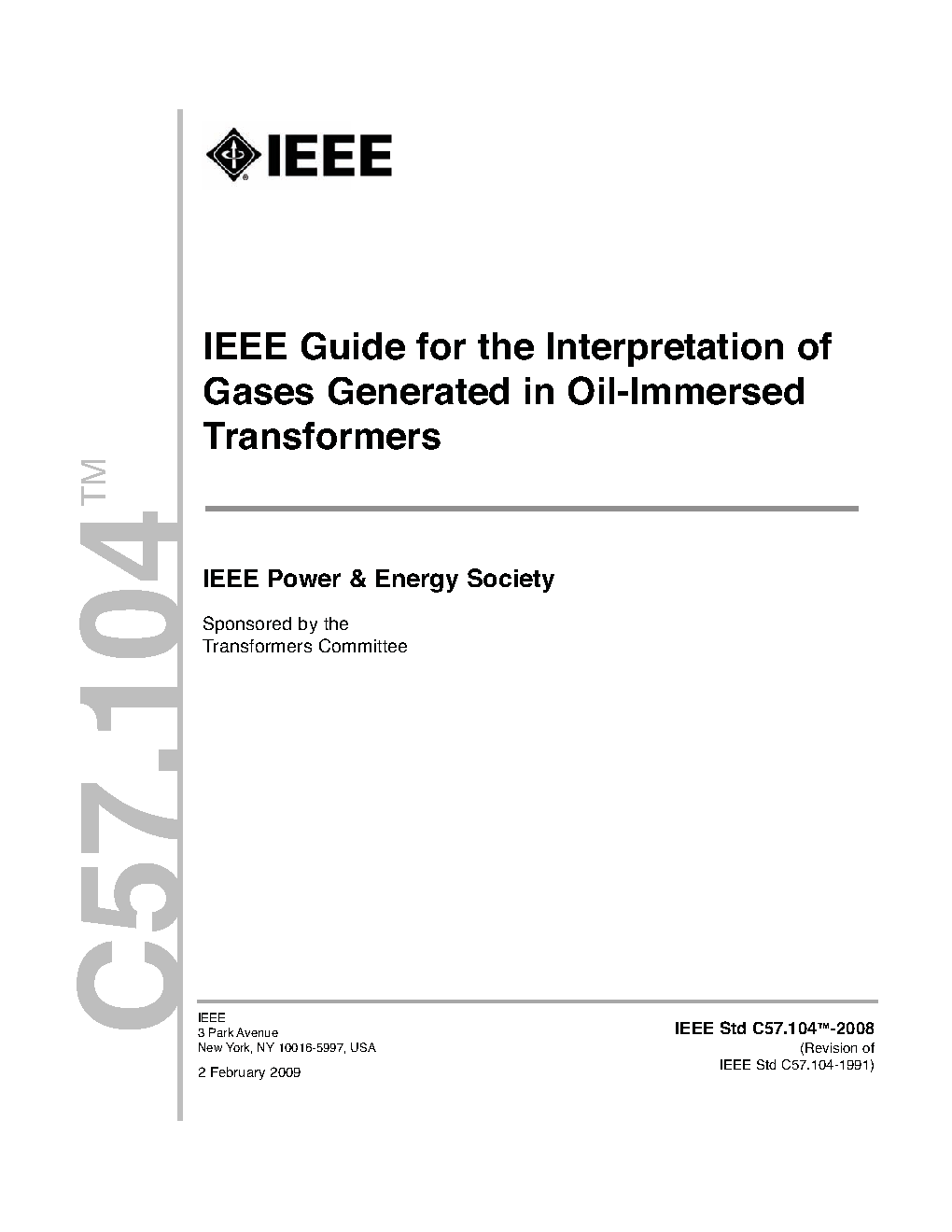
IEEE C57.104:2008
IEEE Guide for the Interpretation of Gases Generated in Oil-Immersed Transformers

Summary
Revision Standard - Superseded.
Detailed procedures for analyzing gas from gas spaces or gas-collecting devices as well as gas dissolved in oil are described. The procedures cover: 1) the calibration and use of field instruments for detecting and estimating the amount of combustible gases present in gas blankets above oil, or in gas detector relays; 2) the use of fixed instruments for detecting and determining the quantity of combustible gases present in gas-blanketed equipment; 3) obtaining samples of gas and oil from the transformer for laboratory analysis; 4) laboratory methods for analyzing the gas blanket and the gases extracted from the oil; and 5) interpreting the results in terms of transformer serviceability. The intent is to provide the operator with useful information concerning the serviceability of the equipment. An extensive bibliography on gas evolution, detection, and interpretation is included.
This guide applies to mineral-oil-immersed transformers and addresses:
a) The theory of combustible gas generation in a transformer
b) The interpretation of gas analysis
c) Suggested operating procedures
d) Various diagnostic techniques, such as key gases, Dornenberg ratios, and Rogers ratios
e) Instruments for detecting and determining the amount of combustible gases present
f) A bibliography of related literature
The purpose of this document is to provide the transformer owner and/or operator with a Guide for operating transformers using analytical tools and methods involving transformer mineral oil and associated developed gases.
Detailed procedures for analyzing gas from gas spaces or gas-collecting devices as well as gas dissolved in oil are described. The procedures cover: 1) the calibration and use of field instruments for detecting and estimating the amount of combustible gases present in gas blankets above oil, or in gas detector relays; 2) the use of fixed instruments for detecting and determining the quantity of combustible gases present in gas-blanketed equipment; 3) obtaining samples of gas and oil from the transformer for laboratory analysis; 4) laboratory methods for analyzing the gas blanket and the gases extracted from the oil; and 5) interpreting the results in terms of transformer serviceability. The intent is to provide the operator with useful information concerning the serviceability of the equipment. An extensive bibliography on gas evolution, detection, and interpretation is included.
This guide applies to mineral-oil-immersed transformers and addresses:
a) The theory of combustible gas generation in a transformer
b) The interpretation of gas analysis
c) Suggested operating procedures
d) Various diagnostic techniques, such as key gases, Dornenberg ratios, and Rogers ratios
e) Instruments for detecting and determining the amount of combustible gases present
f) A bibliography of related literature
The purpose of this document is to provide the transformer owner and/or operator with a Guide for operating transformers using analytical tools and methods involving transformer mineral oil and associated developed gases.
Notes
Superseded
Technical characteristics
| Publisher | Institute of Electrical and Electronics Engineers (IEEE) |
| Publication Date | 02/02/2009 |
| Edition | |
| Page Count | 36 |
| EAN | --- |
| ISBN | --- |
| Weight (in grams) | --- |
| Brochures |

|
Amendments replaces
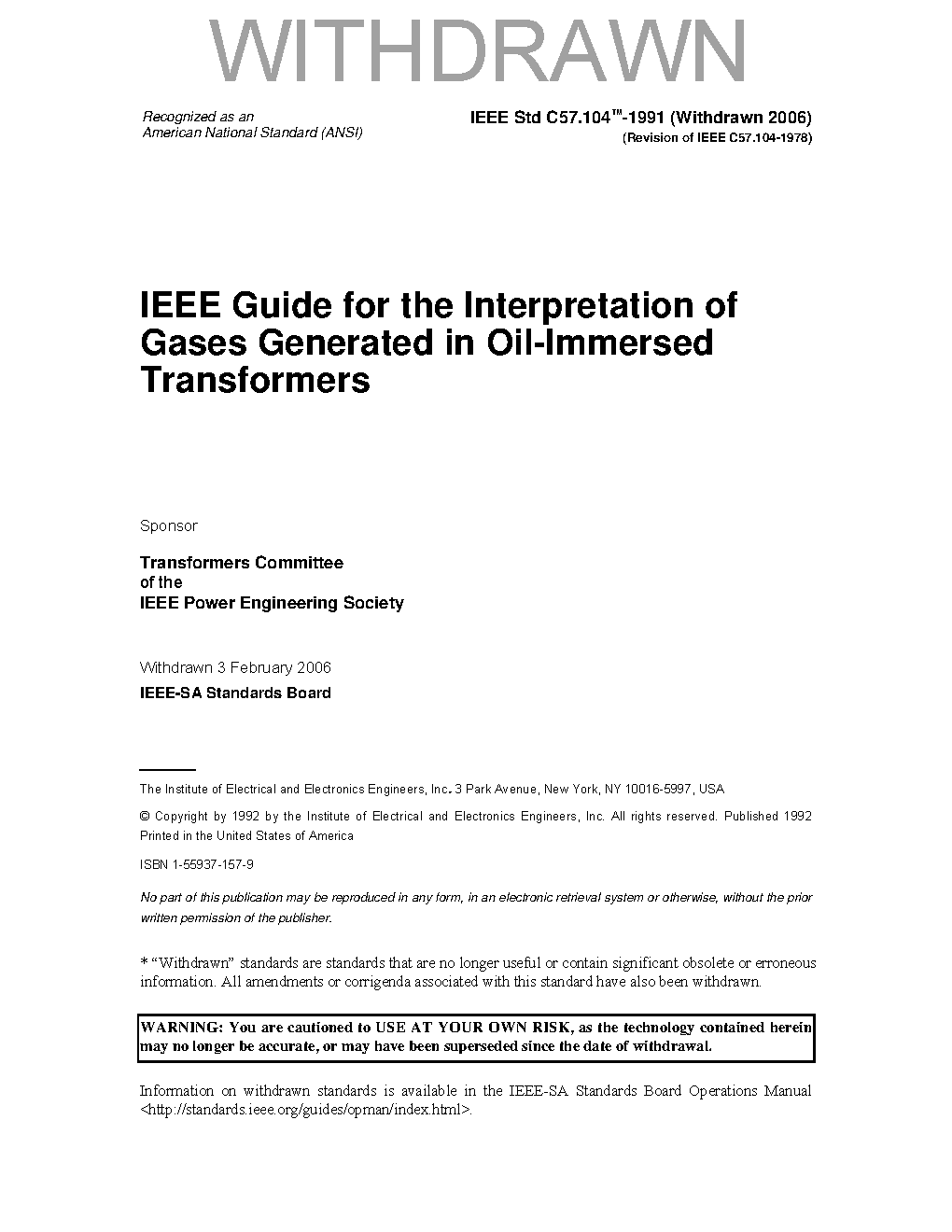
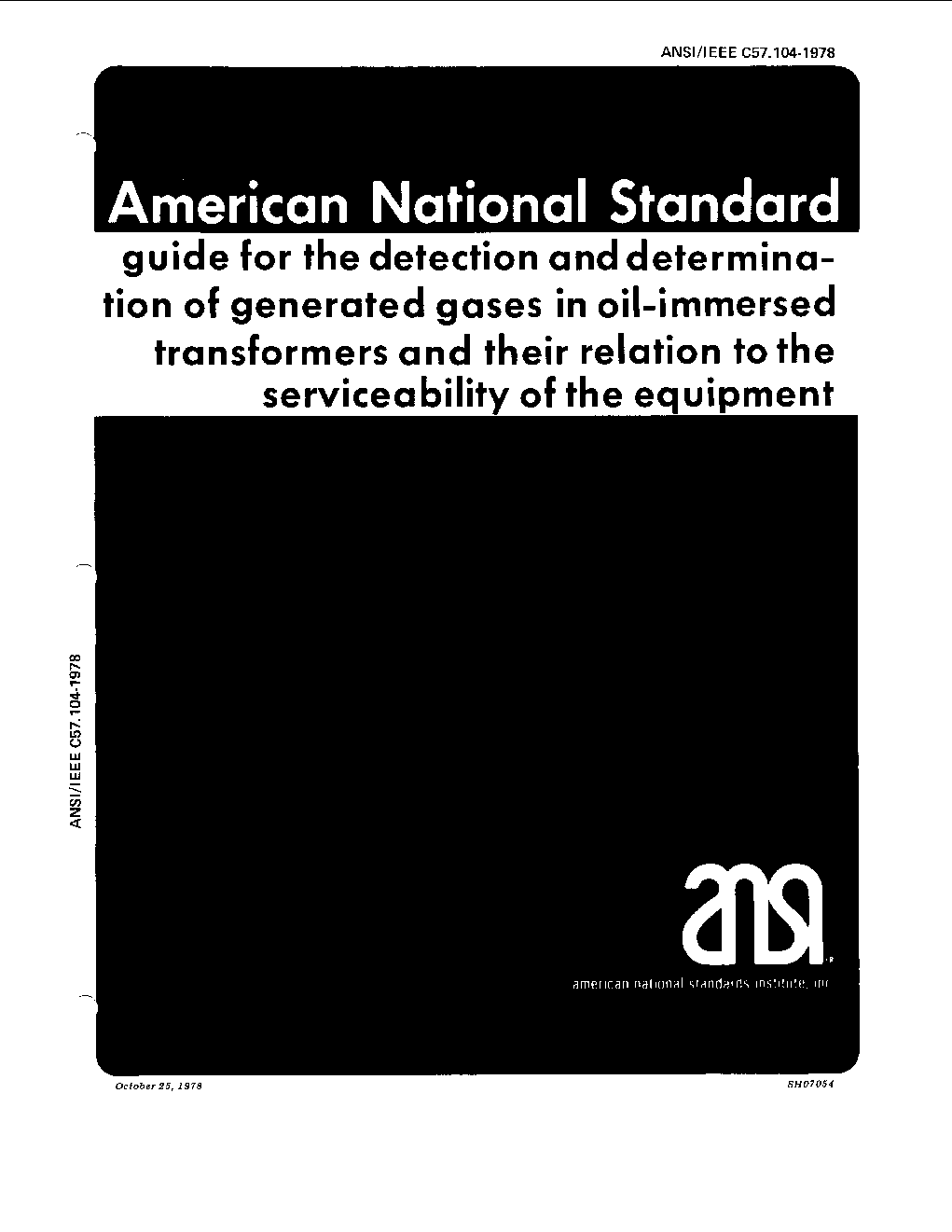
22/07/1992
Superseded
Historical
Previous versions
IEEE C57.104
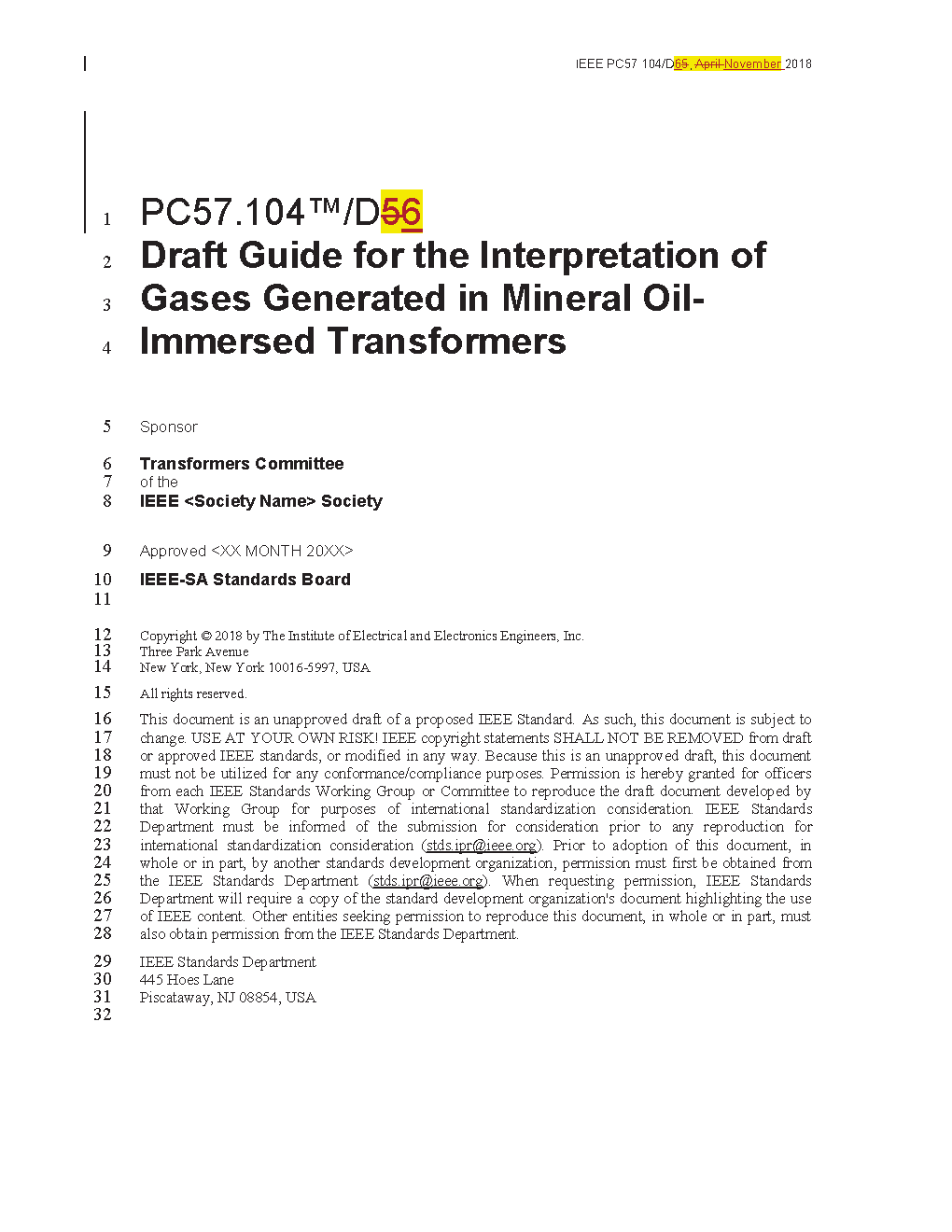
IEEE Draft Guide for the Interpretation of Gases Generated in Oil-Immersed Transformers
22/07/2022
Superseded
Historical

01/11/2019
Active
Most Recent
02/02/2009
Superseded
Historical
22/07/1992
Superseded
Historical