Active
Standard
Most Recent
IEEE C37.119:2016
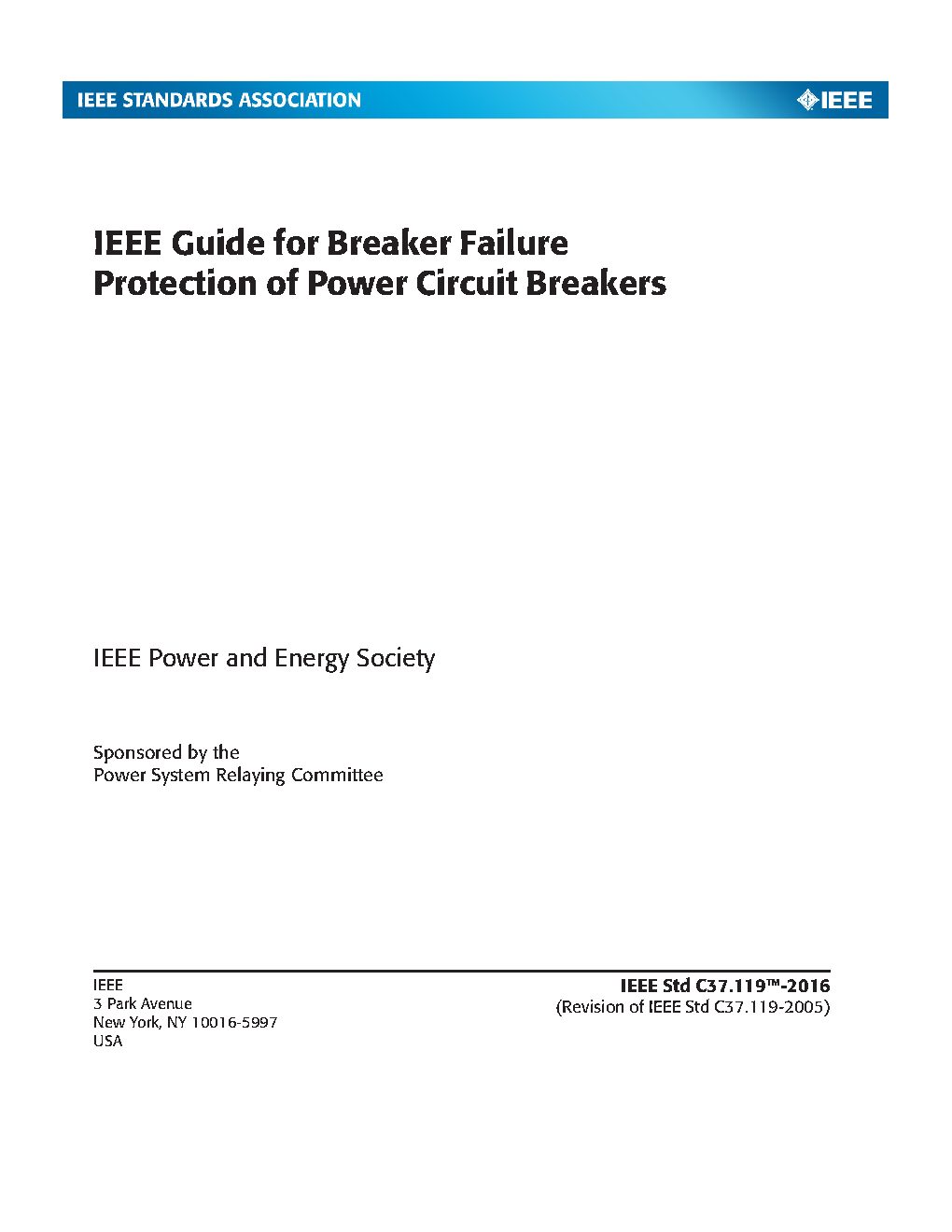
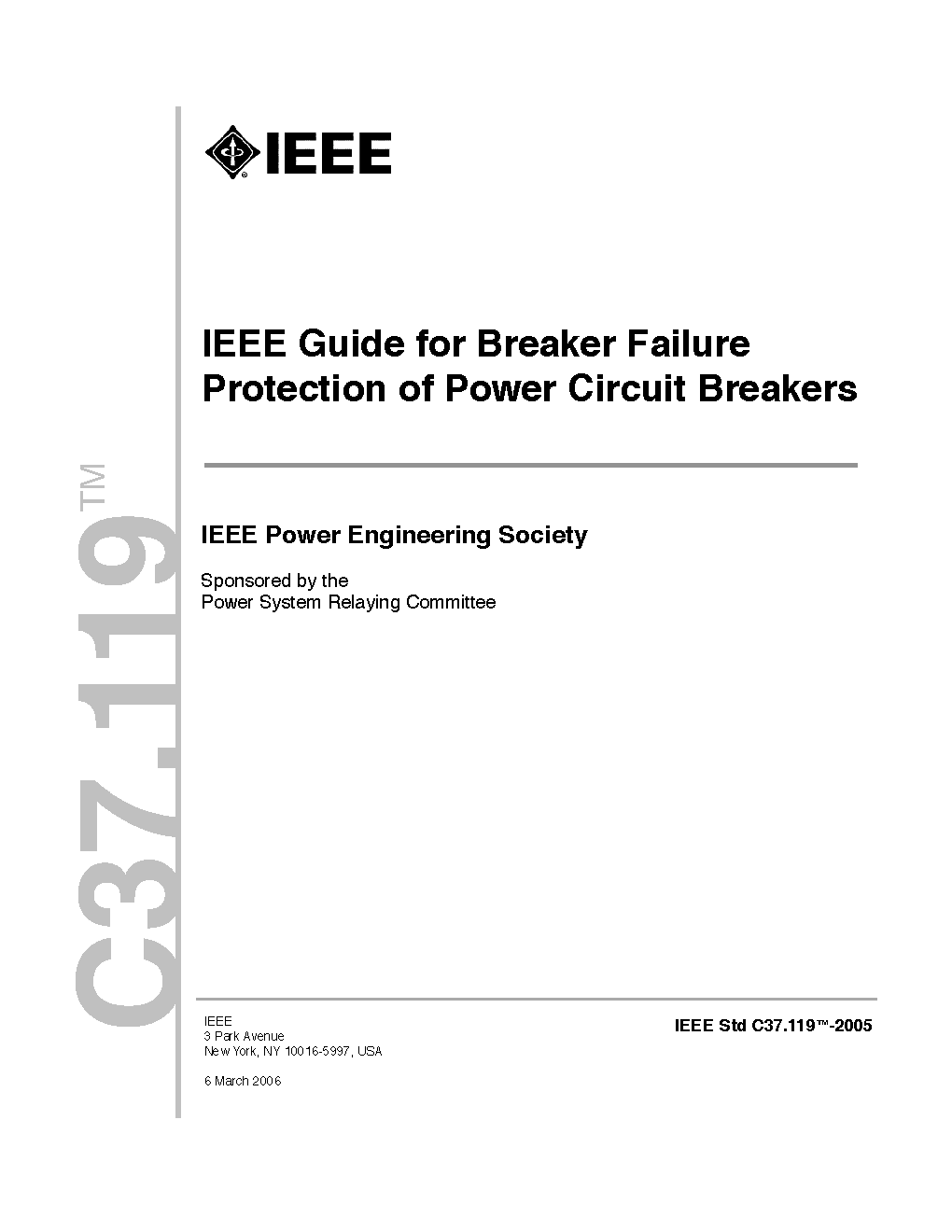
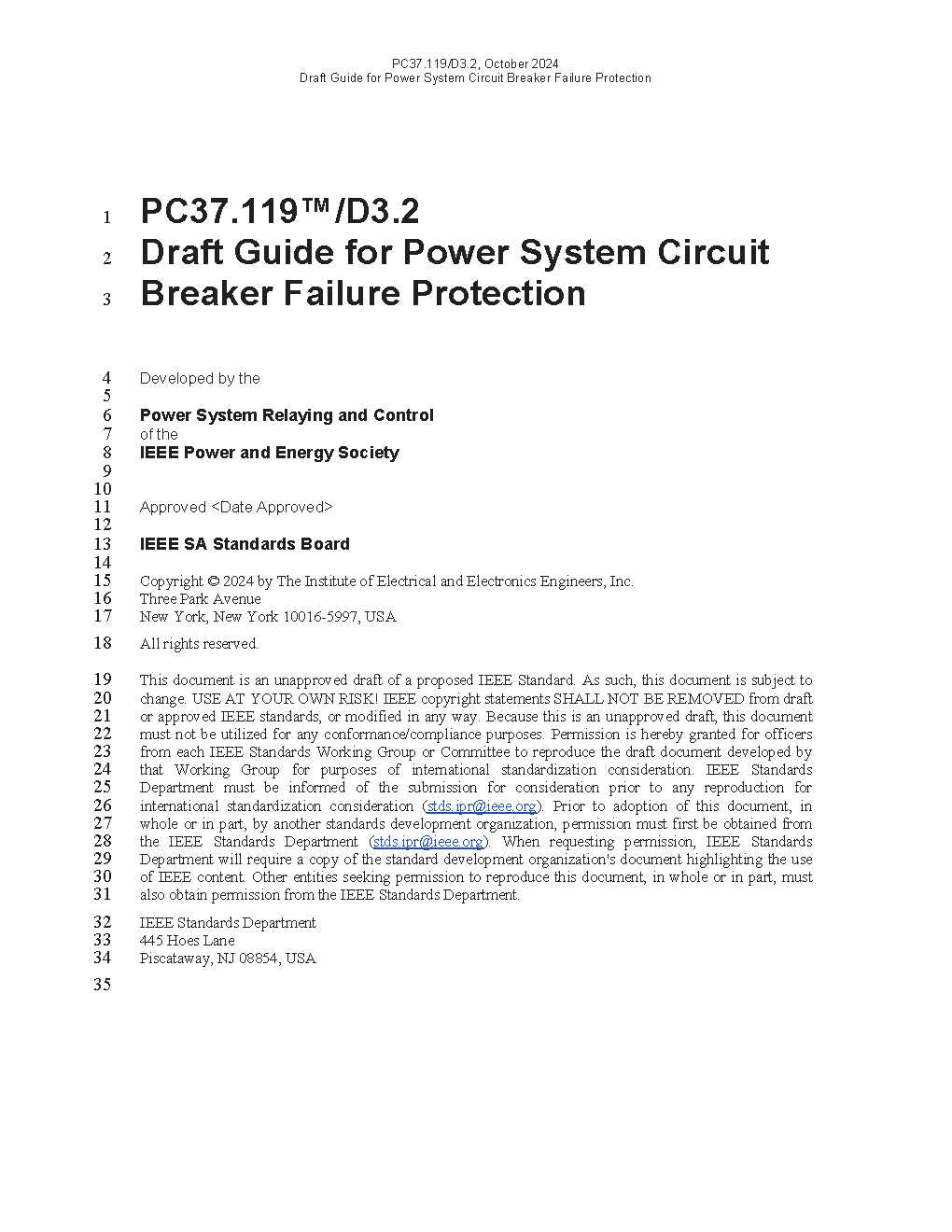
IEEE Guide for Breaker Failure Protection of Power Circuit Breakers

Summary
Revision Standard - Active.
Methods to protect a power system from faults that are not cleared because of failure of a power circuit breaker to operate or interrupt when called upon by a protective relay are described in this guide. The intent is to give the reader a guide in how to detect that a breaker has failed to clear a fault, and how to electrically isolate the fault after the breaker has failed to clear the fault. Additionally, schemes that provide primary protection of the power system from performance failures of the power circuit breaker other than fault clearing failures such as failure to operate, either tripping or closing, manual or automatic, are also described. Such schemes, when applied, are typically integrated as a part of the overall breaker failure protection scheme. Also covered are recent practices that take advantage of new technologies.
This guide describes methods to protect a power system from faults that are not cleared because of failure of a power circuit breaker to operate or interrupt when called upon by a protective relay. The intent is to give the reader a guide in how to detect that a breaker has failed to clear a fault, and how to electrically isolate the fault after the breaker has failed to clear the fault. Additionally, schemes that provide primary protection of the power system from performance failures of the power circuit breaker other than fault clearing failures such as failure to operate, either tripping or closing, manual or automatic, are also described. Such schemes, when applied, are typically integrated as a part of the overall BFP scheme. Also covered are recent practices that take advantage of new technologies.
This guide is intended to help the relay engineer understand the application considerations when applying BFP to power circuit breakers.
Methods to protect a power system from faults that are not cleared because of failure of a power circuit breaker to operate or interrupt when called upon by a protective relay are described in this guide. The intent is to give the reader a guide in how to detect that a breaker has failed to clear a fault, and how to electrically isolate the fault after the breaker has failed to clear the fault. Additionally, schemes that provide primary protection of the power system from performance failures of the power circuit breaker other than fault clearing failures such as failure to operate, either tripping or closing, manual or automatic, are also described. Such schemes, when applied, are typically integrated as a part of the overall breaker failure protection scheme. Also covered are recent practices that take advantage of new technologies.
This guide describes methods to protect a power system from faults that are not cleared because of failure of a power circuit breaker to operate or interrupt when called upon by a protective relay. The intent is to give the reader a guide in how to detect that a breaker has failed to clear a fault, and how to electrically isolate the fault after the breaker has failed to clear the fault. Additionally, schemes that provide primary protection of the power system from performance failures of the power circuit breaker other than fault clearing failures such as failure to operate, either tripping or closing, manual or automatic, are also described. Such schemes, when applied, are typically integrated as a part of the overall BFP scheme. Also covered are recent practices that take advantage of new technologies.
This guide is intended to help the relay engineer understand the application considerations when applying BFP to power circuit breakers.
Notes
Active
Technical characteristics
| Publisher | Institute of Electrical and Electronics Engineers (IEEE) |
| Publication Date | 07/16/2016 |
| Cancellation Date | 07/16/2016 |
| Edition | |
| Page Count | 73 |
| EAN | --- |
| ISBN | --- |
| Weight (in grams) | --- |
| Brochures |

|
Amendments replaces
06/03/2006
Superseded
, Confirmed
Historical
Previous versions
12/10/2024
Active
Most Recent
16/07/2016
Active
Most Recent
06/03/2006
Superseded
, Confirmed
Historical