Active
Standard
Most Recent
IEEE C37.102:2023
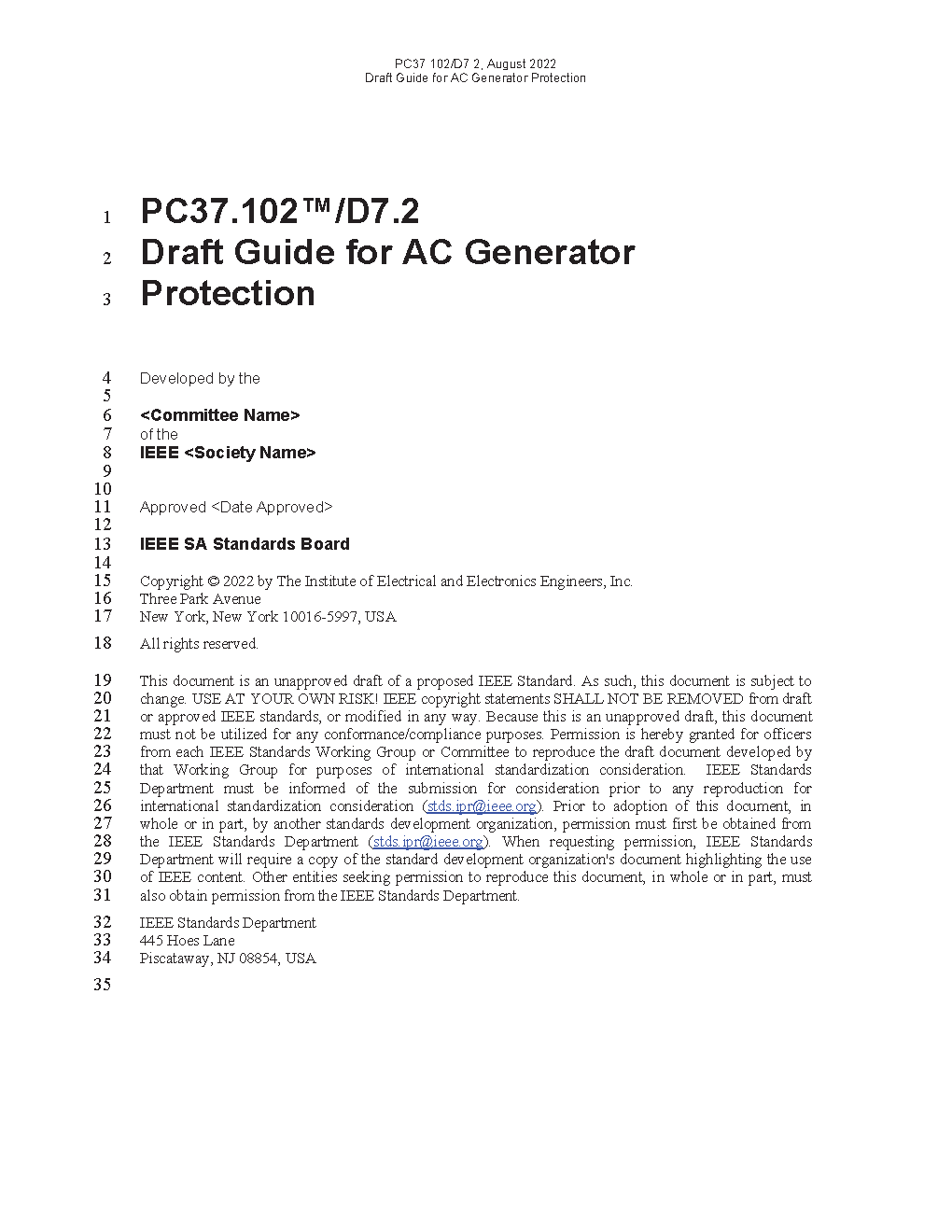
IEEE Approved Draft Guide for AC Generator Protection

Summary
Revision Standard - Active - Draft.
This guide has been prepared to assist the protection engineer in applying relays for the protection of generators from damage caused by internal electrical faults, system faults or abnormal operating conditions.
This application guide for the relay protection of synchronous generators presents a review of the generally accepted forms of protection for the synchronous generator and its excitation system. It summarizes the use of relays and devices and serves as a guide for the selection of equipment to obtain adequate protection. The guide is primarily concerned with protection against faults and abnormal operating conditions for large hydraulic, steam, and combustion turbine generators. Basing generator protection on machine size is difficult because the desired protection may be determined more by the importance of the generator to the power system than by the size of the generator. The recommendations made pertain to typical synchronous generator installations. However, sufficient background information relating to protection requirements, applications, and setting philosophy is given to enable the reader to evaluate the need, to select, and to apply suitable protection for most situations. The protective functions discussed in this guide may be implemented with a multifunction microprocessor based protection system (digital system). The protection philosophy, practices, and limits are essentially identical to those of the implementation using discrete component relays. The algorithms used to perform some of the protection functions may be different, but should produce equal or better protection. However, the performance and capability may be superior using the digital systems such as improved frequency response (bandwidth) and thresholds (pickup settings). Other additional features may be available from these digital systems that enhance the functionality. This guide does not purport to detail the protective requirements of all generators in every situation. For example, standby and emergency-use generators are specifically excluded.
This Guide summarizes the use of relays and devices such that the reader may select the necessary equipment to provide adequate protection for AC generators from short circuits and abnormal operating conditions.
This guide has been prepared to assist the protection engineer in applying relays for the protection of generators from damage caused by internal electrical faults, system faults or abnormal operating conditions.
This application guide for the relay protection of synchronous generators presents a review of the generally accepted forms of protection for the synchronous generator and its excitation system. It summarizes the use of relays and devices and serves as a guide for the selection of equipment to obtain adequate protection. The guide is primarily concerned with protection against faults and abnormal operating conditions for large hydraulic, steam, and combustion turbine generators. Basing generator protection on machine size is difficult because the desired protection may be determined more by the importance of the generator to the power system than by the size of the generator. The recommendations made pertain to typical synchronous generator installations. However, sufficient background information relating to protection requirements, applications, and setting philosophy is given to enable the reader to evaluate the need, to select, and to apply suitable protection for most situations. The protective functions discussed in this guide may be implemented with a multifunction microprocessor based protection system (digital system). The protection philosophy, practices, and limits are essentially identical to those of the implementation using discrete component relays. The algorithms used to perform some of the protection functions may be different, but should produce equal or better protection. However, the performance and capability may be superior using the digital systems such as improved frequency response (bandwidth) and thresholds (pickup settings). Other additional features may be available from these digital systems that enhance the functionality. This guide does not purport to detail the protective requirements of all generators in every situation. For example, standby and emergency-use generators are specifically excluded.
This Guide summarizes the use of relays and devices such that the reader may select the necessary equipment to provide adequate protection for AC generators from short circuits and abnormal operating conditions.
Notes
Active
Technical characteristics
| Publisher | Institute of Electrical and Electronics Engineers (IEEE) |
| Publication Date | 06/28/2024 |
| Cancellation Date | 06/28/2024 |
| Edition | |
| Page Count | 211 |
| EAN | --- |
| ISBN | --- |
| Weight (in grams) | --- |
| Brochures |

|
Amendments replaces
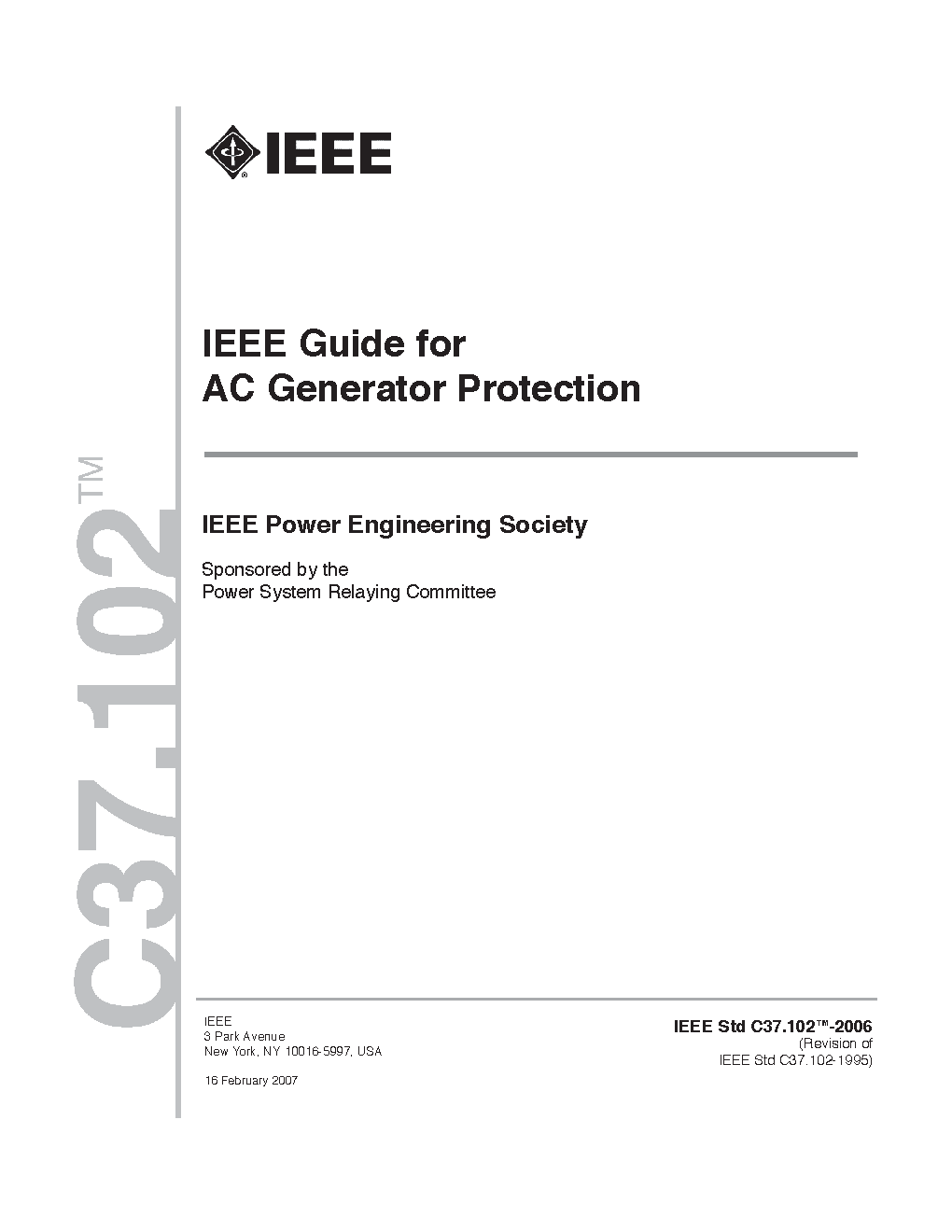
16/02/2007
Withdrawn
, Confirmed
Most Recent
Previous versions
28/06/2024
Active
Most Recent
16/02/2007
Withdrawn
, Confirmed
Most Recent
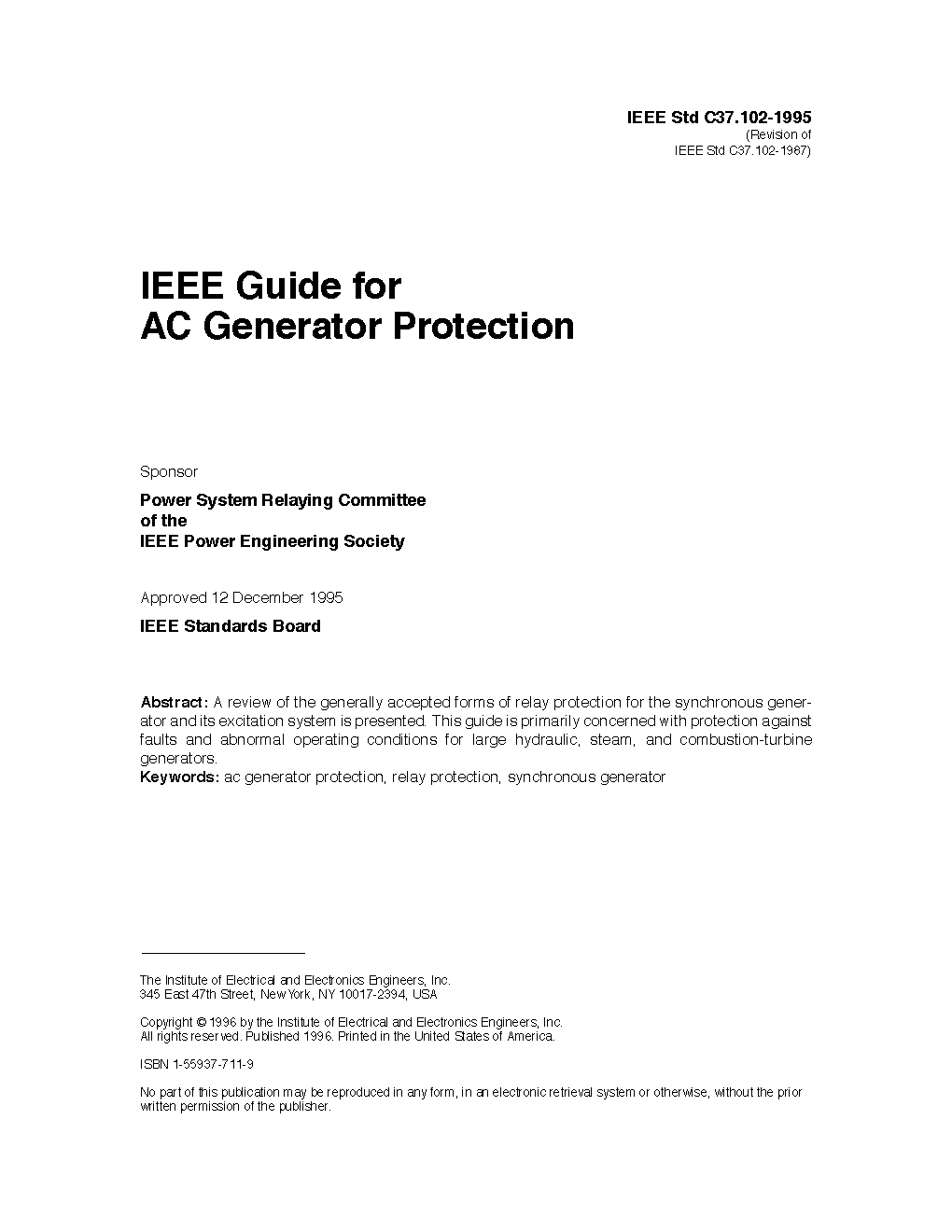
30/11/1995
Superseded
, Confirmed
Historical

31/12/1987
Superseded
, Confirmed
Historical