
Withdrawn
Standard
Most Recent
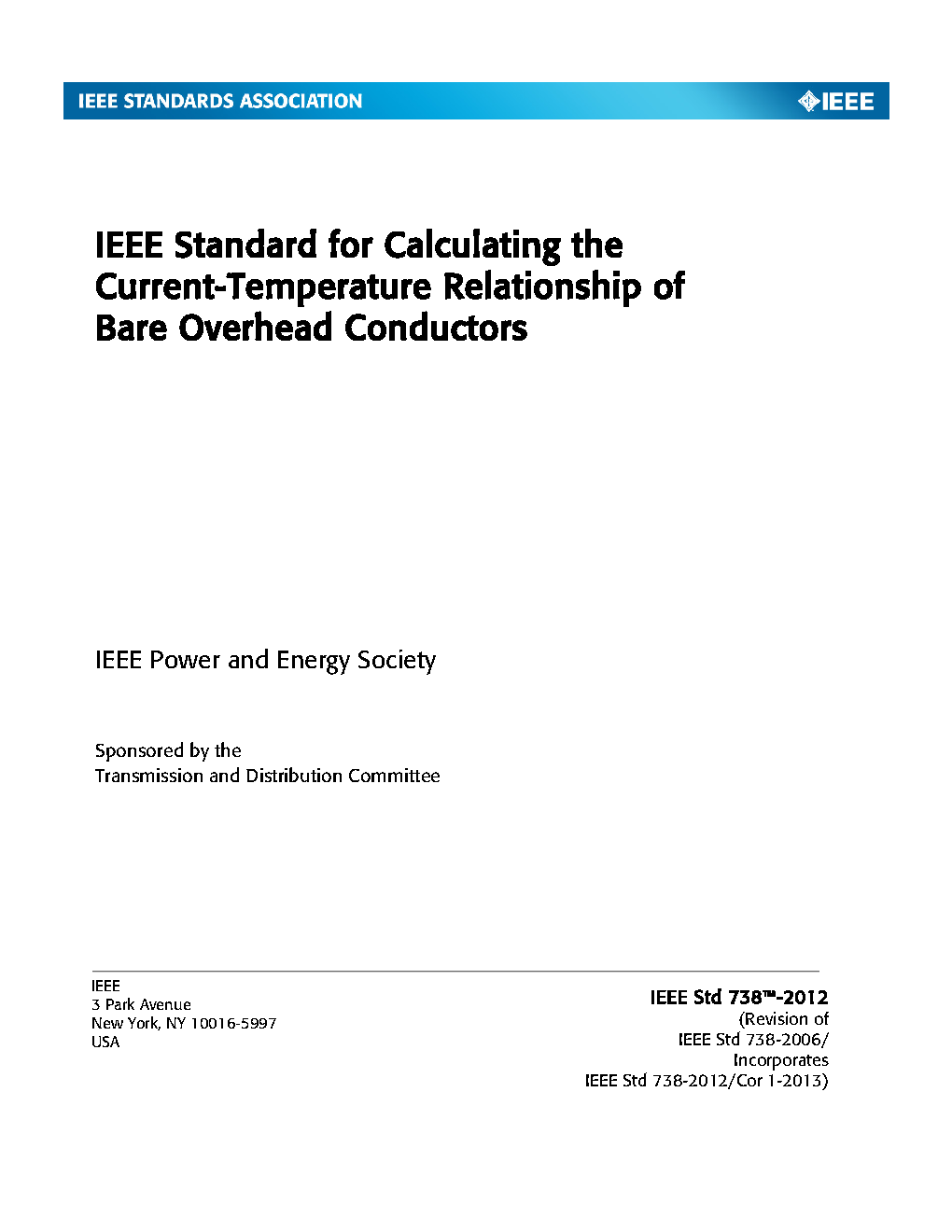
IEEE 738:2012
IEEE Standard for Calculating the Current-Temperature Relationship of Bare Overhead Conductors

Summary
Revision Standard - Inactive-Reserved.
A method of calculating the current-temperature relationship of bare overhead lines, given the weather conditions, is presented. Along with a mathematical method, sources of the values to be used in the calculation are indicated. This standard does not undertake to list actual temperature-ampacity relationships for a large number of conductors nor does it recommend appropriately conservative weather conditions for the rating of overhead power lines. It does, however, provide a standard method for doing such calculations for both constant and variable conductor current and weather conditions.
The standard describes a numerical method by which the core and surface temperatures of a bare stranded overhead conductor are related to the steady or time-varying electrical current and weather conditions. The method may also be used to determine the conductor current that corresponds to conductor temperature limits. The standard does not recommend suitable weather conditions or conductor parameters for use in line rating calculations.
The purpose of the standard is to provide a well-documented method by which the temperatures, steady-state, transient, and real-time thermal ratings of overhead power line conductors can be calculated given suitable weather, conductor parameters, and (for ratings) maximum conductor temperatures.
A method of calculating the current-temperature relationship of bare overhead lines, given the weather conditions, is presented. Along with a mathematical method, sources of the values to be used in the calculation are indicated. This standard does not undertake to list actual temperature-ampacity relationships for a large number of conductors nor does it recommend appropriately conservative weather conditions for the rating of overhead power lines. It does, however, provide a standard method for doing such calculations for both constant and variable conductor current and weather conditions.
The standard describes a numerical method by which the core and surface temperatures of a bare stranded overhead conductor are related to the steady or time-varying electrical current and weather conditions. The method may also be used to determine the conductor current that corresponds to conductor temperature limits. The standard does not recommend suitable weather conditions or conductor parameters for use in line rating calculations.
The purpose of the standard is to provide a well-documented method by which the temperatures, steady-state, transient, and real-time thermal ratings of overhead power line conductors can be calculated given suitable weather, conductor parameters, and (for ratings) maximum conductor temperatures.
Notes
Inactive-Reserved
Technical characteristics
| Publisher | Institute of Electrical and Electronics Engineers (IEEE) |
| Publication Date | 12/23/2013 |
| Cancellation Date | 03/30/2023 |
| Edition | |
| Page Count | 72 |
| EAN | --- |
| ISBN | --- |
| Weight (in grams) | --- |
| Brochures |

|
Amendments replaces
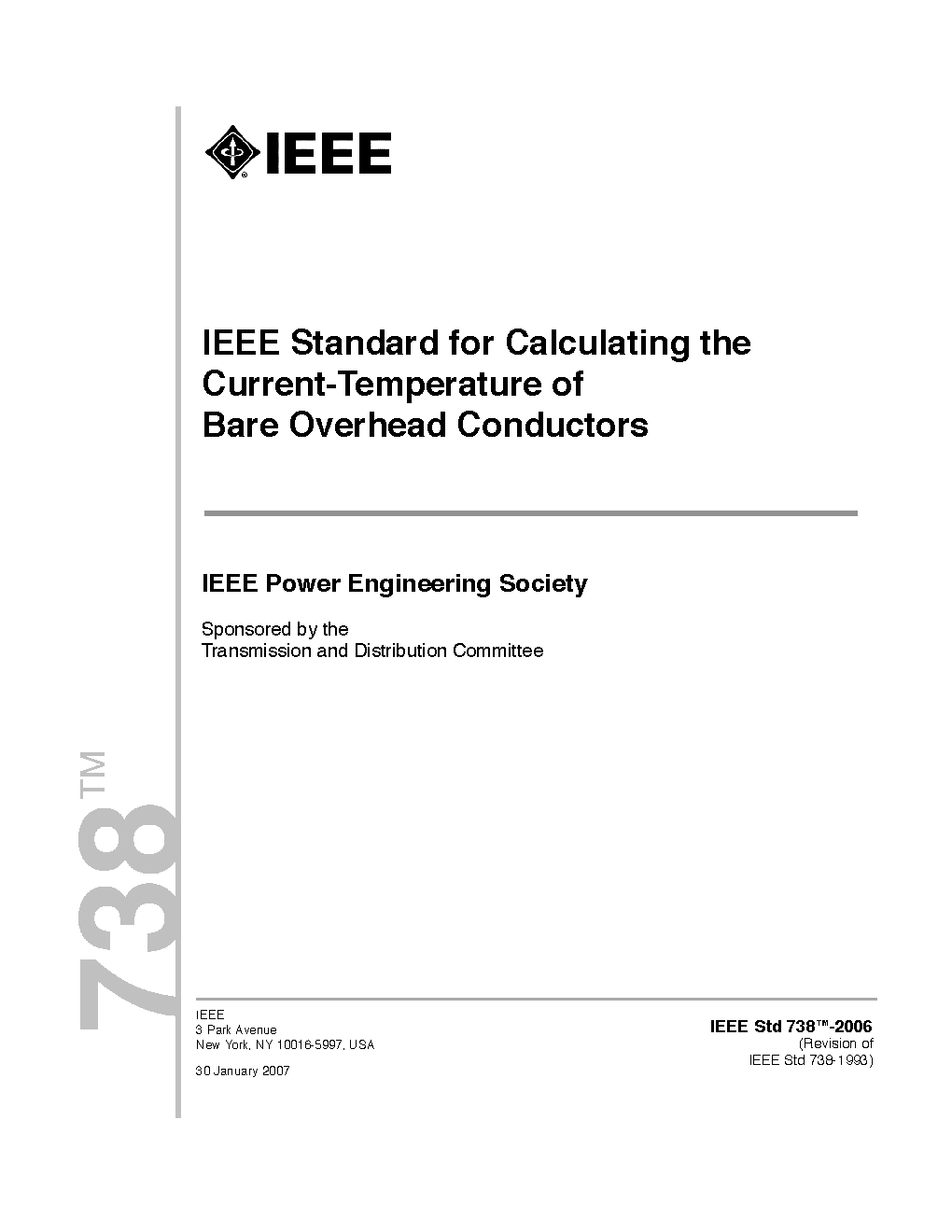
30/01/2007
Superseded
Historical
Previous versions
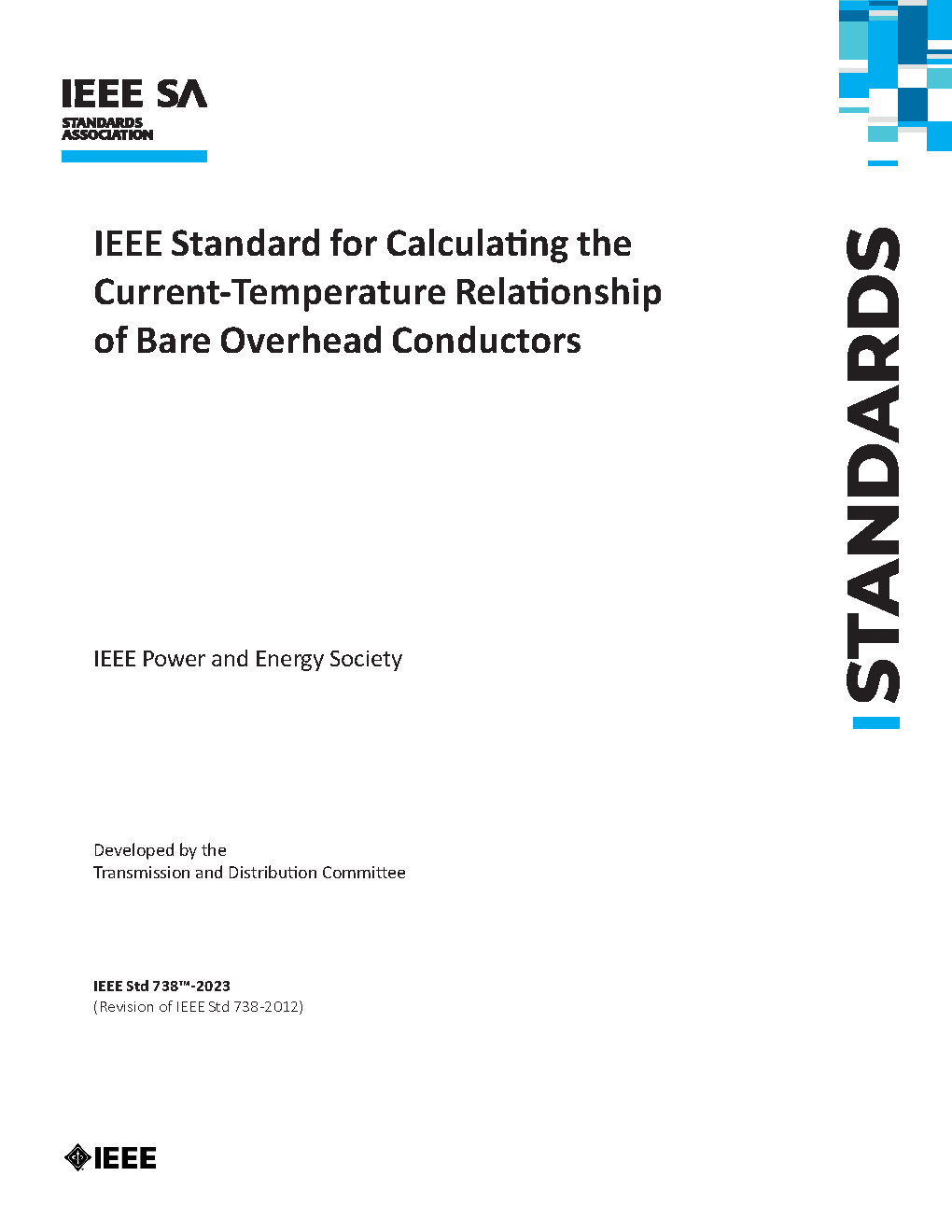
19/12/2023
Active
Most Recent
23/12/2013
Withdrawn
Most Recent
30/01/2007
Superseded
Historical

08/11/1993
Superseded
Historical
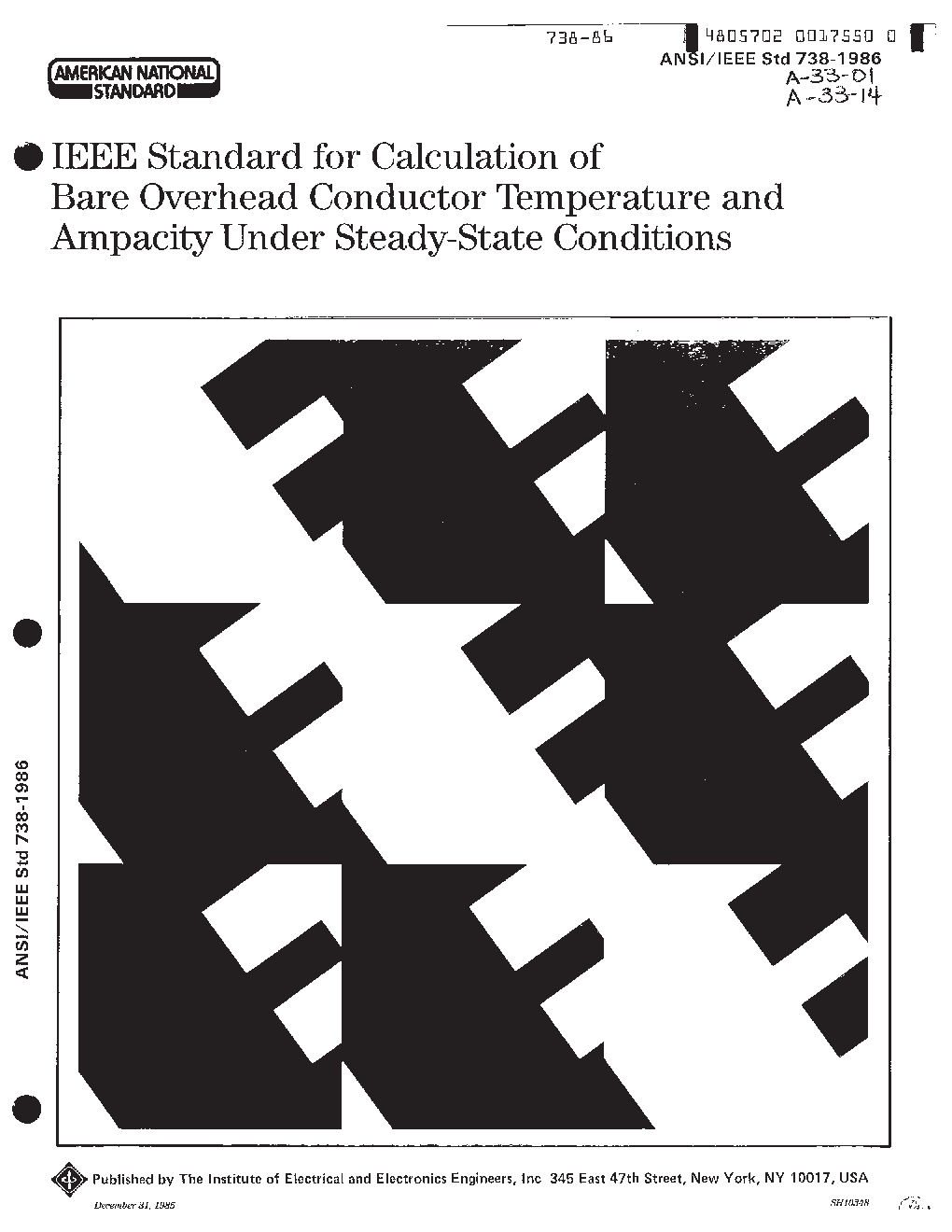
31/12/1985
Superseded
, Confirmed
Historical