Active
Standard
Most Recent
IEEE 389:2020
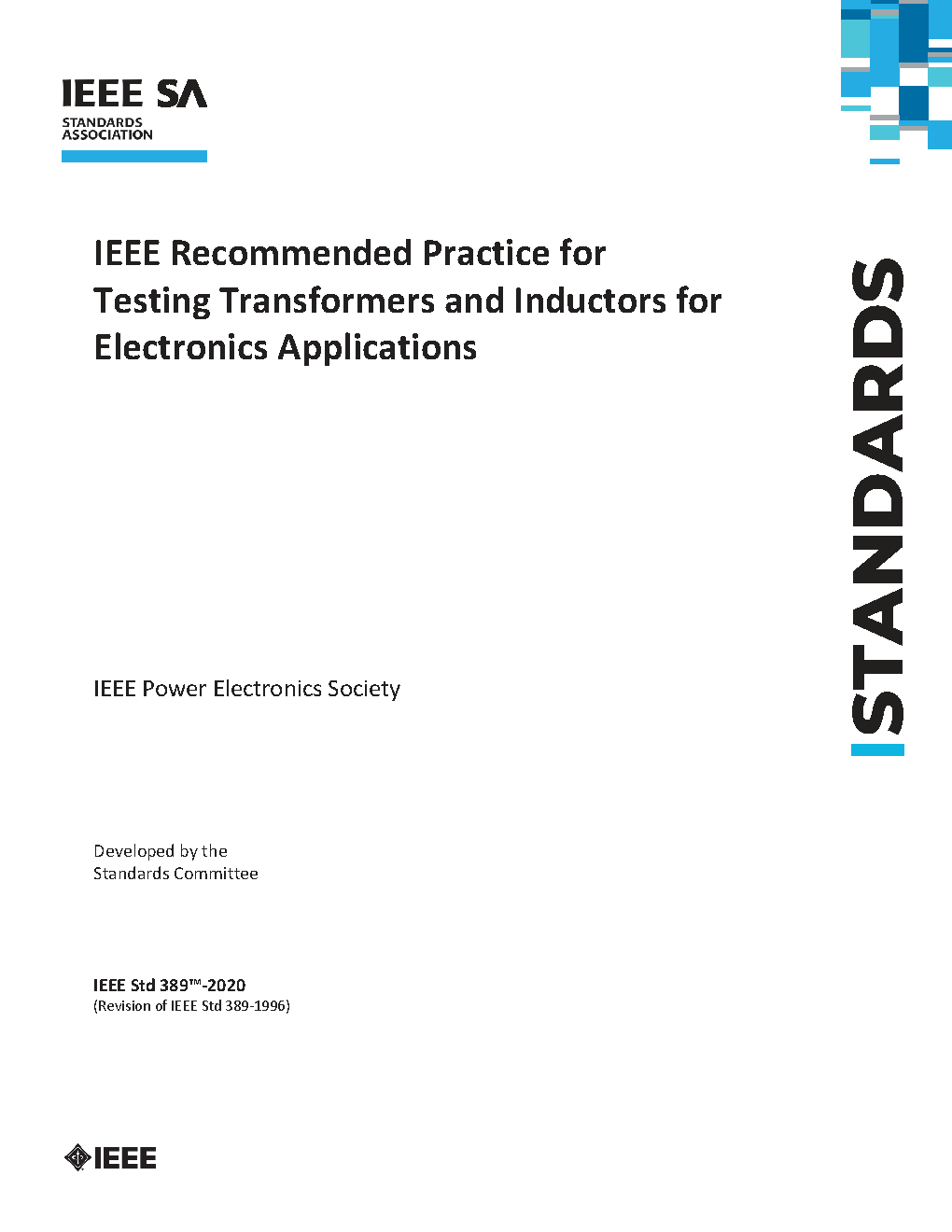
IEEE Recommended Practice for Testing Transformers and Inductors for Electronics Applications

Summary
Revision Standard - Active.
A number of tests are presented for use in determining the significant parameters and performance characteristics of electronics transformers and inductors. These tests are designed primarily for transformers and inductors used in all types of electronics applications, but they may apply to the other types of transformers of large apparent-power rating used in the electric power utility industry.
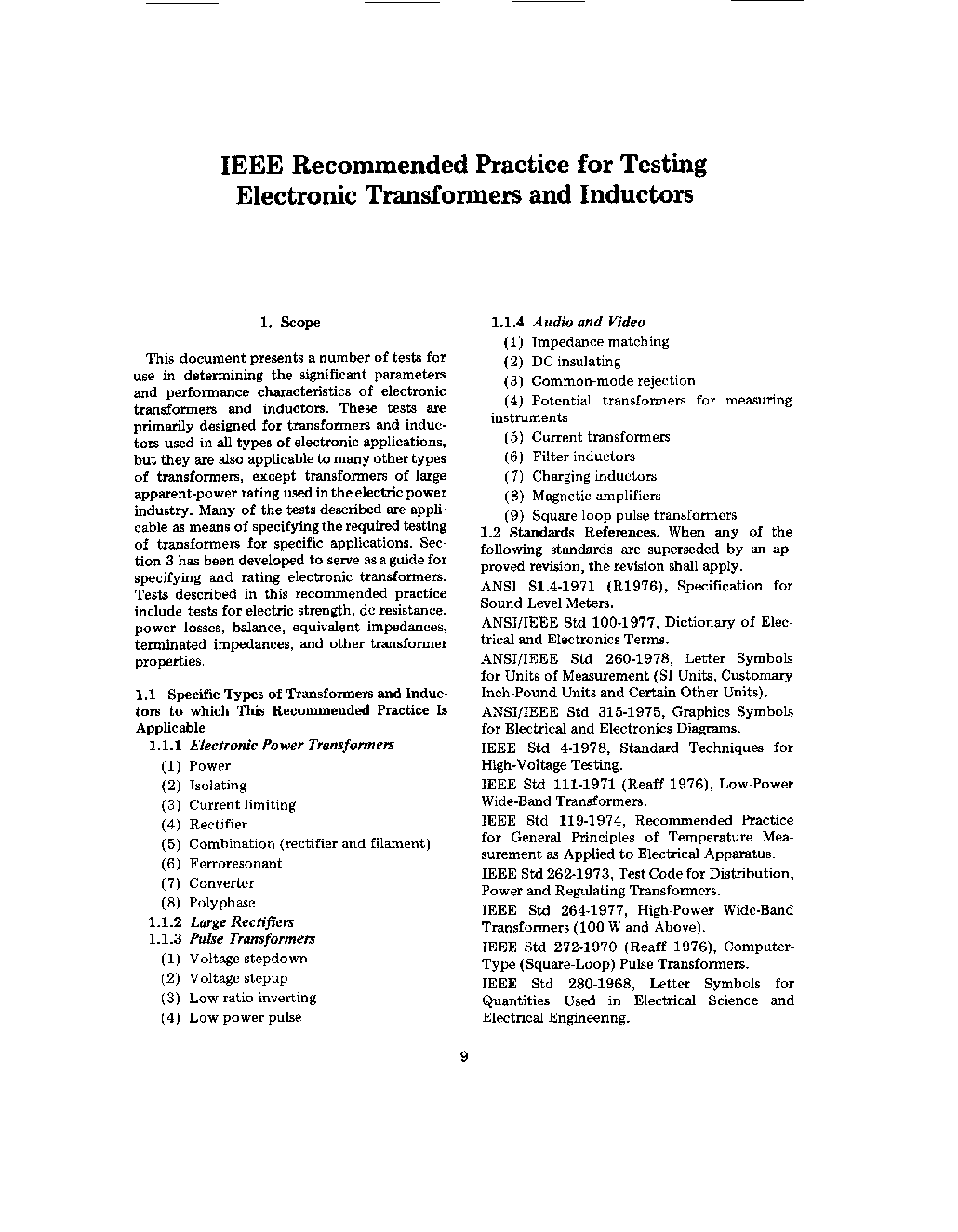
This recommended practice presents a number of tests for use in determining the significant parameters and performance characteristics of electronics transformers and inductors. These tests are designed primarily for transformers and inductors used in all types of electronics applications. Even though these tests may be useful to the other types of transformers used in power distribution applications in utilities, industry, and others, the tests discussed in this document may supplement or complement the tests, but are not intended to replace the tests in standards for transformers, such as those in the IEEE C57 series of standards. Some of the tests described are intended for qualifying a product for a specific application, while others are test practices used for manufacturing and customer acceptance testing. The tests described in this recommended practice include those most commonly used in the electronics transformer industry: electric strength, resistance, power loss, inductance, impedance, balance, ratio of transformation, and many others used less
frequently.
The following are the specific types of transformers and inductors to which this recommended practice is applicable: a) Electronic power: 1) Power, 2) Isolating, 3) Current limiting, 4) Rectifier, 5) Combination (rectifier and filament), 6) Ferroresonant, 7) Converter, 8) Polyphase, 9) Switch mode,
10) Magnetic amplifiers; b) Large rectifiers; c) Pulse: 1) Voltage stepdown, 2) Voltage stepup, 3) Low ratio inverting, 4) Low power pulse, 5) Square-loop, d) Broadband, 1) Impedance matching, 2) DC insulating, 3) Common-mode rejection, 4) Potential transformers, 5) Current transformers, 6) Filter inductors, 7) Charging inductors, 8) Hybrid transformers
A number of tests are presented for use in determining the significant parameters and performance characteristics of electronics transformers and inductors. These tests are designed primarily for transformers and inductors used in all types of electronics applications, but they may apply to the other types of transformers of large apparent-power rating used in the electric power utility industry.
This recommended practice presents a number of tests for use in determining the significant parameters and performance characteristics of electronics transformers and inductors. These tests are designed primarily for transformers and inductors used in all types of electronics applications. Even though these tests may be useful to the other types of transformers used in power distribution applications in utilities, industry, and others, the tests discussed in this document may supplement or complement the tests, but are not intended to replace the tests in standards for transformers, such as those in the IEEE C57 series of standards. Some of the tests described are intended for qualifying a product for a specific application, while others are test practices used for manufacturing and customer acceptance testing. The tests described in this recommended practice include those most commonly used in the electronics transformer industry: electric strength, resistance, power loss, inductance, impedance, balance, ratio of transformation, and many others used less
frequently.
The following are the specific types of transformers and inductors to which this recommended practice is applicable: a) Electronic power: 1) Power, 2) Isolating, 3) Current limiting, 4) Rectifier, 5) Combination (rectifier and filament), 6) Ferroresonant, 7) Converter, 8) Polyphase, 9) Switch mode,
10) Magnetic amplifiers; b) Large rectifiers; c) Pulse: 1) Voltage stepdown, 2) Voltage stepup, 3) Low ratio inverting, 4) Low power pulse, 5) Square-loop, d) Broadband, 1) Impedance matching, 2) DC insulating, 3) Common-mode rejection, 4) Potential transformers, 5) Current transformers, 6) Filter inductors, 7) Charging inductors, 8) Hybrid transformers
Notes
Active
Technical characteristics
| Publisher | Institute of Electrical and Electronics Engineers (IEEE) |
| Publication Date | 05/01/2020 |
| Edition | |
| Page Count | 97 |
| EAN | --- |
| ISBN | --- |
| Weight (in grams) | --- |
| Brochures |

|
Amendments replaces
22/04/1997
Superseded
, Confirmed
Historical
Previous versions
01/05/2020
Active
Most Recent
22/04/1997
Superseded
, Confirmed
Historical
28/08/1990
Superseded
Historical
04/05/1979
Superseded
Historical