Withdrawn
Standard
Most Recent
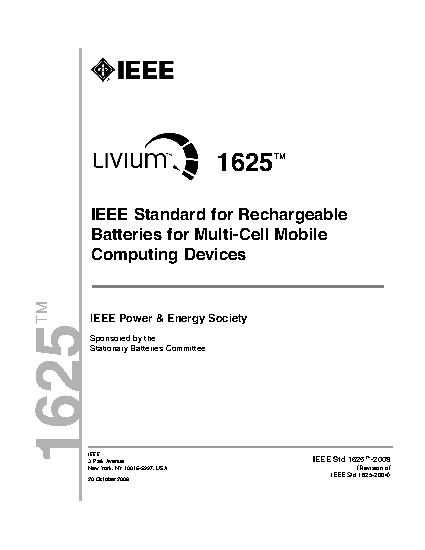
IEEE 1625:2008
IEEE Standard for Rechargeable Batteries for Multi-Cell Mobile Computing Devices

Summary
Revision Standard - Inactive-Reserved.
This standard establishes criteria for design analysis for qualification, quality, and reliability of rechargeable battery systems for multi-cell mobile computing devices. It also provides methods for quantifying the operational performance of these batteries and their associated management and control systems including considerations for end-user notification. This standard covers rechargeable battery systems for mobile computing. The battery technologies covered are limited to Li-ion and Li-ion polymer, but future versions of this standard may include technologies that are not in general use at present. Also included are: battery pack electrical and mechanical construction; system, pack, and cell level charge and discharge controls; and battery status communications. The following are addressed: qualification process; manufacturing process control; energy capacity and demand management; levels of management and control in the battery systems; and current and planned lithium-based battery chemistries, packaging technologies, and considerations for end-user notification.
This standard establishes criteria for design analysis for qualification, quality, and reliability of rechargeable battery systems for multi-cell mobile computing devices. It also provides methods for quantifying the operational performance of these batteries and their associated management and control systems including considerations for end-user notification. This standard covers rechargeable battery systems for mobile computing. The battery technologies covered are limited to Li-ion and Li-ion polymer, but future versions of this standard may include technologies that are not in general use at present. Also included are: battery pack electrical and mechanical construction; system, pack, and cell level charge and discharge controls; and battery status communications. The following are addressed: qualification process; manufacturing process control; energy capacity and demand management; levels of management and control in the battery systems; current and planned lithium-based battery chemistries, packaging technologies, and considerations for end-user notification.
The purpose of this standard is to facilitate reliable end-user experience and operation of batteries in mobile computing environments. The battery and mobile computing industries need standardized criteria for the design and qualification of rechargeable battery systems and to verify the quality and reliability of such cell, batteries and systems.
The purpose clause will not appear in the draft standard.
This standard establishes criteria for design analysis for qualification, quality, and reliability of rechargeable battery systems for multi-cell mobile computing devices. It also provides methods for quantifying the operational performance of these batteries and their associated management and control systems including considerations for end-user notification. This standard covers rechargeable battery systems for mobile computing. The battery technologies covered are limited to Li-ion and Li-ion polymer, but future versions of this standard may include technologies that are not in general use at present. Also included are: battery pack electrical and mechanical construction; system, pack, and cell level charge and discharge controls; and battery status communications. The following are addressed: qualification process; manufacturing process control; energy capacity and demand management; levels of management and control in the battery systems; and current and planned lithium-based battery chemistries, packaging technologies, and considerations for end-user notification.
This standard establishes criteria for design analysis for qualification, quality, and reliability of rechargeable battery systems for multi-cell mobile computing devices. It also provides methods for quantifying the operational performance of these batteries and their associated management and control systems including considerations for end-user notification. This standard covers rechargeable battery systems for mobile computing. The battery technologies covered are limited to Li-ion and Li-ion polymer, but future versions of this standard may include technologies that are not in general use at present. Also included are: battery pack electrical and mechanical construction; system, pack, and cell level charge and discharge controls; and battery status communications. The following are addressed: qualification process; manufacturing process control; energy capacity and demand management; levels of management and control in the battery systems; current and planned lithium-based battery chemistries, packaging technologies, and considerations for end-user notification.
The purpose of this standard is to facilitate reliable end-user experience and operation of batteries in mobile computing environments. The battery and mobile computing industries need standardized criteria for the design and qualification of rechargeable battery systems and to verify the quality and reliability of such cell, batteries and systems.
The purpose clause will not appear in the draft standard.
Notes
Inactive-Reserved
Technical characteristics
| Publisher | Institute of Electrical and Electronics Engineers (IEEE) |
| Publication Date | 10/20/2008 |
| Cancellation Date | 11/07/2019 |
| Edition | |
| Page Count | 0 |
| EAN | --- |
| ISBN | --- |
| Weight (in grams) | --- |
| Brochures |

|
Amendments replaces
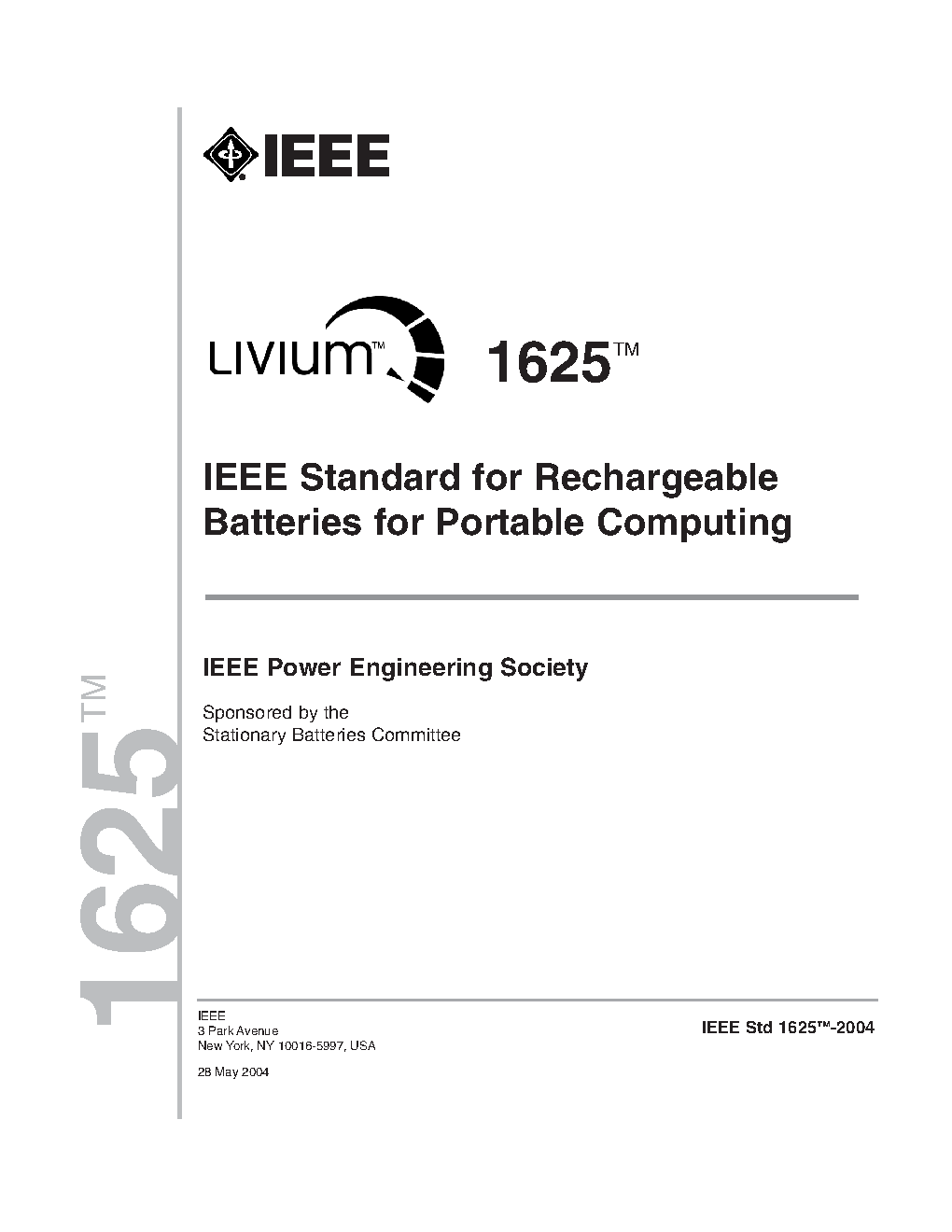
28/05/2004
Superseded
Historical
Previous versions
20/10/2008
Withdrawn
Most Recent
28/05/2004
Superseded
Historical