Superseded
Standard
Historical
IEEE 1561:2007
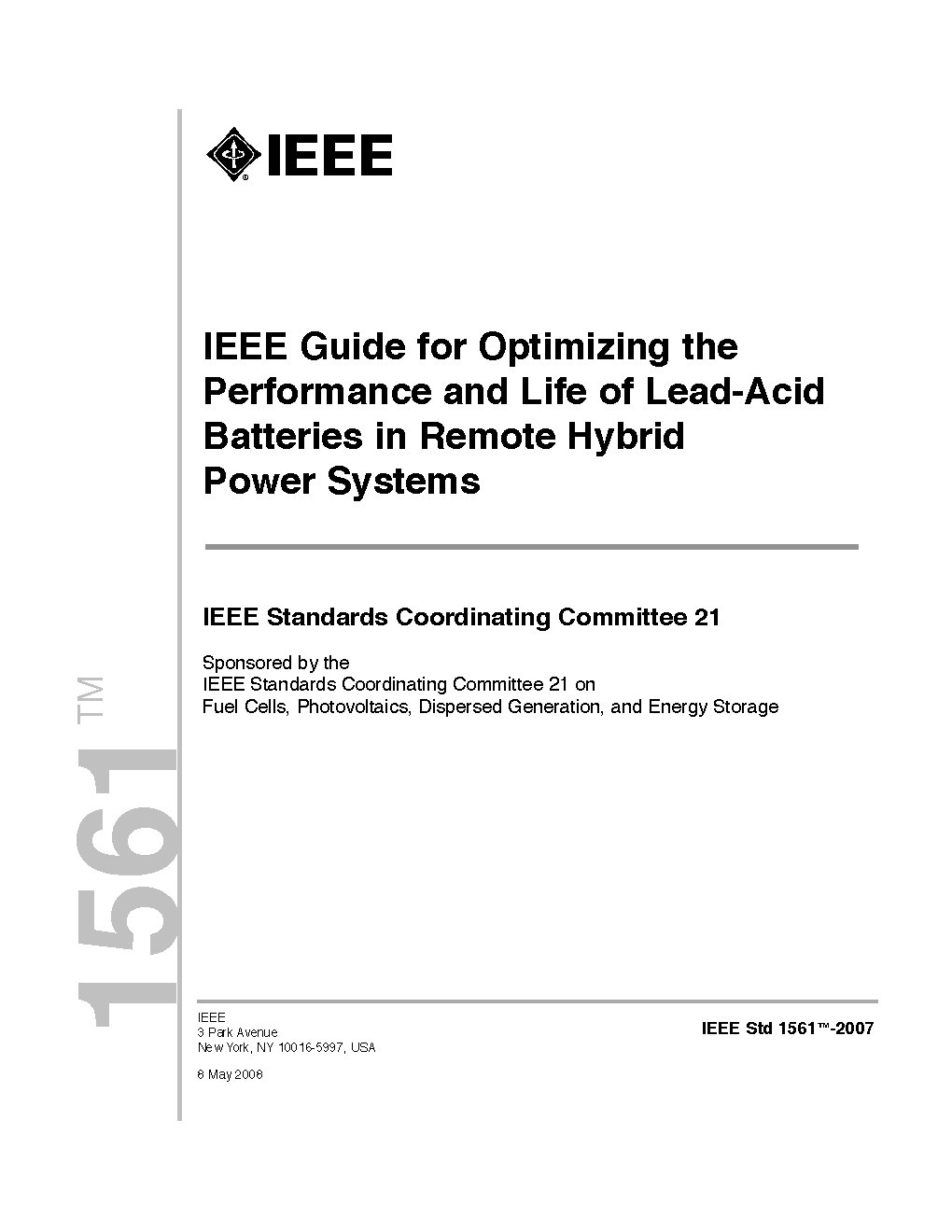
IEEE Guide for Optimizing the Performance and Life of Lead-Acid Batteries in Remote Hybrid Power Systems

Summary
New IEEE Standard - Superseded.
This guide is applicable to lead-acid batteries that are used as the energy storage component in remote hybrid power supplies. The remote hybrid application, with its dual generator option, i.e., both renewable and dispatchable generation, is advantageous in that the battery can usually be charged at will and under circumstances that may also be advantageous for the dispatchable generator. The normative references provide guidance to battery safety, installation, and maintenance considerations. This guide discusses battery selection, sizing, and management issues, e.g., cycling, charging, and the effect of temperature and charge-discharge rates on performances such as life and capacity. An informative annex discusses the several lead-acid technologies.
This guide provides rationale and guidance for operating lead-acid batteries in remote hybrid power
systems, taking into consideration system loads and the capacities of the system’s renewable-energy
generator(s), dispatchable generator(s), and battery(s). It also provides guidance for selecting an appropriate lead-acid battery technology for various system operating strategies.
Using the information provided in this guide, the performance and life of the lead-acid battery can be optimized for the particular operational strategy selected for the remote hybrid power system. The information provided is intended for use by remote hybrid system designers, system evaluators, owners and operators.
This guide is applicable to lead-acid batteries that are used as the energy storage component in remote hybrid power supplies. The remote hybrid application, with its dual generator option, i.e., both renewable and dispatchable generation, is advantageous in that the battery can usually be charged at will and under circumstances that may also be advantageous for the dispatchable generator. The normative references provide guidance to battery safety, installation, and maintenance considerations. This guide discusses battery selection, sizing, and management issues, e.g., cycling, charging, and the effect of temperature and charge-discharge rates on performances such as life and capacity. An informative annex discusses the several lead-acid technologies.
This guide provides rationale and guidance for operating lead-acid batteries in remote hybrid power
systems, taking into consideration system loads and the capacities of the system’s renewable-energy
generator(s), dispatchable generator(s), and battery(s). It also provides guidance for selecting an appropriate lead-acid battery technology for various system operating strategies.
Using the information provided in this guide, the performance and life of the lead-acid battery can be optimized for the particular operational strategy selected for the remote hybrid power system. The information provided is intended for use by remote hybrid system designers, system evaluators, owners and operators.
Notes
Superseded
Technical characteristics
| Publisher | Institute of Electrical and Electronics Engineers (IEEE) |
| Publication Date | 05/08/2008 |
| Edition | |
| Page Count | 29 |
| EAN | --- |
| ISBN | --- |
| Weight (in grams) | --- |
| Brochures |

|
No products.
Previous versions
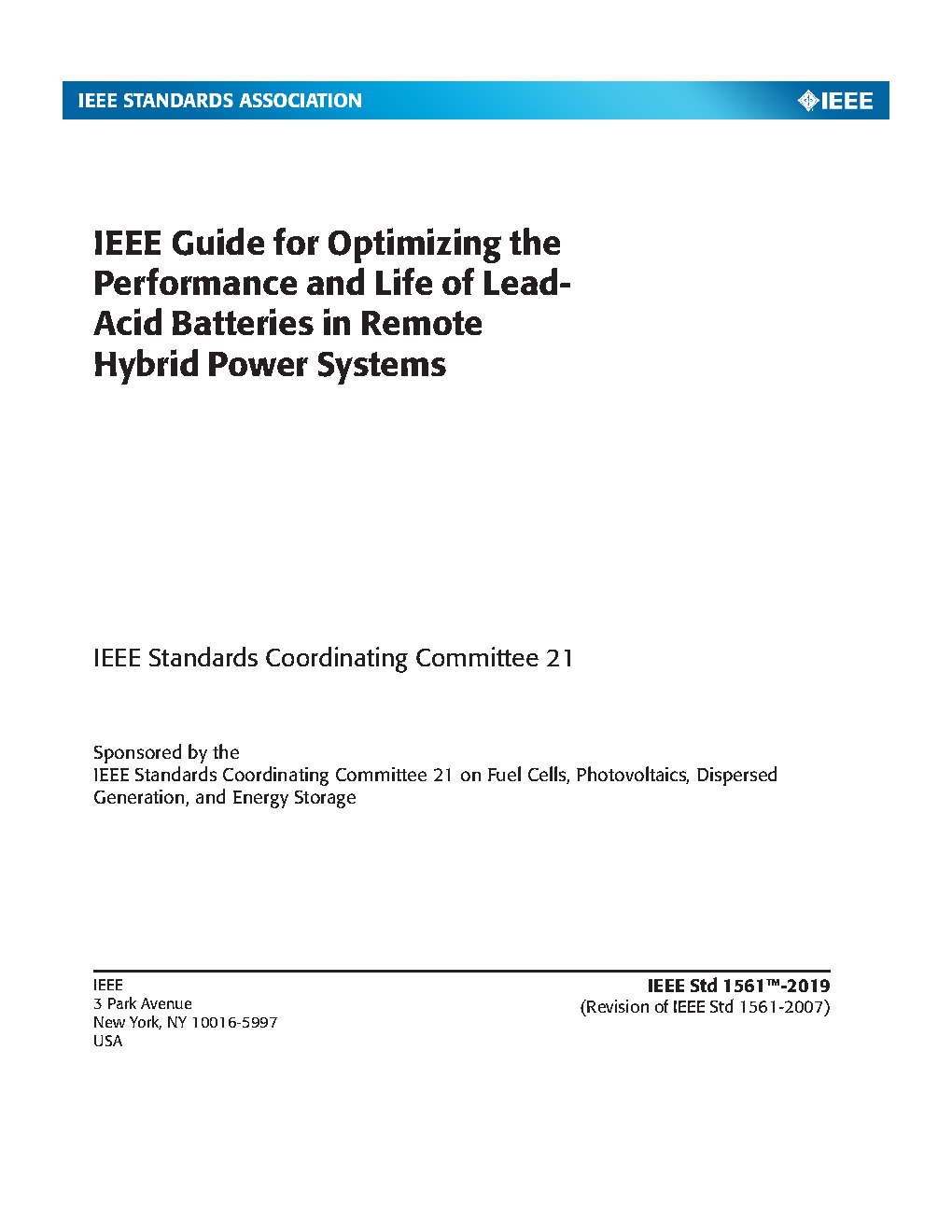
07/06/2019
Active
Most Recent
08/05/2008
Superseded
Historical